Choosing the Right TABC Permit for Your Texas Bar or Restaurant
The specific TABC permit you need depends on whether you serve alcohol on or off premises and what types of beverages you plan to sell. For most Texas bars and restaurants, the Mixed Beverage Permit (MB) is the standard choice for full service, while the Wine and Malt Beverage Retailer's Permit (BG) covers beer and wine only. Gerald Franklin Agency helps Texas business owners identify the correct permit class before they sign a lease or file an application.
Understanding the Core TABC Permit Classes
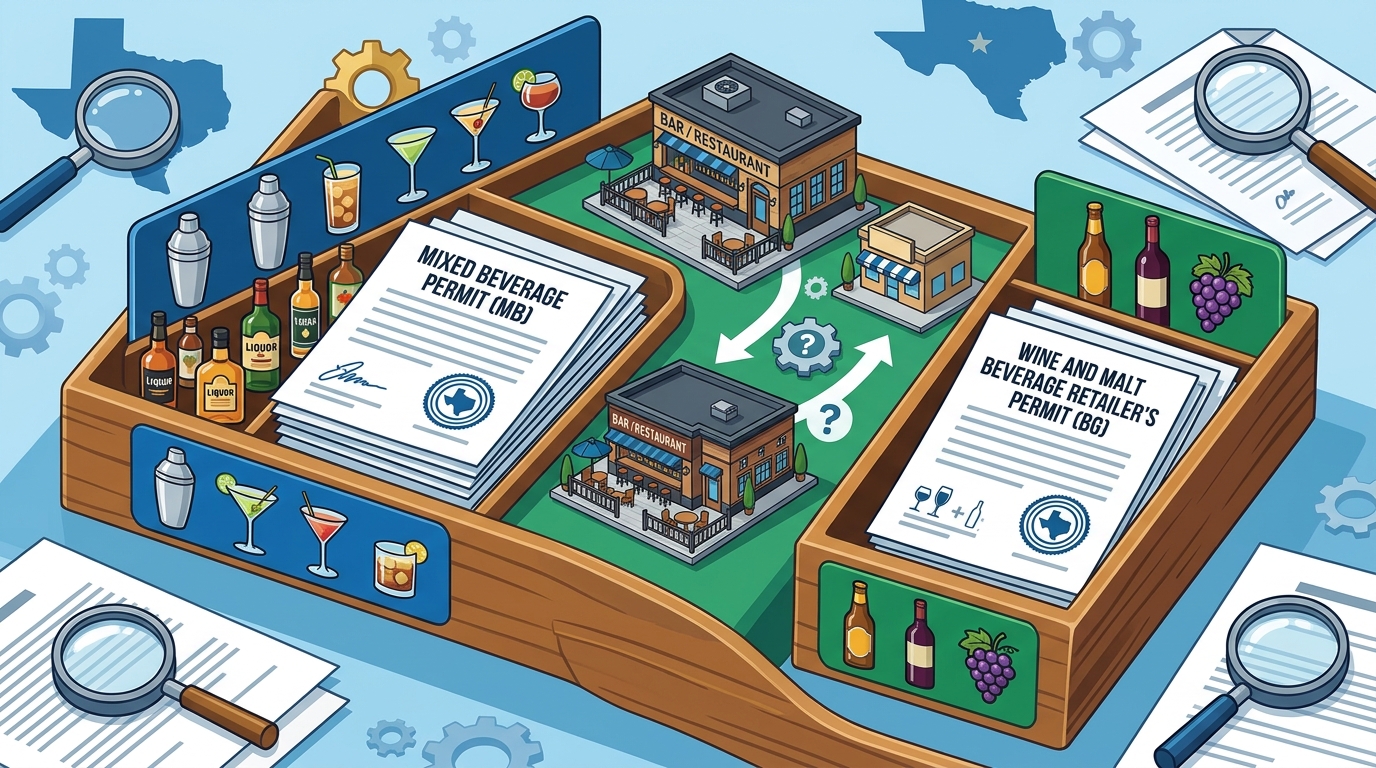
Texas Alcoholic Beverage Commission (TABC) permits are categorized by the type of alcohol sold and the location of consumption. A Mixed Beverage Permit is a license that authorizes the on-premise sale of distilled spirits, wine, and beer. This is the primary permit for bars, nightclubs, and full-service restaurants that pour cocktails and spirits. It is the most comprehensive permit available for hospitality businesses in the state.
In contrast, a Wine and Malt Beverage Retailer's Permit is a license that allows the on-premise sale of beer and wine but excludes distilled spirits. This permit is ideal for cafes, wine bars, and restaurants that do not plan to offer a full spirits menu. Understanding the distinction is critical because the application requirements, fees, and local zoning rules differ significantly between these two classes.
Choosing the wrong permit can delay your opening or result in a denied application. For example, a venue planning to serve only craft beer and local wines should not apply for a Mixed Beverage Permit if they do not intend to sell spirits, as this adds unnecessary complexity and cost. Gerald Franklin Agency reviews your business concept to ensure you select the permit that matches your operational goals.
On-Premise vs. Off-Premise Sales
The location where the alcohol is consumed is the primary factor in determining your permit type. On-premise permits allow customers to drink at your establishment, while off-premise permits allow them to take the product home. A Package Store Permit is a license that authorizes the off-premise sale of distilled spirits, wine, and beer. This is the permit held by traditional liquor stores and is not suitable for bars or restaurants.
Restaurants and bars almost always require on-premise permits. However, some establishments may want to offer to-go sales of beer and wine. To do this, a business holding a Mixed Beverage or Wine and Malt permit must also obtain a Food and Beverage Certificate. This certificate allows for the sale of beer and wine for off-premise consumption, provided the food and beverage requirements are met. Without this certificate, all alcohol must be consumed on the premises.
Implication: If your business model includes happy hour to-go sales or catering, you must plan for the additional Food and Beverage Certificate. This requires specific menu and food service standards that differ from standard on-premise operations. Failing to account for this can limit your revenue streams after opening.
Local Jurisdiction and Zoning Constraints
State permits do not operate in a vacuum. Texas law requires local certifications from the county clerk and city secretary before the TABC will issue a permit. In major cities like Houston, Dallas, and Austin, local ordinances impose strict distance requirements from schools, churches, and parks. A Distance Check is a verification process that ensures your proposed location meets the minimum separation distances required by state and local law.
For instance, in Houston, a Mixed Beverage Permit requires a specific distance from a school or church, which can vary based on the population of the surrounding area. If your location is too close to a protected establishment, the local certification will be denied, and the state permit will not be issued. This is why it is crucial to verify zoning before signing a lease. Gerald Franklin Agency performs these distance checks and coordinates with local officials to ensure your location is viable.
Implication: A location that looks perfect for a bar may be legally ineligible for a liquor permit due to proximity to a school. Conducting a pre-lease distance check saves thousands of dollars in potential lease penalties and relocation costs. It is the single most important step before committing to a physical space.
Specialized Permits for Unique Venues
Not all bars and restaurants fit the standard MB or BG categories. Some venues operate in dry counties or have specific entertainment needs that require specialized permits. A Private Club Registration Permit is a license that allows a private organization to serve alcohol to its members in areas where public sales are restricted. This is common for country clubs, social clubs, and certain entertainment venues.
Additionally, venues with dance floors in cities like Houston may need a City of Houston Dance Hall Permit. This local permit is separate from the TABC permit and requires fire marshal certification and background checks for owners with a significant interest in the business. It is a mandatory requirement for any commercial establishment where dancing occurs, regardless of whether there is a cover charge.
Implication: If your concept includes live music, dancing, or operates as a private club, you must budget for these additional local permits. They involve separate application processes, fees, and inspection schedules. Overlooking these requirements can result in fines or forced closure by local authorities, even if your state TABC permit is valid.
Ensuring Compliance with Surety Bonds
Most TABC permits require a surety bond to guarantee compliance with state regulations. A Conduct Surety Bond is a financial guarantee that the permit holder will adhere to TABC rules regarding service, hours, and responsible alcohol sales. The amount of the bond varies by permit type and location. For example, a Mixed Beverage Permit in a high-population area may require a higher bond amount than one in a rural county.
The bond is not a fee paid to the state; it is a contract between the business, the surety company, and the state. If the business violates TABC rules, the state can make a claim against the bond. This makes it essential to maintain strict compliance with all regulations, including employee training and record-keeping. Gerald Franklin Agency assists in securing the necessary bonds and ensures they are properly linked to your permit in the TABC AIMS system.
Implication: A lapsed bond can result in the suspension of your permit. It is critical to track renewal dates for both the permit and the bond. Missing a renewal deadline can interrupt your ability to sell alcohol, causing significant revenue loss. Professional management of these renewals ensures continuity of operations.
Key Takeaways
- Mixed Beverage Permit (MB) is the standard for bars and restaurants serving spirits, wine, and beer on-premise.
- Wine and Malt Beverage Retailer's Permit (BG) is suitable for venues selling only beer and wine on-premise.
- Local certifications from the county clerk and city secretary are mandatory before state permit issuance.
- Distance checks from schools and churches must be completed before signing a lease to ensure eligibility.
- Food and Beverage Certificates are required for to-go sales of beer and wine.
- Specialized permits, such as Dance Hall or Private Club, may be required based on venue features.
- Surety bonds are required for most permits and must be maintained to avoid suspension.
Frequently Asked Questions
Can I sell spirits with a Wine and Malt Permit?
No. A Wine and Malt Beverage Retailer's Permit only authorizes the sale of beer and wine. To sell distilled spirits, you must hold a Mixed Beverage Permit.
Do I need a local permit if I have a state TABC permit?
Yes. In most Texas cities and counties, you need local certifications from the city secretary and county clerk. These are separate from the state permit and are required for issuance.
How far must my bar be from a school?
Distance requirements vary by location and population. In many areas, the minimum distance is 1,000 feet, but it can be more in densely populated cities. A professional distance check is required to confirm eligibility.
Can I add spirits to my menu after opening with a BG permit?
No. You cannot sell spirits with a BG permit. To add spirits, you must apply for a Mixed Beverage Permit, which is a separate application process with its own fees and requirements.
What is a Conduct Surety Bond?
A Conduct Surety Bond is a financial guarantee that you will comply with TABC regulations. It is required for most permits and protects the state from losses due to violations.
Do I need a Dance Hall Permit if I have live music?
It depends on the city. In Houston, for example, any venue with a dance floor requires a Dance Hall Permit, regardless of whether dancing is the primary activity. Check local ordinances for your specific city.
Next Steps for Your Application
Selecting the right TABC permit is the foundation of a successful alcohol service operation. By understanding the differences between Mixed Beverage, Wine and Malt, and specialized permits, you can avoid costly mistakes and ensure a smooth approval process. Gerald Franklin Agency, with decades of experience as former TABC professionals, provides the expertise to navigate these complex requirements. To determine the exact permit needed for your specific location and business concept, for a personalized consultation.