
TABC Permit vs. Liquor License: The Ultimate Guide for Texas Business Owners
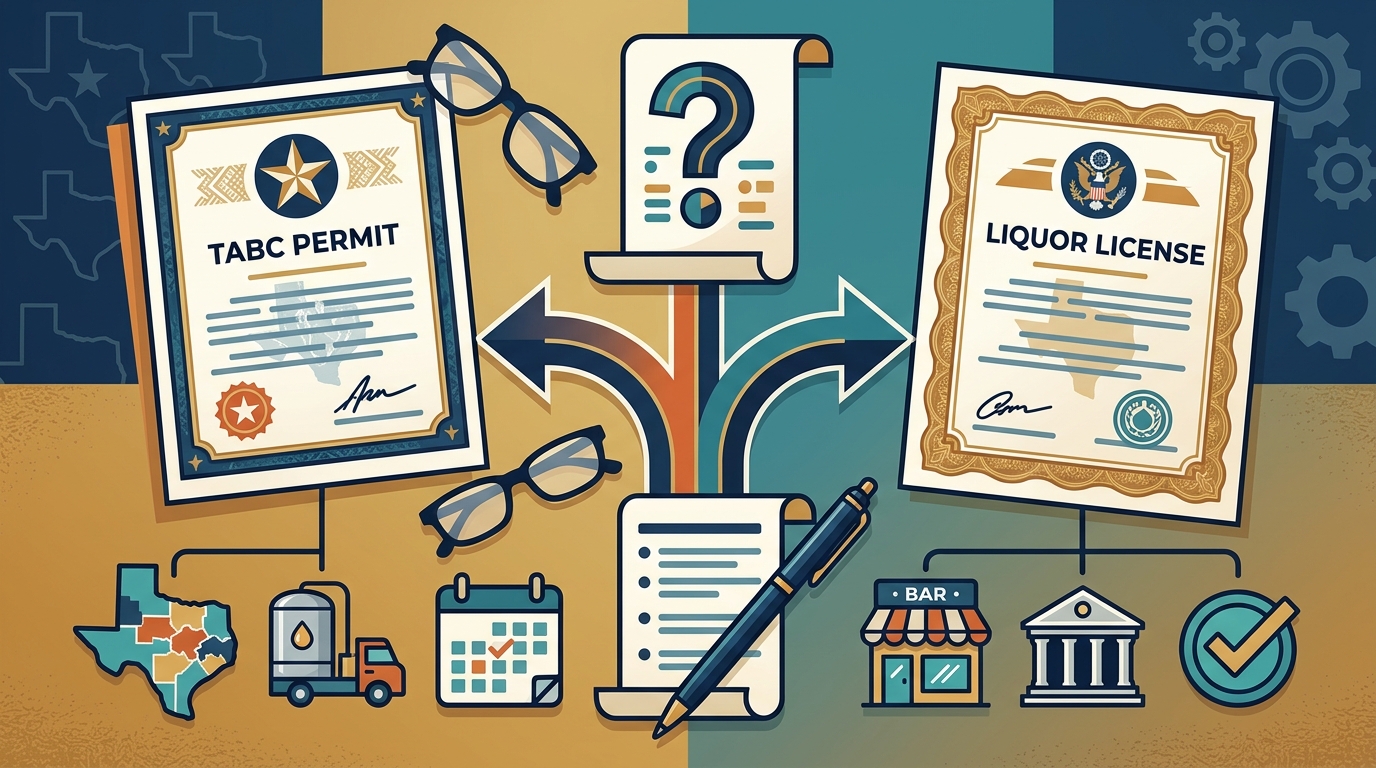
Many Texas business owners confuse TABC permits with liquor licenses, leading to costly application delays. A TABC permit is a specific state authorization for a defined alcohol activity, while a liquor license is a broader, often local or federal term. This guide explains exactly how to determine which authorization your business needs to operate legally in Texas.
Local Regulatory Requirements
Understanding the regulatory landscape is the first step in securing the right authorization. In Texas, the Texas Alcoholic Beverage Commission (TABC) is the primary state agency that regulates the sale and service of alcohol. However, state law is not the only layer of regulation. Local governments, including cities and counties, hold significant power over alcohol sales within their jurisdictions. This dual regulatory structure means that a business must satisfy both state and local requirements before it can legally operate.
The TABC manages the state-level permits and licenses, which are processed through the Alcohol Industry Management System (AIMS). Local governments, on the other hand, issue certifications that confirm the proposed location is permitted to sell alcohol. These local certifications are a mandatory part of the TABC application process. Without them, the state will not approve your application. This interplay between state and local authorities is a critical factor in determining your specific authorization needs.
Local Wet and Dry Regulations
One of the most significant factors in Texas alcohol regulation is the concept of wet and dry areas. A dry area is a local jurisdiction where the sale of alcohol is prohibited by local ordinance. In a dry area, you generally cannot obtain a TABC permit for on-premises or off-premises sales, with very few exceptions. A wet area is a jurisdiction where alcohol sales are permitted. This status is determined by the local city or county government, not the state.
Before investing in a business that plans to sell alcohol, you must verify the wet or dry status of your specific location. This is not a one-size-fits-all determination. A city might be wet, but a specific unincorporated area within the county might be dry. The TABC requires the local city or county to certify the wet or dry status of the proposed location as part of the application. This certification is a non-negotiable requirement. If your location is in a dry area, you will need to explore alternative business models or seek a local referendum to change the status, which is a lengthy and uncertain process.
Alcohol Type Requirements
The type of alcohol you intend to sell or serve is a primary determinant of which TABC permit you need. Texas law categorizes alcoholic beverages into distinct classes, and each class requires a specific permit. The main categories are spirits, wine, and beer. Spirits include distilled beverages like whiskey, vodka, and rum. Wine is fermented grape juice, and beer is fermented grain. Each of these categories has its own set of rules regarding hours of sale, service methods, and packaging.
Your business model must align with the alcohol types you plan to offer. For example, a restaurant that wants to serve a full menu of spirits, wine, and beer will need a different permit than a store that only sells beer and wine for off-premises consumption. The TABC permit you apply for must explicitly authorize the specific types of alcohol you intend to handle. Misalignment between your business plan and your permit type can lead to violations and potential penalties. Therefore, a clear understanding of your alcohol offerings is essential before you begin the application process.
Business Type Determination
Your business type is another critical factor in determining the correct TABC permit. The TABC distinguishes between different types of businesses based on their primary function. The main categories are on-premises consumption, off-premises consumption, and manufacturing or distribution. On-premises consumption refers to businesses where the alcohol is consumed at the location, such as bars, restaurants, and nightclubs. Off-premises consumption refers to businesses where the alcohol is purchased to be consumed elsewhere, such as package stores, grocery stores, and convenience stores. according to TABC License and
Manufacturing and distribution businesses, such as breweries, wineries, and distilleries, operate under a different set of permits. These businesses are involved in the production or wholesale distribution of alcohol, rather than retail sales. Each business type has specific requirements and restrictions. For instance, a restaurant may have different rules for serving alcohol than a bar, even if both are on-premises establishments. Accurately classifying your business type is the foundation of a successful TABC application. Misclassification can lead to application denial or the need to reapply with the correct permit type.
Local Wet and Dry Status
While the previous section covered the general concept of wet and dry areas, this section focuses on the practical steps for verifying the status of your specific location. The wet or dry status of a location is determined by the local city or county government. To verify this status, you must contact the local city clerk or county clerk's office. They will provide you with the official certification of the wet or dry status for your proposed location. This certification is a required document for your TABC application.
It is important to note that the wet or dry status can vary within a single city or county. For example, a city might be generally wet, but a specific neighborhood might be designated as dry. Therefore, you must verify the status for your exact address, not just the city or county name. This level of specificity is crucial for a successful application. The TABC will not approve an application if the local certification does not match the proposed location. Taking the time to verify this status early in the process can save you significant time and money.
Business Model Classification
Business model classification goes beyond the basic on-premises or off-premises distinction. It involves a more detailed analysis of how your business will operate. For example, a restaurant that serves food and alcohol has a different business model than a bar that primarily serves alcohol. The TABC uses these classifications to determine the appropriate permit type and any additional requirements. A restaurant may be eligible for a Food and Beverage Certificate, which can exempt it from certain bond requirements. A bar, on the other hand, may need to post a conduct surety bond.
Other business models include private clubs, which operate under a different set of rules, and temporary event permits, which allow for alcohol sales at one-time events. Each of these models has its own specific requirements and restrictions. Accurately classifying your business model is essential for ensuring that you apply for the correct permit. This classification also affects other aspects of your business, such as insurance requirements and tax obligations. A thorough analysis of your business model is a critical step in the TABC application process.
Beverage Type Categories
Understanding the specific beverage type categories is essential for selecting the right TABC permit. Texas law defines several categories of alcoholic beverages, each with its own set of rules. The main categories are spirits, wine, and beer. Spirits are distilled beverages with an alcohol content of 20% or higher. Wine is a fermented beverage made from grapes, with an alcohol content typically between 8% and 20%. Beer is a fermented beverage made from grains, with an alcohol content typically below 8%.
Each of these categories has specific rules regarding hours of sale, service methods, and packaging. For example, spirits can only be sold during certain hours, while beer and wine may have more flexible hours. The packaging requirements also differ. Spirits are typically sold in sealed containers, while beer and wine may be sold in various formats. Understanding these categories and their associated rules is crucial for ensuring compliance with Texas law. It also helps you to make informed decisions about your product offerings and business operations.
Specific Permit Types
Once you have determined your business type, alcohol types, and local wet or dry status, you can select the specific TABC permit that fits your needs. The TABC offers a wide range of permits, each designed for a specific business model and alcohol type. Some of the most common permits include the Mixed Beverage Permit, the Wine and Malt Beverage Retailer Permit, and the Package Store Permit. The Mixed Beverage Permit allows for the on-premises consumption of spirits, wine, and beer. The Wine and Malt Beverage Retailer Permit allows for the off-premises sale of wine and beer. The Package Store Permit allows for the off-premises sale of spirits, wine, and beer.
Each of these permits has its own specific requirements and restrictions. For example, the Mixed Beverage Permit requires a conduct surety bond, while the Wine and Malt Beverage Retailer Permit may not. The hours of sale and service methods also differ between permits. Selecting the correct permit type is a critical step in the TABC application process. A mistake in this step can lead to application denial or the need to reapply with the correct permit. It is important to carefully review the requirements for each permit type and ensure that your business meets all of them.
TABC Certification Requirements
In addition to the permit itself, TABC certification requirements are a crucial part of the application process. These requirements include the submission of a complete and accurate application, the payment of the required fees, and the provision of all necessary supporting documents. The application must be signed and notarized, and it must include all required certifications from the local city or county, the Texas Secretary of State, and the Texas Comptroller of Public Accounts. These certifications confirm that your business is in good standing and that the proposed location is eligible for alcohol sales.
Failure to meet any of these certification requirements can result in application denial. It is important to carefully review the TABC application guidelines and ensure that all requirements are met before submitting your application. The TABC provides resources and guidance to help applicants navigate the certification process. However, the responsibility for ensuring compliance ultimately lies with the applicant. Taking the time to thoroughly prepare your application and meet all certification requirements is essential for a successful TABC permit application.
Key Takeaways
- A TABC permit is a state authorization for a specific alcohol activity, while a liquor license is a broader term.
- Local wet and dry status is a critical factor in determining if you can obtain a TABC permit.
- The type of alcohol you sell or serve (spirits, wine, beer) determines the specific permit you need.
- Your business type (on-premises, off-premises, manufacturing) is a primary determinant of your permit type.
- Local certifications from the city or county are a mandatory part of the TABC application process.
- Accurate business model classification is essential for selecting the correct permit and meeting all requirements.
- TABC certification requirements include a complete application, payment of fees, and all necessary local and state certifications.
- Consulting with a licensing expert can help you navigate the complex TABC application process and ensure compliance.
Frequently Asked Questions
What is the difference between a TABC permit and a liquor license?
A TABC permit is a specific state authorization for a defined alcohol activity in Texas. A liquor license is a broader term that can refer to state, local, or federal authorizations. In Texas, the TABC permit is the primary state authorization for alcohol sales and service.
How do I check if my location is wet or dry?
You must contact your local city or county clerk's office to verify the wet or dry status of your specific location. This certification is a required document for your TABC application.
What are the main types of TABC permits?
The main types of TABC permits include the Mixed Beverage Permit, the Wine and Malt Beverage Retailer Permit, and the Package Store Permit. Each permit is designed for a specific business model and alcohol type.
Do I need a local certification for my TABC application?
Yes, local certifications from the city or county are a mandatory part of the TABC application process. These certifications confirm that your location is eligible for alcohol sales.
What is a conduct surety bond?
A conduct surety bond is a financial guarantee that your business will comply with TABC regulations. It is required for certain types of permits, such as the Mixed Beverage Permit.
How long does the TABC application process take?
The TABC application process can take several weeks to several months, depending on the complexity of your application and the completeness of your documentation. It is important to submit a complete and accurate application to avoid delays.
Can I sell alcohol in a dry area?
In most cases, no. If your location is in a dry area, you generally cannot obtain a TABC permit for alcohol sales. There are very few exceptions, and they are difficult to obtain.
Who can help me with my TABC application?
You can work with a licensing expert or a legal professional who specializes in TABC regulations. These professionals can help you navigate the application process and ensure that you meet all requirements.