
What Surety Bond Underwriters Check in Texas Liquor License Applications
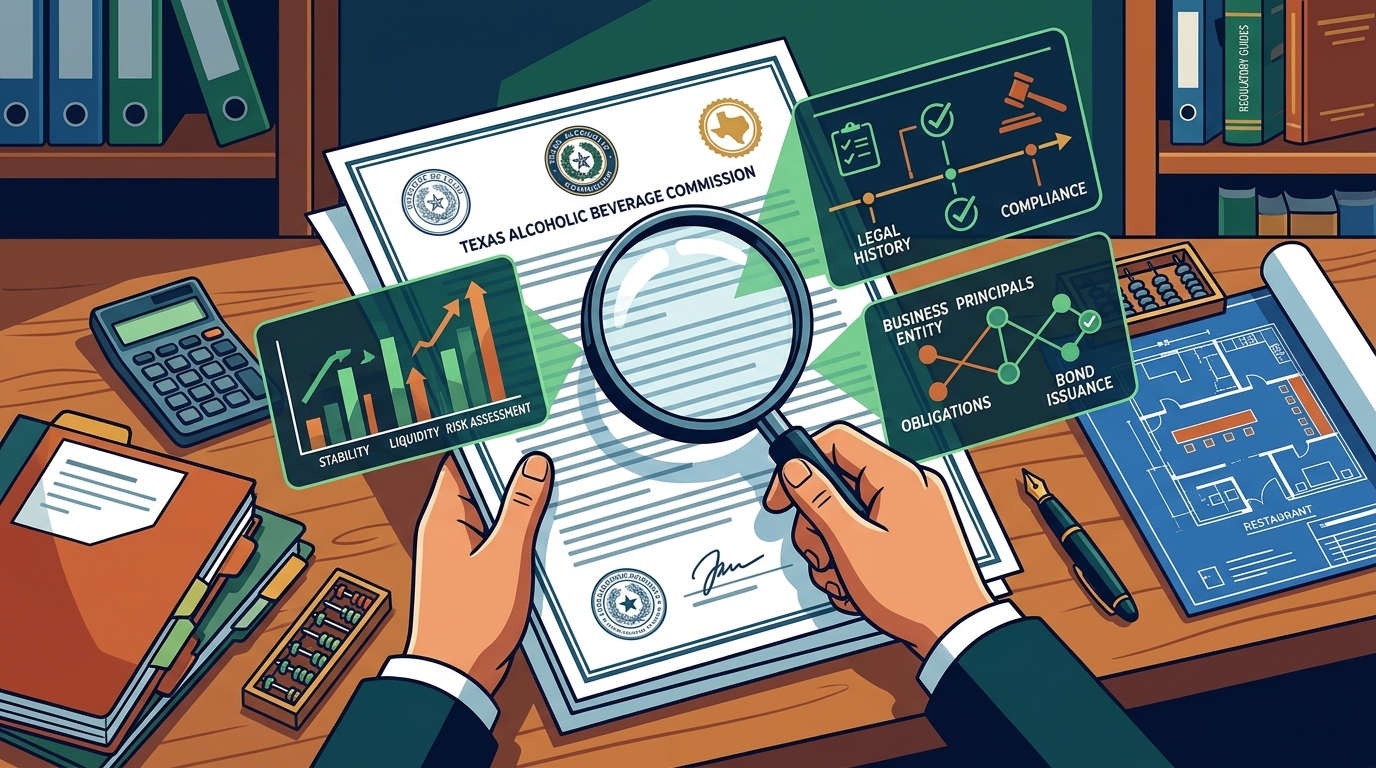
Surety bond underwriters evaluate the financial stability, legal history, and operational compliance of the applicant to determine the risk of issuing a bond. They verify that the business entity and its principals can meet the obligations required by the Texas Alcoholic Beverage Commission (TABC). This assessment ensures the state is protected against potential violations of alcohol laws. Gerald Franklin Agency helps applicants navigate these underwriting criteria to secure the necessary bonds for their liquor licenses.
The Financial Profile of the Applicant
Underwriters begin by analyzing the financial health of the business and its owners. They review personal and business credit reports to gauge the ability to pay premiums and cover potential claims. A strong credit score often results in lower premiums, while poor credit may require additional collateral or a higher premium rate. This financial screening is the first gate in the underwriting process.
For example, an applicant with a personal credit score above 700 is typically viewed as a low-risk candidate. Underwriters look for consistent income, low debt-to-income ratios, and a history of on-time payments. If the business is new, underwriters may place more weight on the personal financials of the principals. This ensures that the individual behind the business has the means to support the bond.
The implication for applicants is that financial preparation should begin before the bond application. Cleaning up credit reports and organizing financial statements can significantly speed up the underwriting process. Gerald Franklin Agency works with surety partners who understand these nuances, helping clients present their financial profiles in the best possible light.
Legal and Regulatory History
Underwriters conduct thorough background checks on all principals and owners of the business. They search for any history of criminal convictions, civil judgments, or prior regulatory violations. A clean record is essential for approval, as past misconduct suggests a higher risk of future non-compliance. This step is critical in the alcohol industry, where regulatory adherence is strictly enforced. according to Bonds TABC
Specifically, underwriters look for any prior suspensions or revocations of alcohol licenses. If a principal has been involved in a dram shop liability case or a TABC enforcement action, this will be flagged. The severity and recency of these events heavily influence the underwriting decision. For instance, a recent conviction for a felony involving fraud may result in an automatic denial.
Applicants should be transparent about their legal history. Attempting to hide past issues can lead to bond rescission later, which is far more damaging than a delayed approval. Gerald Franklin Agency advises clients on how to present their legal history accurately and how to mitigate risks associated with past incidents.
Business Structure and Ownership
The legal structure of the business is a key factor in underwriting. Underwriters need to clearly identify all individuals with a significant ownership stake or control over the business. This includes general partners, members of an LLC, and corporate officers. Each of these individuals must undergo the same financial and background screening as the primary applicant.
For example, in a Limited Liability Company (LLC), underwriters will require a complete list of all members who own 10 percent or more of the company. Each of these members must submit a personal financial statement and a background check. This ensures that no high-risk individual is hidden behind the corporate veil. The clarity of the ownership structure directly impacts the speed of the underwriting process.
Implications for business owners include the need for accurate and up-to-date operating agreements. Discrepancies between the business registration and the bond application can cause delays. Gerald Franklin Agency ensures that the business structure is properly documented and that all required principals are identified before submitting the bond application.
Operational Compliance and Premises
Underwriters also consider the operational aspects of the business, including the location and type of license being applied for. They verify that the business has a valid lease or ownership of the premises. The physical location must comply with local zoning laws and TABC distance requirements from schools and churches. This operational check ensures that the business is legally permitted to operate at the specified address.
For instance, a mixed beverage permit application requires the premises to be a certain distance from a public school. If the location does not meet this requirement, the bond cannot be issued. Underwriters cross-reference the business address with TABC records to confirm compliance. This step is crucial for preventing future legal issues that could lead to bond claims.
Applicants should ensure that their lease agreements and zoning permits are in order before applying for a bond. Any ambiguity in the operational setup can raise red flags for underwriters. Gerald Franklin Agency helps clients verify that their premises meet all TABC requirements, ensuring a smooth underwriting process.
Key Takeaways
- Underwriters prioritize the financial stability of the business and its principals, with credit scores playing a major role in premium rates.
- A clean legal and regulatory history is essential; any prior violations or criminal records can lead to denial.
- All significant owners and officers must be identified and undergo background checks, regardless of the business structure.
- The business must have a valid lease or ownership of the premises that complies with TABC distance and zoning rules.
- Transparency in the application process is critical; hiding past issues can result in bond rescission.
- Proper documentation of business structure and operational compliance speeds up the underwriting process.
Frequently Asked Questions
What is a surety bond in the context of a Texas liquor license?
A surety bond is a three-party contract between the business, the surety company, and the TABC. It guarantees that the business will comply with state alcohol laws and protects the state from financial loss due to violations.
How long does the underwriting process take?
The underwriting process typically takes a few days to a few weeks, depending on the complexity of the application and the responsiveness of the applicant. Providing complete and accurate information can speed up this process.
Can I get a bond if I have bad credit?
Yes, but it may be more difficult and expensive. Underwriters may require a higher premium or additional collateral. Working with an experienced agency can help find a surety company willing to work with applicants who have less-than-perfect credit.
Do all owners need to be screened?
Yes, all individuals with a significant ownership stake or control over the business must be screened. This includes owners of 10 percent or more in an LLC or corporation.
What happens if the bond is denied?
If the bond is denied, the applicant can address the issues cited by the underwriter and reapply. It is also possible to appeal the decision or seek a different surety company. Gerald Franklin Agency can help navigate this process.