
Yes, you can sell beer and wine in Texas with a specific permit without obtaining a full liquor license. The Texas Alcoholic Beverage Commission (TABC) issues distinct permit classes that authorize the sale of malt beverages and wine separately from distilled spirits. Choosing the correct permit class depends entirely on your business model, the type of alcohol you intend to serve, and your location. Gerald Franklin Agency helps Texas businesses identify the exact permit required for their specific operations.
Understanding the Texas Three-Tier System
Texas regulates alcohol through a strict three-tier system that separates manufacturing, wholesale, and retail. A retail permit is the authorization that allows a business to sell alcohol directly to consumers. The specific class of this retail permit dictates exactly what products you can sell and how you can serve them. This structure ensures that the state can track the flow of alcohol from the producer to the final consumer.
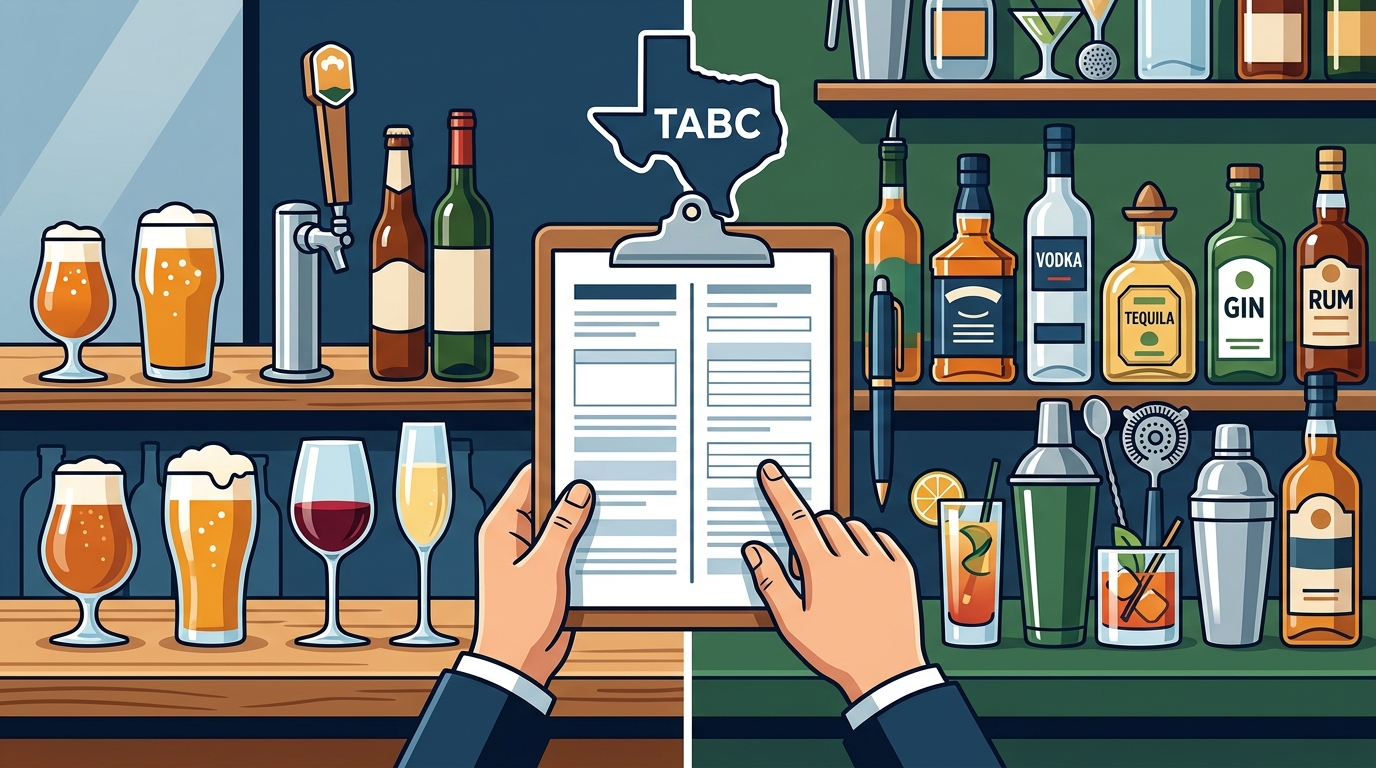
The distinction between a beer and wine permit and a full liquor license is fundamental to this system. A full liquor license, often referred to as a Mixed Beverage Permit, authorizes the sale of distilled spirits, wine, and beer. In contrast, a beer and wine permit restricts sales to malt beverages and wine only. Understanding this hierarchy is the first step in determining your legal obligations and financial requirements.
Identifying the Right Permit for Your Business
The choice between a beer and wine permit and a full liquor license depends on your menu and service style. If your business is a casual restaurant, cafe, or bistro that only plans to serve wine and beer, a beer and wine permit is the appropriate and often more cost-effective choice. This permit allows you to serve these beverages on the premises or sell them to go, depending on the specific class you obtain.
However, if your concept involves a full bar, cocktails, or the sale of distilled spirits, you must obtain a Mixed Beverage Permit. This is the full liquor license that covers all three categories of alcohol. Gerald Franklin Agency reviews your business plan to ensure you are applying for the permit that matches your actual service model, preventing costly application errors.
Comparing Costs and Requirements
Financial considerations play a major role in this decision. Beer and wine permits generally carry lower state fees than Mixed Beverage Permits. For example, the state fee for a Wine and Malt Beverage Retailer's Permit is significantly lower than the fee for an original Mixed Beverage Permit. Additionally, the bond requirements may differ based on the permit type and your location's proximity to sensitive areas like schools. according to On Premises Beer
Both permit types require local certifications from your city and county, as well as a conduct surety bond in most cases. The conduct bond is a financial guarantee that your business will comply with state alcohol laws. While the initial cost of a beer and wine permit is lower, the long-term revenue potential of a full liquor license may justify the higher investment for certain business models. Gerald Franklin Agency provides a detailed cost breakdown for both options during your consultation.
Navigating Local Regulations and Distance Rules
State law is only one part of the equation; local regulations also play a critical role. Texas law imposes strict distance requirements between alcohol retailers and sensitive locations such as schools, churches, and parks. These distance rules apply to both beer and wine permits and full liquor licenses. A location that is too close to a school may be ineligible for any alcohol permit, or it may require a higher bond amount.
Furthermore, local option elections can affect what you can sell in your specific city or county. Some areas may have restrictions on the sale of certain types of alcohol or on the hours of operation. It is essential to verify your location's eligibility before signing a lease. Gerald Franklin Agency checks your address against local and state distance rules to ensure your business can legally operate with the permit you intend to obtain.
Key Takeaways
- You can sell beer and wine in Texas with a specific permit without needing a full liquor license.
- A Mixed Beverage Permit is required if you plan to serve distilled spirits or cocktails.
- Beer and wine permits typically have lower state fees and bond requirements than full liquor licenses.
- Both permit types are subject to strict distance rules regarding schools and churches.
- Local option elections and city regulations can impact your ability to sell alcohol.
- Gerald Franklin Agency helps you match your business model to the correct TABC permit class.
Frequently Asked Questions
Can I upgrade from a beer and wine permit to a full liquor license?
Yes, many businesses start with a beer and wine permit and later apply for a Mixed Beverage Permit as they grow. This allows you to test the market with a lower initial investment before committing to the full cost of a liquor license. according to Beer Wine Licensing
What is the difference between on-premise and off-premise sales?
On-premise sales allow customers to consume alcohol at your location, while off-premise sales allow them to take sealed containers home. The permit you choose must match your intended sales method.
Do I need a bond for a beer and wine permit?
In most cases, yes. A conduct surety bond is required for most retail permits, including beer and wine permits, unless you hold a Food and Beverage Certificate that exempts you.
How long does it take to get a beer and wine permit?
A complete application typically takes 35 to 50 days to process through the TABC, though local certifications and inspections can extend this timeline.
Where can I get help with my TABC application?
Gerald Franklin Agency provides expert assistance with all TABC permit applications, from initial consultation to final approval. You can to start your application.
Start Your Application with Confidence
Choosing the right alcohol permit is a critical decision that impacts your business's legal compliance and financial success. By understanding the differences between beer and wine permits and full liquor licenses, you can make an informed choice that aligns with your business goals. Gerald Franklin Agency has been guiding Texas businesses through the TABC process since 1944, ensuring that your application is accurate and complete. Contact Gerald Franklin Agency today to discuss your specific needs and get started on the right permit.