
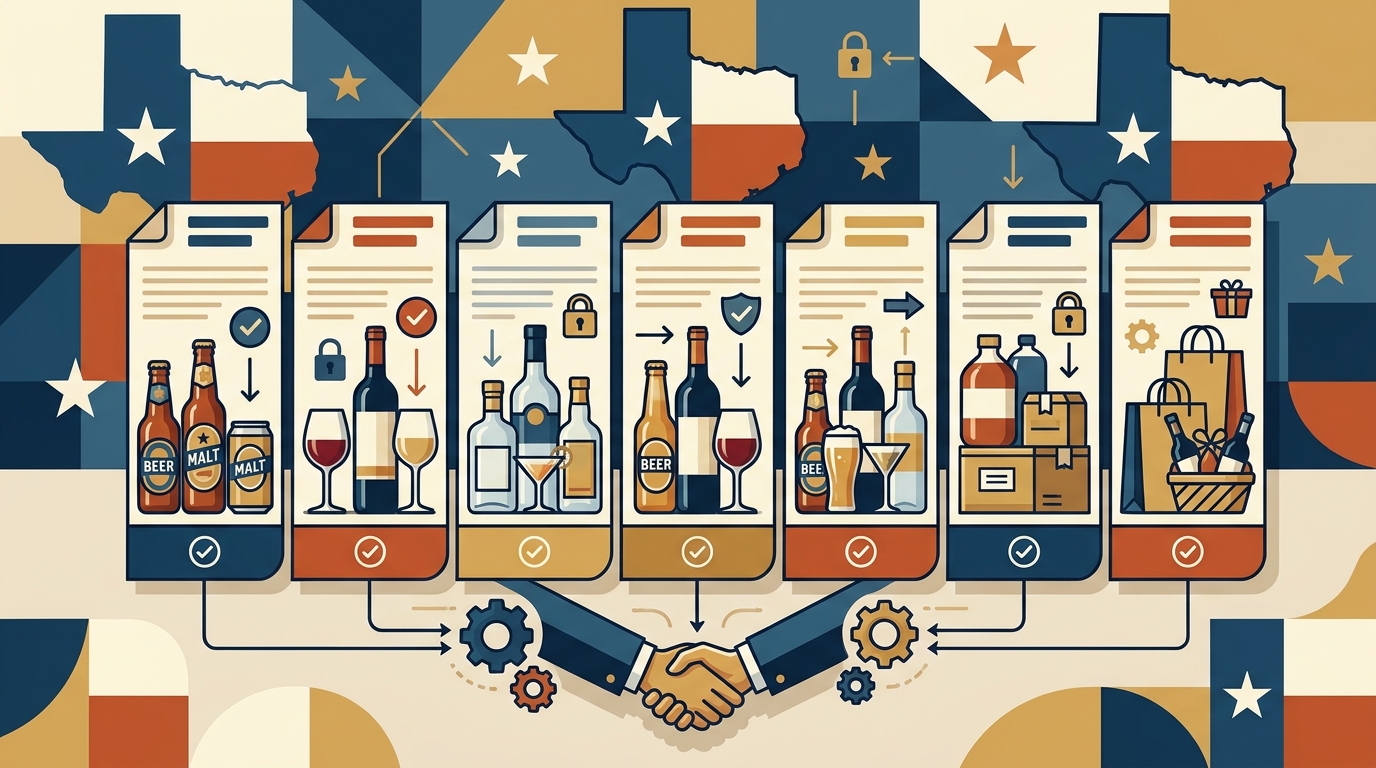
7 Texas Liquor License Categories and the Drinks They Authorize
Understanding which beverages your business can legally sell is the first step in securing the right Texas alcohol permit. The Texas Alcoholic Beverage Commission (TABC) issues specific permits that dictate exactly what you can serve or sell, ranging from beer and wine to full spirits. Choosing the wrong category can result in fines, permit revocation, or the inability to launch your business concept. Gerald Franklin Agency helps Texas businesses navigate these complex beverage authorization rules to ensure your menu matches your legal license.
1. Mixed Beverage Permit
Authorizes full spirits, wine, and beer for on-premise consumption. The Mixed Beverage Permit is the most comprehensive on-premise license in Texas. It allows bars, nightclubs, and full-service restaurants to sell mixed drinks, distilled spirits, wine, and beer. This permit is required for any establishment where alcohol is the primary revenue driver or where spirits are served in cocktails.
2. Wine and Malt Beverage Retailer's Permit
Authorizes beer and wine for on-premise consumption. The Wine and Malt Beverage Retailer's Permit allows businesses to sell beer and wine for consumption on the premises. This category is ideal for restaurants, hotels, and lounges that do not intend to serve distilled spirits or mixed drinks. It is a common choice for establishments that want to offer a full beverage menu without the higher regulatory burden of a spirits license.
3. Package Store Permit
Authorizes off-premise sales of spirits, wine, and beer. The Package Store Permit, commonly known as a liquor store license, authorizes the sale of all types of alcohol for off-premise consumption. This permit allows retailers to sell spirits, wine, and beer in sealed containers. It is the standard license for standalone liquor stores and convenience stores that sell alcohol for takeout.
4. Wine and Malt Beverage Package Permit
Authorizes off-premise sales of beer and wine only. The Wine and Malt Beverage Package Permit allows businesses to sell beer and wine for off-premise consumption. This license is typically used by grocery stores, convenience stores, and specialty retailers that do not wish to handle distilled spirits. It provides a legal pathway for retailers to offer a wider beverage selection than beer-only permits while avoiding the complexities of spirits sales.
5. Malt Beverage Retailer's Permit
Authorizes beer for on-premise consumption. The Malt Beverage Retailer's Permit is the most basic on-premise license, authorizing the sale of beer for consumption on the premises. This permit is suitable for small bars, sports bars, and casual dining establishments that do not serve wine or spirits. It is often the starting point for new businesses testing the market with a limited alcohol offering.
6. Malt Beverage Package Permit
Authorizes off-premise sales of beer only. The Malt Beverage Package Permit allows retailers to sell beer for off-premise consumption. This is the most common off-premise license in Texas, held by the majority of convenience stores and grocery stores. It is a straightforward permit that allows businesses to generate revenue from beer sales without the additional requirements associated with wine or spirits.
7. Temporary Event Permit
Authorizes alcohol sales at specific non-traditional venues. The Temporary Event Permit allows organizations to sell or serve alcohol at festivals, galas, sporting events, and other non-traditional venues. This permit is not tied to a permanent business location but to a specific event. It can authorize the sale of beer, wine, or spirits depending on the specific temporary permit class and the status of the host organization.
Frequently Asked Questions
Can I sell wine with a beer-only permit?
No. A Malt Beverage permit, whether on-premise or off-premise, strictly authorizes beer sales. To sell wine, you must upgrade to a Wine and Malt Beverage permit or a Mixed Beverage permit.
What is the difference between on-premise and off-premise permits?
On-premise permits allow alcohol to be consumed at the location where it is sold, such as a bar or restaurant. Off-premise permits allow alcohol to be sold in sealed containers for consumption elsewhere, such as a liquor store or grocery store.
Do I need a separate permit for spirits and beer?
No. A Mixed Beverage Permit covers spirits, wine, and beer for on-premise consumption. A Package Store Permit covers all three for off-premise sales. You do not need separate licenses for each beverage type within these comprehensive categories.
Can a restaurant serve mixed drinks with a Wine and Malt permit?
No. A Wine and Malt Beverage Retailer's Permit does not authorize the sale of distilled spirits or mixed drinks. To serve cocktails or spirits, a restaurant must obtain a Mixed Beverage Permit.
How does Gerald Franklin Agency help with permit selection?
Gerald Franklin Agency analyzes your business model, location, and revenue goals to recommend the correct TABC permit. Our former TABC professionals ensure your beverage menu aligns with your legal authorization before you file.
Choosing the Right Permit for Your Business
Selecting the correct Texas liquor license depends on your business model and revenue goals. If you plan to serve cocktails, you need a Mixed Beverage Permit. If you are a retailer, you must choose between Package and Wine and Malt Beverage Package permits based on your inventory. Gerald Franklin Agency provides expert guidance to ensure your beverage authorization matches your business vision. to start your application today.