
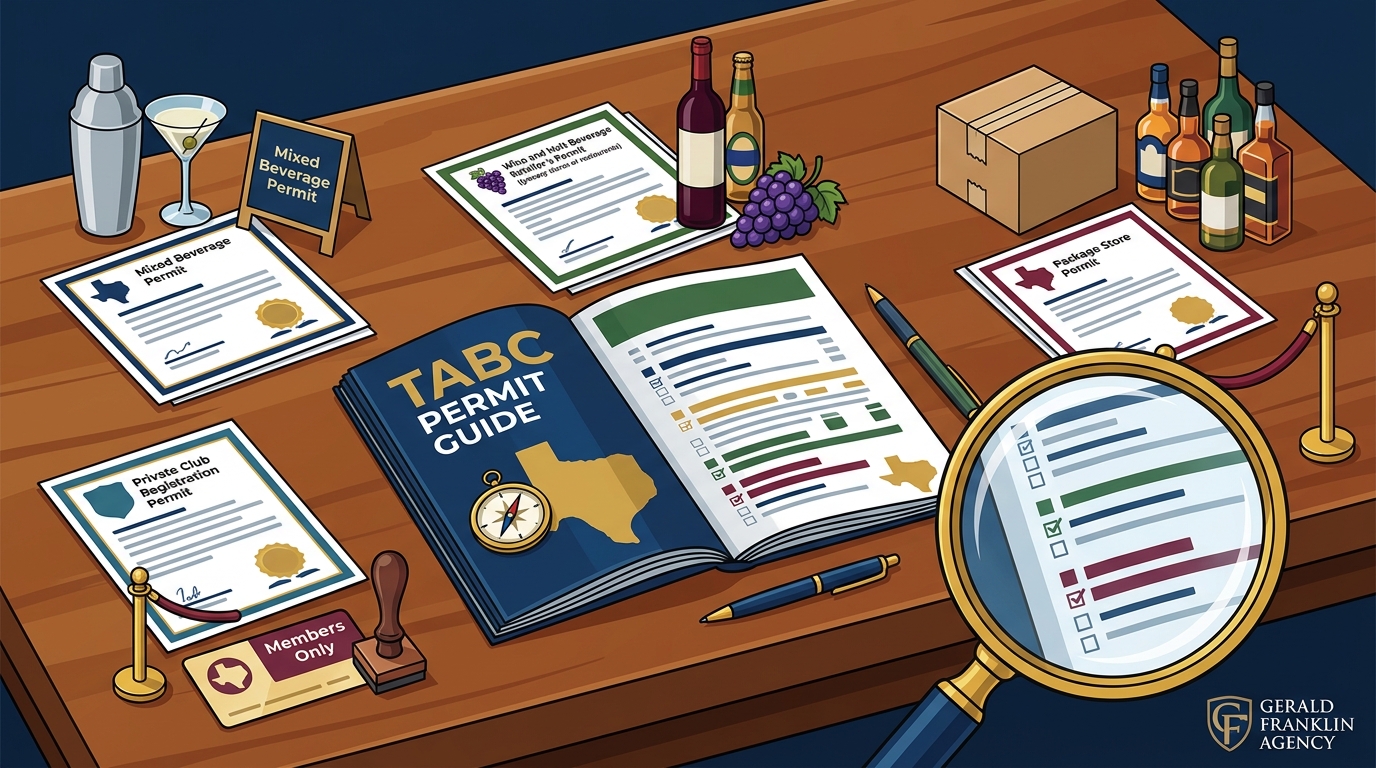
The Texas Alcoholic Beverage Commission (TABC) issues specific permits that dictate how a business can legally sell, serve, or store alcohol. The primary types include the Mixed Beverage Permit, Wine and Malt Beverage Retailer's Permit, Package Store Permit, and Private Club Registration Permit. Each permit type carries distinct operational rules, fee structures, and local certification requirements that determine your business's ability to operate within Texas state law.
On-Premise Permits for Bars and Restaurants
On-premise permits allow alcohol to be consumed within the physical boundaries of the establishment. The most common on-premise permit is the Mixed Beverage Permit, which authorizes the sale of spirits, beer, and wine for consumption on the premises. This permit is the standard requirement for full-service bars, nightclubs, and many restaurants that wish to offer a full alcohol menu. Because these establishments often derive a significant portion of their revenue from alcohol, they typically require a conduct surety bond to guarantee compliance with state regulations. according to Alcoholic Beverage Permits
For businesses that focus primarily on food service, the Wine and Malt Beverage Retailer's Permit is a critical alternative. This permit allows the sale of beer and wine for on-premise consumption but does not authorize the sale of spirits. A key advantage of this permit is that it often exempts the business from the conduct surety bond if the establishment holds a valid Food and Beverage Certificate. This certificate verifies that the business is food-first, which can significantly reduce the financial burden of licensing and allow for alcohol-to-go sales in many jurisdictions.
The distinction between these two permits is not merely academic; it dictates your operational ceiling. A Mixed Beverage holder can serve a martini, while a Wine and Malt holder cannot. Gerald Franklin Agency helps business owners determine which on-premise permit aligns with their revenue model and local zoning laws, ensuring that the chosen license supports the business's long-term financial goals without unnecessary compliance overhead. according to Renew TABC License
Off-Premise Permits for Retail Sales
Off-premise permits authorize the sale of alcohol for consumption outside the establishment. The Package Store Permit is the most recognizable off-premise license, commonly known as the liquor store permit. This license allows the sale of spirits, beer, and wine in sealed containers. However, the Package Store Permit is subject to strict local control, meaning that the city or county must approve the location, and there are often limits on the number of such stores allowed in a specific area.
Another critical off-premise option is the Wine and Malt Beverage Off-Premise Permit. This permit allows the sale of beer and wine in sealed containers but prohibits the sale of spirits. It is a popular choice for convenience stores, grocery stores, and gas stations that wish to expand their alcohol offerings without the heavy regulatory scrutiny and local approval hurdles associated with a full Package Store. The choice between these two off-premise permits often depends on the retailer's inventory strategy and the specific regulations of their local municipality.
Understanding the local control aspect is vital for any retail alcohol business. In many Texas cities, the local government has the power to deny a Package Store application or impose specific operating hours. Gerald Franklin Agency navigates these local certifications, coordinating with city secretaries and county clerks to ensure that the off-premise application clears all local hurdles before it reaches the state level for final approval.
Specialized and Temporary Permits
For businesses that need to serve alcohol at a one-time or short-term event, the Temporary Event Permit is the appropriate solution. This permit allows for the sale and service of alcohol at festivals, galas, sporting events, and other non-traditional venues. It is available to both nonprofit organizations and existing permit holders who wish to extend their service to a secondary location. The application for a temporary permit must be filed at least 10 business days before the event, and the location must be verified as wet territory by local officials.
These specialized permits require a different approach to compliance. For instance, a Private Club must maintain a membership roster and adhere to specific rules regarding guest access. A Temporary Event Permit holder must follow strict inventory rules, including the prohibition on returning unused alcohol to wholesalers. Gerald Franklin Agency manages the filing for these specialized permits, ensuring that the specific conditions of the license are met and that the business is prepared for any inspections that may occur during the event or club operations.
Federal and State Alignment
While the TABC handles state-level licensing, businesses involved in the production, importation, or wholesale of alcohol must also comply with federal regulations. The Federal Basic Permit, issued by the Alcohol and Tobacco Tax and Trade Bureau (TTB), authorizes the first sale level of the alcohol industry, including importing, wholesaling, and producing. This federal permit is separate from, but must align with, the state TABC permits. For example, a winery in Texas needs both a TTB Federal Basic Permit and the appropriate TABC manufacturer or wholesaler permit to operate legally. according to TABC License and
Wholesalers and importers also face additional financial requirements, such as the Liquor and Beer Tax Bond. This bond guarantees that the state will receive the excise taxes owed on alcohol entering the market. The amount of this bond is typically based on an estimate of six weeks of excise tax liability and scales with the volume of the business. Failing to maintain this bond can result in the suspension of the wholesale permit, halting the flow of product to retailers. according to Sign Requirements TABC
Aligning federal and state requirements is a complex task that requires a deep understanding of both regulatory bodies. Gerald Franklin Agency prepares and files the federal application to ensure it matches the Texas TABC permits, preventing discrepancies that could delay the launch of a new product or the opening of a new facility. This dual-compliance approach is essential for any business operating in the middle or upper tiers of the alcohol supply chain.
Key Takeaways
- The Mixed Beverage Permit is the standard for full-service bars and allows the sale of spirits, beer, and wine on-premise.
- The Wine and Malt Beverage Retailer's Permit allows beer and wine sales and may exempt the business from the conduct surety bond if a Food and Beverage Certificate is held.
- Package Store Permits are subject to strict local control and require approval from city or county officials.
- The Private Club Registration Permit is ideal for member-only organizations and can operate in areas with restrictions on public sales.
- Temporary Event Permits allow for alcohol sales at one-time events and require application at least 10 business days in advance.
- Wholesalers and importers must obtain a Federal Basic Permit from the TTB in addition to their state TABC permits.
- Conduct surety bonds are required for most on-premise and retail permits that derive more than 60 percent of revenue from alcohol.
Frequently Asked Questions
What is the difference between a Mixed Beverage and a Wine and Malt permit?
A Mixed Beverage Permit allows the sale of spirits, beer, and wine for on-premise consumption. A Wine and Malt Beverage Retailer's Permit allows the sale of beer and wine for on-premise consumption but does not authorize the sale of spirits. The Mixed Beverage permit typically requires a conduct surety bond, while the Wine and Malt permit may be exempt if the business holds a Food and Beverage Certificate.
Do I need a local certification for my TABC permit?
Yes, Texas law requires local certifications for most TABC permits. This involves obtaining signatures and approvals from local officials such as the city secretary, county clerk, and county judge. The specific requirements vary by jurisdiction, and failing to secure these local approvals will result in the denial of the state permit.
What is a conduct surety bond?
Can I sell alcohol to go with a Mixed Beverage permit?
Generally, no. A Mixed Beverage permit allows for on-premise consumption only. To sell alcohol to go, the business usually needs a Wine and Malt Beverage Retailer's Permit and a Food and Beverage Certificate, or a specific off-premise permit. The rules for alcohol-to-go vary by local ordinance, so it is essential to verify the specific regulations in your jurisdiction.
How long does it take to get a TABC permit?
The timeline for obtaining a TABC permit varies depending on the type of permit, the complexity of the application, and the local certification process. It can take several weeks to several months. Factors such as the need for a public hearing, the scheduling of a TABC interview, and the resolution of any local objections can all impact the timeline. Starting the process early and ensuring all documents are complete is the best way to minimize delays.
What is the Federal Basic Permit?
The Federal Basic Permit is issued by the TTB and authorizes the first sale level of the alcohol industry, including importing, wholesaling, and producing. It is a federal permit that is separate from, but must align with, the state TABC permits. Businesses that produce, import, or wholesale alcohol in Texas need both the federal and state permits to operate legally. according to INDUSTRY NOTICE New
Choosing the Right Permit for Your Business
Selecting the correct TABC permit is a foundational decision that impacts your operational flexibility, financial obligations, and long-term growth potential. The complexity of Texas alcohol regulations, with their interplay of state, local, and federal requirements, makes professional guidance invaluable. Gerald Franklin Agency, with its team of former TABC professionals, provides the expertise needed to navigate this landscape. We help you identify the right permit, secure the necessary bonds, and clear the local certifications so your business can open on time and operate in full compliance. To start your application, for a consultation. according to FAQs TABC