
How Texas Liquor Licenses Compare by Beverage Type
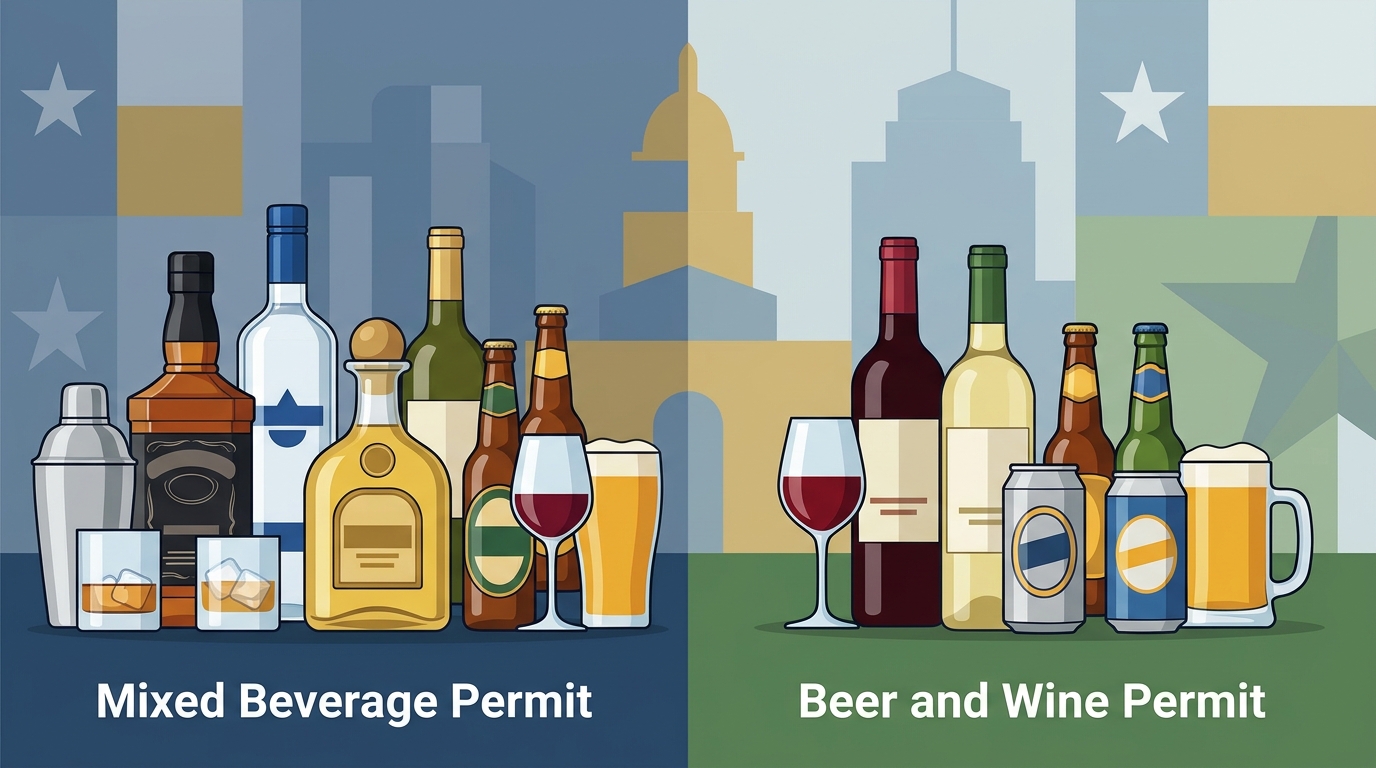
Choosing the right Texas liquor license depends entirely on the specific types of alcohol you intend to sell and how you serve them. The Texas Alcoholic Beverage Commission (TABC) issues distinct permit classes that dictate exactly what beverages your business can legally offer to consumers. A full liquor license, often referred to as a Mixed Beverage Permit, authorizes the sale of distilled spirits, wine, and beer. In contrast, a beer and wine permit restricts sales to malt beverages and wine only. Gerald Franklin Agency helps Texas businesses identify the exact permit required for their specific operations to ensure compliance and avoid costly application delays. according to TABC License and
Understanding the Texas Three-Tier System
Texas regulates alcohol through a strict three-tier system that separates manufacturing, wholesale, and retail. A retail permit is the authorization that allows a business to sell alcohol directly to consumers. The specific class of this retail permit dictates exactly what products you can sell and how you can serve them. This structure ensures that the state can track the flow of alcohol from the producer to the final consumer. The distinction between a beer and wine permit and a full liquor license is fundamental to this system. A full liquor license, often referred to as a Mixed Beverage Permit, authorizes the sale of distilled spirits, wine, and beer. In contrast, a beer and wine permit restricts sales to malt beverages and wine only. Understanding this hierarchy is the first step in determining your legal obligations and financial requirements.
Comparing Beverage Authorizations by Permit Class
The choice between a beer and wine permit and a full liquor license depends on your menu and service style. If your business is a casual restaurant, cafe, or bistro that only plans to serve wine and beer, a beer and wine permit is the appropriate and often more cost-effective choice. This permit allows you to serve these beverages on the premises or sell them to go, depending on the specific class you obtain. However, if your concept involves a full bar, cocktails, or the sale of distilled spirits, you must obtain a Mixed Beverage Permit. This is the full liquor license that covers all three categories of alcohol. Gerald Franklin Agency reviews your business plan to ensure you are applying for the permit that matches your actual service model.
| Permit Class | Distilled Spirits | Wine | Beer | Primary Use Case |
|---|---|---|---|---|
| Mixed Beverage Permit | Yes | Yes | Yes | Full-service bars and restaurants |
| Wine and Malt Beverage Retailer's Permit | No | Yes | Yes | Casual restaurants and cafes |
| Package Store Permit | Yes | Yes | Yes | Liquor stores and retail |
| Wine and Malt Beverage Package Permit | No | Yes | Yes | Grocery and convenience stores |
Mixed Beverage Permit: Full Liquor Authorization
The Mixed Beverage Permit is the most comprehensive on-premise license in Texas. It allows bars, nightclubs, and full-service restaurants to sell mixed drinks, distilled spirits, wine, and beer. This permit is required for any establishment where alcohol is the primary revenue driver or where spirits are served in cocktails. Because these establishments often derive a significant portion of their revenue from alcohol, they typically require a conduct surety bond to guarantee compliance with state regulations. The distinction between this permit and a beer and wine permit is not merely academic; it dictates your operational ceiling. A Mixed Beverage holder can serve a martini, while a Wine and Malt holder cannot. Gerald Franklin Agency helps business owners determine which on-premise permit aligns with their revenue model and local zoning laws, ensuring that the chosen license supports the business's long-term financial goals without unnecessary compliance overhead. according to TABC License and
Wine and Malt Beverage Permits: Beer and Wine Only
For businesses that focus primarily on food service, the Wine and Malt Beverage Retailer's Permit is a critical alternative. This permit allows the sale of beer and wine for on-premise consumption but does not authorize the sale of spirits. A key advantage of this permit is that it often exempts the business from the conduct surety bond if the establishment holds a valid Food and Beverage Certificate. This certificate verifies that the business is food-first, which can significantly reduce the financial burden of licensing and allow for alcohol-to-go sales in many jurisdictions. Choosing the wrong permit can delay your opening or result in a denied application. For example, a venue planning to serve only craft beer and local wines should not apply for a Mixed Beverage Permit if they do not intend to sell spirits, as this adds unnecessary complexity and cost. Gerald Franklin Agency reviews your business concept to ensure you select the permit that matches your operational goals.
Package Store Permits: Off-Premise Retail Sales
The Package Store Permit, commonly known as a liquor store license, authorizes the sale of all types of alcohol for off-premise consumption. This permit allows retailers to sell spirits, wine, and beer in sealed containers. It is the standard license for standalone liquor stores and convenience stores that sell alcohol for takeout. The location where the alcohol is consumed is the primary factor in determining your permit type. On-premise permits allow customers to drink at your establishment, while off-premise permits allow them to take the product home. A Package Store Permit is a license that authorizes the off-premise sale of distilled spirits, wine, and beer. Understanding the distinction is critical because the application requirements, fees, and local zoning rules differ significantly between these two classes. Gerald Franklin Agency helps Texas businesses navigate these complex beverage authorization rules to ensure your menu matches your legal license.
Choosing the Right Permit for Your Business
Understanding which beverages your business can legally sell is the first step in securing the right Texas alcohol permit. The Texas Alcoholic Beverage Commission (TABC) issues specific permits that dictate exactly what you can serve or sell, ranging from beer and wine to full spirits. Choosing the wrong category can result in fines, permit revocation, or the inability to launch your business concept. Gerald Franklin Agency helps Texas businesses navigate these complex beverage authorization rules to ensure your menu matches your legal license. If you are still unsure which permit fits your business model, our team of former TABC professionals can guide you through the selection process. We prepare, file, and track your application through the AIMS portal, so you open on time. To start your application or ask about a specific permit, .
Frequently Asked Questions
Can I upgrade from a beer and wine permit to a full liquor license?
Yes, you can apply for a Mixed Beverage Permit if you currently hold a Wine and Malt Beverage Permit. However, this requires a new application, additional fees, and potentially a conduct surety bond. The process is not automatic and must be filed with the TABC.
Does a beer and wine permit allow me to sell spirits?
No, a beer and wine permit strictly prohibits the sale of distilled spirits. If you wish to sell spirits, you must obtain a Mixed Beverage Permit or a Package Store Permit, depending on whether you serve on or off premises.
What is the difference between on-premise and off-premise permits?
On-premise permits allow customers to consume alcohol within the establishment, while off-premise permits allow customers to take the alcohol home in sealed containers. The type of alcohol you can sell depends on the specific permit class you hold.
Do I need a surety bond for a beer and wine permit?
It depends. If you hold a valid Food and Beverage Certificate, you may be exempt from the conduct surety bond. Without the certificate, you will likely need to post a bond to secure your permit.
How long does it take to get a liquor license in Texas?
Timelines vary by permit class and locality. Texas filings often clear in a few months, but filing complete the first time is the biggest factor in avoiding delay. Gerald Franklin Agency manages the process to keep it moving.