
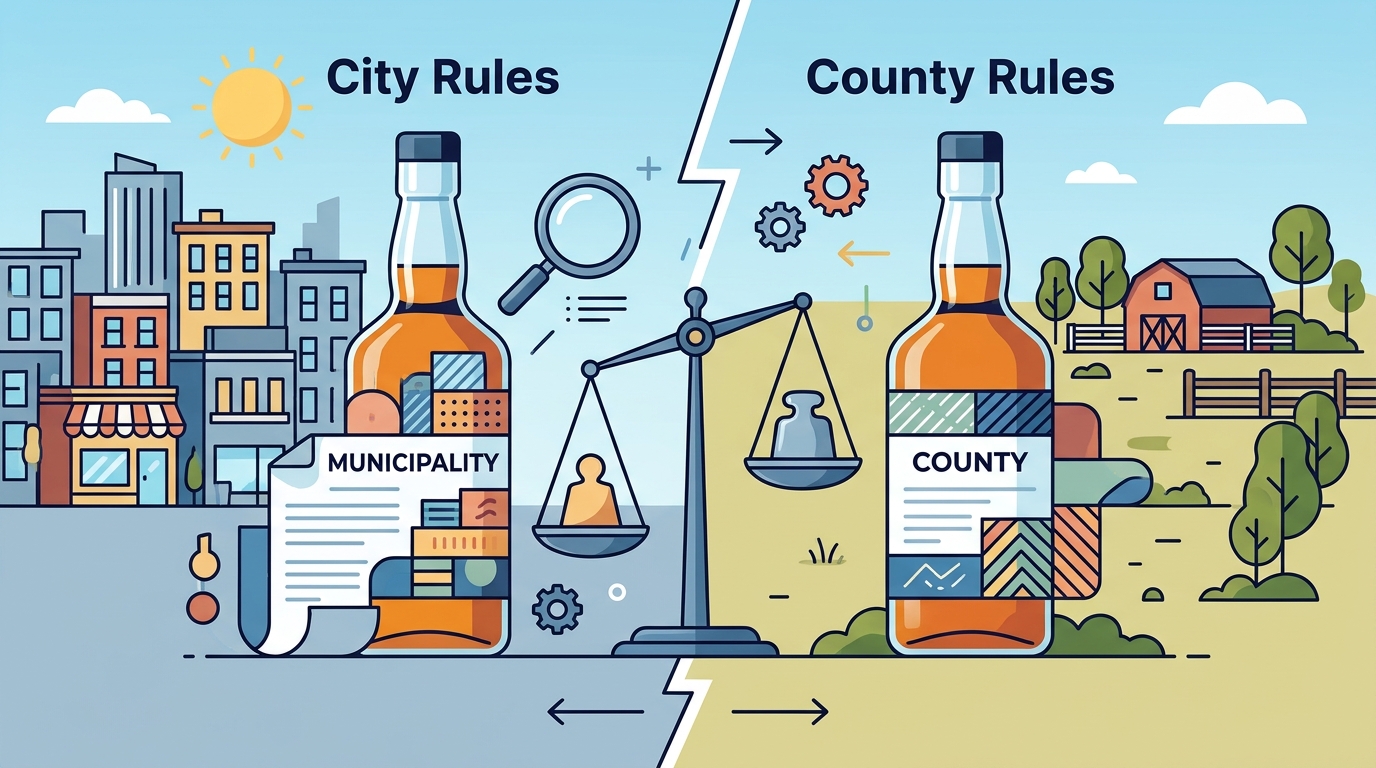
Choosing the right jurisdiction for your Texas alcohol business requires understanding distinct local regulatory frameworks. Cities and counties operate under separate legal authorities, creating different approval pathways, fee structures, and compliance requirements. Gerald Franklin Agency helps navigate these complex local rules to ensure your application meets specific municipal and county standards. This guide breaks down the critical differences between city and county licensing to help you plan your launch strategy effectively.
City Regulations and Approvals
City ordinances often impose stricter zoning and operational rules than state law. Municipalities may require specific distance buffers from schools, churches, and parks that exceed state minimums. Local city councils or boards of adjustment frequently hold public hearings where residents can voice objections to new alcohol establishments. This community input can significantly impact approval timelines and final conditions. Cities also control local business licenses and sales tax registrations that must align with your alcohol permit.
Strengths of City Licensing
City processes provide clear, localized standards that reflect community values. Approval from a city often signals strong local support, which can benefit your business reputation. Municipal staff typically handle zoning verification and fire code compliance checks directly. This centralized approach can streamline the initial review phase for applicants who understand local expectations.
Limits of City Licensing
City rules can be highly variable, with no uniform standard across different municipalities. Some cities have strict quotas or moratoriums on new alcohol licenses, making it difficult to secure approval in certain neighborhoods. Public hearings can introduce delays if community opposition arises. Applicants must carefully review specific city codes, as generic state guidance may not address local nuances.
County Regulations and Approvals
County regulations focus on broader land use and public safety concerns. County commissioners or judges often have final say on alcohol permits in unincorporated areas. Counties may impose different distance requirements and operational restrictions that apply to rural or suburban properties. The county clerk typically processes the paperwork and maintains records of approved permits. This layer of approval ensures that alcohol sales align with county-wide planning goals.
Strengths of County Licensing
County processes can be more predictable in unincorporated areas where city rules do not apply. Rural counties may have fewer competitors, reducing the likelihood of quota limitations. County officials often focus on safety and compliance rather than community aesthetics, which can simplify the approval criteria. This structure suits businesses in suburban or rural locations that need clear, consistent guidelines.
Limits of County Licensing
County approvals may involve longer processing times due to smaller administrative staff. Some counties have strict wet or dry designations that limit where alcohol can be sold. Applicants in unincorporated areas must coordinate with both the county and any nearby city if their property borders municipal boundaries. This dual oversight can complicate the application process and increase compliance costs.
Comparison Table
| Criteria | City Regulations | County Regulations |
|---|---|---|
| Primary Authority | City Council or Board of Adjustment | County Commissioners or Judge |
| Distance Requirements | Often stricter, specific to neighborhood | Generally broader, applies to unincorporated areas |
| Public Hearings | Frequent, community-driven | Less frequent, safety-focused |
| Quota Limitations | Common in dense urban areas | Rare in rural counties |
| Processing Time | Variable, depends on community input | Often longer due to smaller staff |
| Best For | Urban restaurants, bars, and retail | Rural venues, farms, and unincorporated areas |
Decision Guidance
Choosing between city and county focus depends on your specific location and business model. Understanding which jurisdiction has primary authority over your property is the first step in a successful application.
Choose City Focus If
Your business is located within municipal boundaries and serves a dense urban population. City licensing is essential for restaurants, bars, and retail stores in major Texas cities. You should prioritize city regulations if your concept relies on high foot traffic and community engagement. Gerald Franklin Agency can help you navigate specific city ordinances and prepare for public hearings.
Choose County Focus If
Your property is in an unincorporated area or a rural county. County regulations are the primary authority for farms, wineries, and venues outside city limits. You should focus on county approvals if you are in a wet county with fewer local competitors. This approach suits businesses that need consistent, safety-focused guidelines rather than community-driven decisions.
Frequently Asked Questions
What is the main difference between city and county alcohol licensing?
City licensing focuses on local zoning and community input, while county licensing emphasizes broader land use and public safety. Cities often have stricter distance rules and public hearings, whereas counties may have longer processing times but fewer quota limitations.
Can a business be subject to both city and county rules?
Yes, if your property is near a city boundary, you may need to comply with both sets of regulations. This dual oversight can complicate the application process and increase compliance costs. It is important to verify which jurisdiction has primary authority over your specific address.
How do I know if my area is wet or dry?
Wet or dry status is determined by local referendums and ordinances. You can check with your local city or county clerk to confirm the current status. Gerald Franklin Agency can verify the wet or dry status of your location before you file your application.
What are the switching costs if I change locations?
Switching locations may require a new application and approval process in the new jurisdiction. You may need to pay new fees and undergo new inspections. It is important to plan your location carefully to avoid these costs.
How long does the approval process take?
Processing times vary by jurisdiction and can range from weeks to months. City approvals may be faster if there is no community opposition, while county approvals may take longer due to smaller staff. Gerald Franklin Agency can provide a realistic timeline for your specific situation.
How do I get started with my application?
Contact Gerald Franklin Agency to discuss your specific location and business model. Our team of former TABC professionals can help you navigate the local regulatory landscape and ensure your application is complete and accurate. Learn more: New York Food Service.