
Local alcohol licensing costs in Texas vary significantly by jurisdiction, business type, and specific permit requirements. Gerald Franklin Agency helps businesses navigate these complex local fees alongside state TABC requirements. Understanding the local cost structure is critical for accurate budgeting before you file your application.
1. Jurisdictional Variance in Base Fees
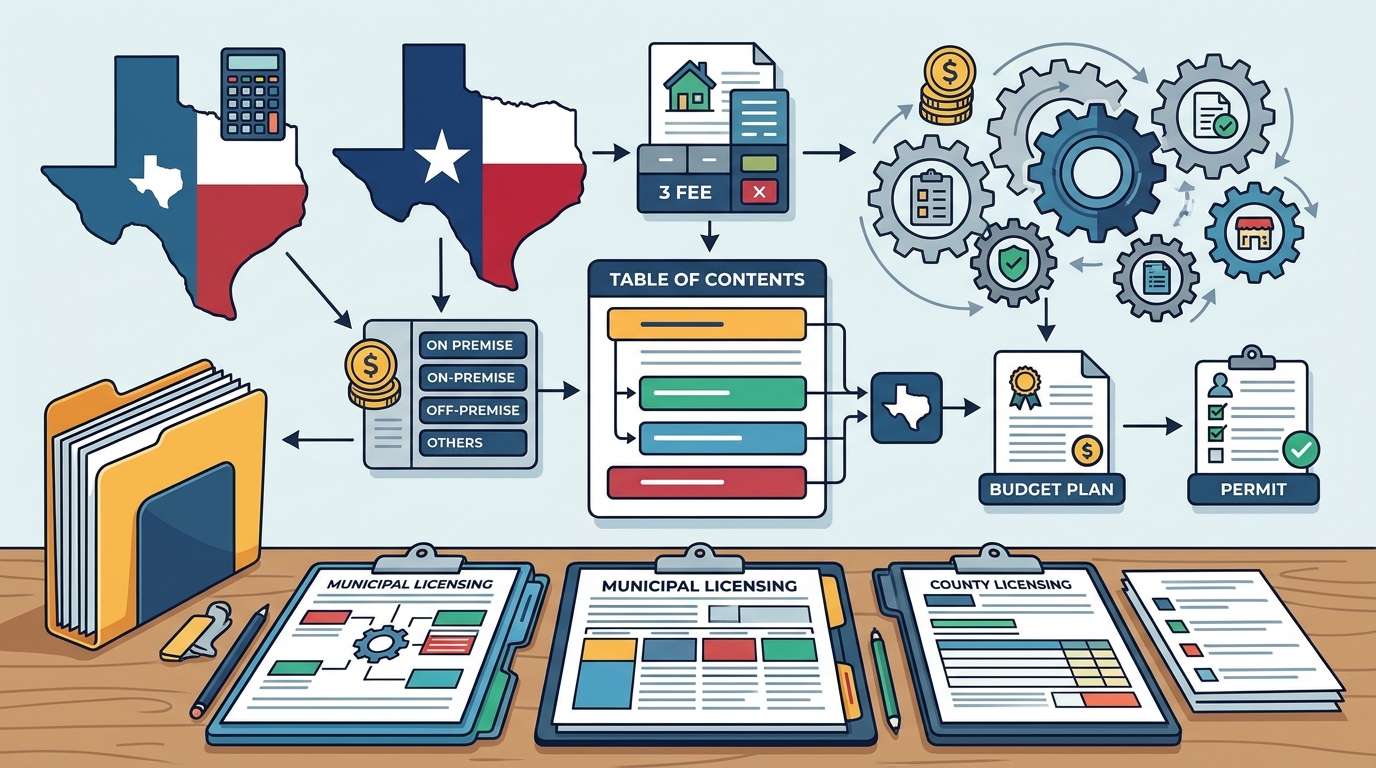
Base local fees differ by city and county, often exceeding state costs. Texas does not have a single uniform local fee schedule for alcohol permits. Each municipality and county sets its own rates, which can range from a few hundred to several thousand dollars depending on the specific jurisdiction. This variance means two identical businesses in neighboring cities may face vastly different local costs.
2. Permit Type Specifics
Local fees are tied to the specific TABC permit you hold. A Mixed Beverage permit typically carries a higher local fee than a Wine and Malt Beverage permit. Local governments often categorize fees by the level of alcohol service allowed, such as on-premise versus off-premise sales. You must identify the exact local fee schedule for your specific permit class to budget correctly.
3. Surety Bond Requirements
Local jurisdictions may require separate surety bonds in addition to state bonds. While the TABC requires a conduct surety bond, many local governments also mandate their own bonds for specific permits. These local bonds protect the municipality and can add several hundred to a few thousand dollars to your initial costs. Gerald Franklin Agency issues these bonds in-house to streamline the process.
4. Inspection and Administrative Costs
Local inspections and administrative processing add hidden costs. Cities and counties often charge fees for physical inspections of your premises to ensure compliance with local ordinances. These administrative costs are separate from the license fee itself and can vary based on the complexity of your establishment. Budgeting for these inspections prevents unexpected delays in your approval timeline.
5. Renewal Cycle Differences
Local renewal fees and cycles may differ from state requirements. While TABC permits renew every two years, some local jurisdictions have different renewal schedules or fee structures. You must track both state and local renewal dates to avoid lapses in your license. Missing a local renewal can result in fines or suspension of your alcohol sales privileges.
6. Special District and Zone Fees
Operating in special districts or zones may trigger additional local fees. Some Texas cities designate specific areas, such as entertainment districts or downtown zones, with unique fee structures. These zones may have higher fees due to increased regulatory oversight or infrastructure costs. Confirming your location's zoning status is essential for accurate cost estimation.
7. Late Filing and Penalty Fees
Local penalties for late filings can significantly increase total costs. Most Texas municipalities impose late fees or penalties if you fail to file or renew your local license on time. These penalties can double or triple the standard fee amount. Proactive management of your local filing deadlines is crucial to avoid these unnecessary expenses.
Choosing the Right Local Fee Strategy
Select your business location and permit type based on a comprehensive analysis of both state and local fee structures. Gerald Franklin Agency provides detailed fee breakdowns for your specific jurisdiction to ensure you are not caught off guard by local costs. We handle the local filing and fee payment process so you can focus on opening your business.
Frequently Asked Questions
Do all Texas cities charge the same local liquor license fee?
No, local fees vary by jurisdiction. Each city and county sets its own rates, so you must check the specific fee schedule for your location.
Are local fees separate from TABC state fees?
Yes, local fees are separate from state TABC fees. You must pay both to operate legally, and local fees can sometimes be higher than state fees.
Does Gerald Franklin Agency handle local fee payments?
Yes, we manage the local filing process, including fee payments and bond issuance, to ensure your application is complete and on time.
How often do local liquor licenses renew?
Renewal cycles vary by jurisdiction. Some align with the two-year TABC cycle, while others may have different schedules. We track all renewal dates for you.
Can I find local fee schedules online?
Some jurisdictions publish fee schedules online, but many do not. Gerald Franklin Agency has access to current local fee data for all Texas counties and cities.