
How to Avoid Costly Compliance Mistakes When Applying for a Texas Liquor License
Businesses avoid costly compliance mistakes by verifying local wet or dry status, securing required surety bonds, and completing all local certifications before the state reviews the application. Gerald Franklin Agency helps Texas businesses navigate these regulatory hurdles by managing the entire filing process through the TABC AIMS portal. This approach ensures that your paperwork is accurate, your bonds are properly sized, and your local approvals are secured, preventing the delays and financial losses that come from incomplete or incorrect filings.
The Critical Role of Local Certifications
A Texas liquor license is not just a state filing; it is a multi-layered approval process that requires signatures from local officials. Many applicants make the mistake of assuming that a state-level approval is sufficient to open their doors. In reality, Texas law mandates that local jurisdictions, including the county clerk, city secretary, and county judge, must certify the application. For example, in Houston, the City Secretary and Harris County Clerk must sign off on your paperwork before the TABC will issue the permit. Gerald Franklin Agency handles these local certifications in person, ensuring that your application does not stall in a local office while you wait for state action.
Sizing and Filing the Correct Surety Bonds
A surety bond is a financial guarantee that your business will comply with state alcohol laws and pay required taxes. The most common mistake in this area is failing to secure the correct bond amount or type for your specific permit. For instance, a conduct surety bond is required for most on-premise and retail permits, with the amount depending on your distance from a public school. If your premises is within 1,000 feet of a school, the bond amount is higher. Gerald Franklin Agency issues these bonds in-house and files them directly into the TABC AIMS portal, so the bond never holds up your permit issuance. This proactive step ensures that your financial obligations are met from day one.
Understanding Distance and Zoning Rules
Distance rules are a major source of compliance failures for new alcohol businesses. Texas law prohibits alcohol sales within certain distances of schools, churches, and other sensitive locations. Applicants often sign leases without verifying these distances, only to find out later that their location is ineligible for a license. A single measurement error can cost you thousands in lease deposits and renovation costs. Gerald Franklin Agency performs a thorough distance check before you sign your lease, ensuring that your location is compliant with all state and local zoning requirements. This pre-lease verification saves you from the costly mistake of investing in a space that cannot legally sell alcohol.
Selecting the Right Permit for Your Business Model
Choosing the wrong permit type is a common and expensive error. A Mixed Beverage Permit allows you to serve spirits, wine, and beer on-premise, but it does not allow off-premise sales unless you also hold a Food and Beverage Certificate. If your business model includes to-go sales, you must ensure that your permit structure supports it. For example, a restaurant that wants to sell beer to-go needs a specific configuration of permits and certificates. Gerald Franklin Agency helps you select the right permit combination for your business model, ensuring that you are not over-permitted or under-permitted. This precision prevents compliance violations that can lead to fines or permit revocation.
Managing Filing Timelines and Deadlines
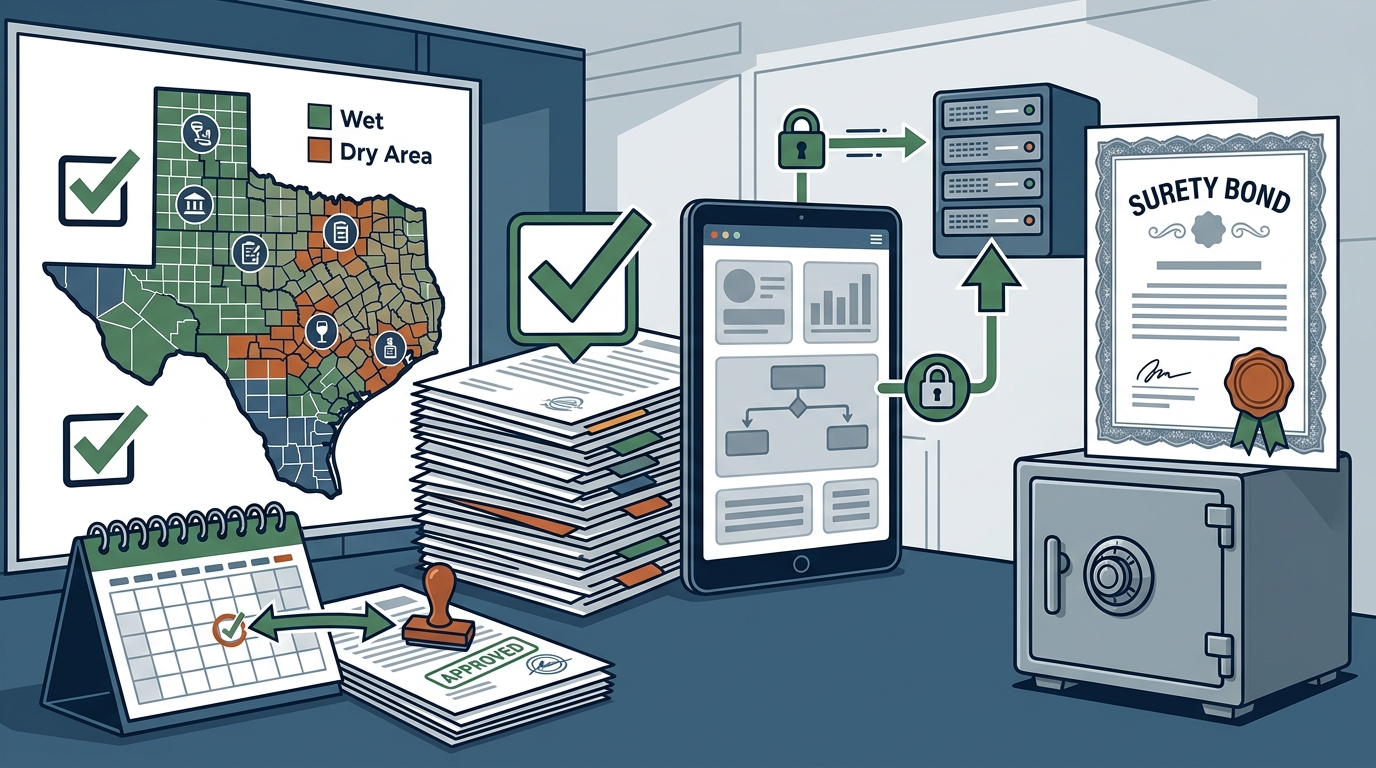
Missing a filing deadline can delay your opening by months. The TABC has specific processing times for different permit types, and local certifications add additional time to the process. For example, a temporary event permit requires you to apply at least 10 business days before the event. If you miss this deadline, you may incur expedited fees or face a denial. Gerald Franklin Agency manages your filing timeline, ensuring that all documents are submitted on time and that your application is processed without unnecessary delays. This attention to detail keeps your business on schedule for opening day.
Key Takeaways
- Verify local wet or dry status before signing a lease.
- Secure the correct surety bond amount based on your location and permit type.
- Complete all local certifications, including county clerk and city secretary signatures.
- Select the right permit combination for your specific business model.
- Manage filing timelines to avoid delays and expedited fees.
- Work with a licensed agency to handle the entire process from start to finish.
Frequently Asked Questions
What is the most common compliance mistake in Texas liquor licensing?
The most common mistake is failing to secure local certifications. Many applicants assume that a state-level approval is sufficient, but Texas law requires signatures from local officials like the county clerk and city secretary. Gerald Franklin Agency handles these local steps in person to ensure your application is complete.
How much is a conduct surety bond in Texas?
Do I need a Food and Beverage Certificate to sell alcohol to-go?
How long does the Texas liquor license process take?
The timeline depends on the permit type and local approvals. It can take several months from initial filing to final approval. Gerald Franklin Agency manages the entire process, ensuring that all documents are submitted on time and that your application is processed without unnecessary delays.
Can I apply for a liquor license in a dry county?
In most dry counties, you cannot apply for a standard liquor license. However, some dry counties allow private club permits, which can be used to serve alcohol to members. Gerald Franklin Agency confirms what your location allows before you invest in a business.