
How to Know If You Need a TABC Permit or a Liquor License
Whether you need a TABC permit or a liquor license depends on your business type, alcohol type, and local regulations. This guide covers local regulatory requirements, wet/dry rules, business classification, and alcohol types. It helps Texas business owners determine the correct licensing path for their specific operations.
Local Regulatory Requirements
Understanding local regulatory requirements is the first step in determining your licensing needs. Texas operates under a dual regulatory system where both state and local authorities have jurisdiction over alcohol sales. The Texas Alcoholic Beverage Commission (TABC) oversees state-level permits, while local governments enforce specific ordinances that can restrict or expand alcohol sales. A TABC permit is a state-issued authorization that allows a business to sell or serve alcohol, but it is not the only requirement. Local regulations often dictate whether a specific type of alcohol can be sold in a particular area.
State vs. Local Jurisdiction
The state sets the baseline rules for alcohol distribution and sales, but local governments can impose stricter controls. For example, a city might prohibit the sale of distilled spirits even if the state allows it. This means that a business must secure both the appropriate state permit and any necessary local certifications. The local regulatory framework includes zoning laws, distance requirements from schools and churches, and specific hours of operation. Ignoring these local rules can result in fines or the revocation of your state permit.
The Role of Local Certifications
Many TABC permits require local certifications from the county clerk or city secretary. These certifications confirm that the business complies with local ordinances. For instance, a Mixed Beverage Permit often requires a signature from the local authority. Gerald Franklin Agency handles these local certifications in person, ensuring that your application clears the local hurdles that often stall independent applicants. This dual-layer approach ensures that your business is fully compliant at both the state and local levels.
Local Wet/Dry Regulations
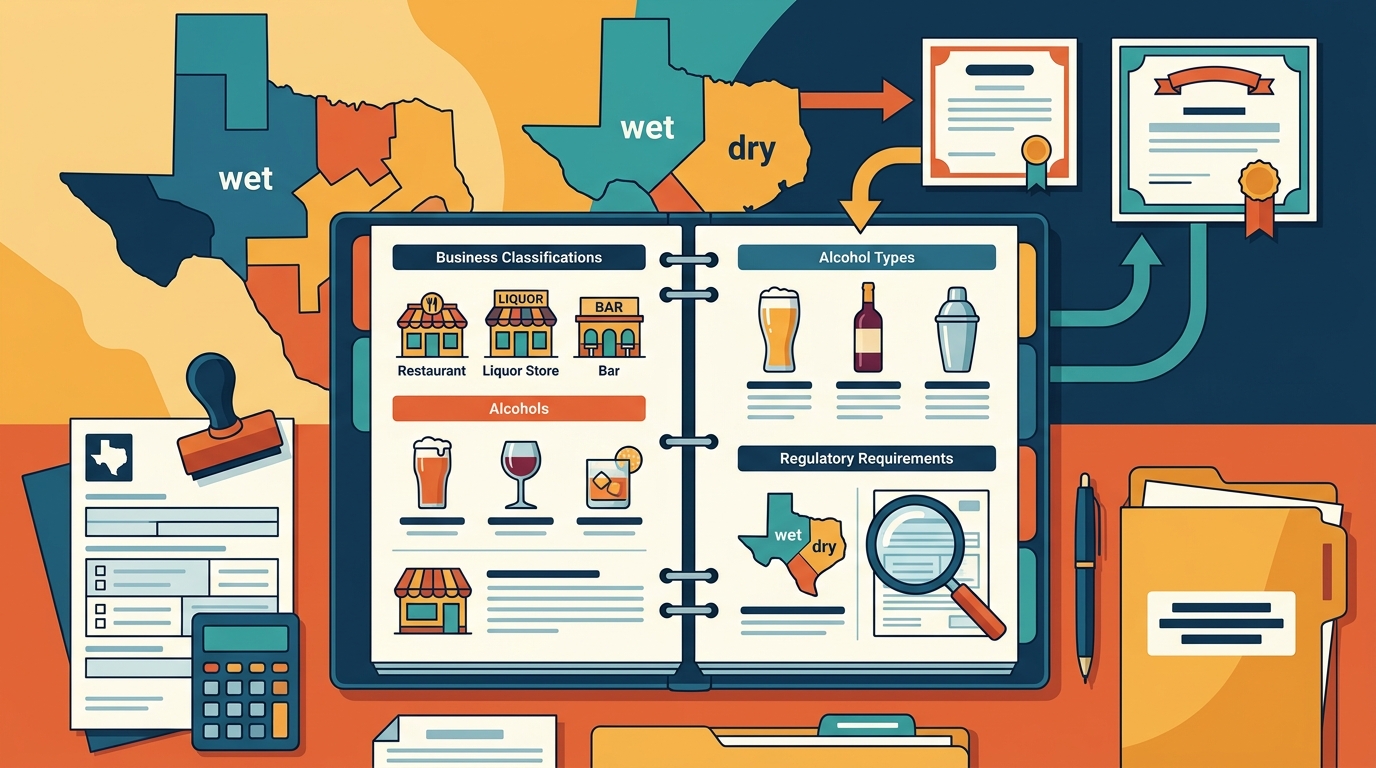
Local wet/dry regulations determine whether alcohol can be sold in a specific jurisdiction. Texas is divided into wet and dry areas based on local referendums. A wet area allows the sale of alcohol, while a dry area prohibits it. However, the distinction is more nuanced than a simple binary. Some areas are semi-dry, allowing certain types of alcohol but not others. Understanding the wet/dry status of your location is critical before you sign a lease or file an application.
Identifying Your Jurisdiction
To determine if your location is wet or dry, you must check the specific county and city ordinances. The TABC maintains a database of wet and dry areas, but local changes can occur through referendums. It is essential to verify the current status with the local clerk. If your location is in a dry area, you may still be able to operate a private club, which allows members to consume alcohol on the premises. This exception is a common strategy for businesses in dry jurisdictions.
Impact on Permit Types
The wet/dry status directly impacts which permits you can obtain. In a dry area, you cannot obtain a Package Store Permit or a standard Mixed Beverage Permit for retail sales. However, you might qualify for a Private Club Registration Permit. This permit allows a venue to serve alcohol to registered members, effectively bypassing the dry restriction. Gerald Franklin Agency helps clients navigate these complex local rules, ensuring that they choose the right permit structure for their specific location.
Business Type Determination
Business type determination is the core of the licensing process. The type of business you operate dictates which TABC permit you need. Texas categorizes businesses into several classes, each with specific requirements and fees. The most common business types include bars, restaurants, package stores, and private clubs. Each type has a corresponding permit that authorizes specific activities. Misclassifying your business can lead to application denial or compliance issues later.
On-Premise vs. Off-Premise
The first major distinction is between on-premise and off-premise sales. On-premise sales occur when customers consume alcohol at the location, such as in a bar or restaurant. Off-premise sales involve selling sealed containers for consumption elsewhere, such as in a liquor store. This distinction determines whether you need a Mixed Beverage Permit or a Package Store Permit. On-premise permits generally have higher fees and stricter requirements, including distance checks from schools and churches.
Specific Business Categories
Within the on-premise and off-premise categories, there are specific business types. For example, a restaurant with a full kitchen may qualify for a Food and Beverage Certificate, which can exempt them from certain bonds. A nightclub might need a Mixed Beverage Permit with a Late Hours Certificate. A convenience store selling beer and wine needs a Wine and Malt Beverage Retailer's Permit. Each category has unique requirements, such as employee age restrictions or signage mandates. Identifying your exact business type is the first step in selecting the correct permit.
Alcohol Type Requirements
Alcohol type requirements specify which beverages you are authorized to sell. Texas regulates alcohol based on its alcohol content and type. The three main categories are beer, wine, and distilled spirits. Each category requires a different permit or certificate. Understanding these requirements ensures that you can sell the products you intend to offer. Selling an unauthorized type of alcohol can result in severe penalties and permit revocation.
Beer and Wine Permits
Beer and wine permits are the most common for restaurants and bars. A Wine and Malt Beverage Retailer's Permit allows the sale of beer and wine, either on or off premise. This permit is suitable for cafes, wine shops, and restaurants that do not serve spirits. The fees for this permit are generally lower than for spirits permits. If you plan to serve only beer and wine, this is likely your primary permit. It offers a balance between product variety and regulatory simplicity.
Distilled Spirits Permits
Distilled spirits, or hard liquor, require a Mixed Beverage Permit for on-premise consumption or a Package Store Permit for off-premise sales. These permits are more expensive and come with stricter compliance requirements. For example, a Package Store must have all employees at least 21 years old and must be closed on Sundays. A Mixed Beverage Permit requires a conduct surety bond unless exempted by a Food and Beverage Certificate. If your business model includes serving cocktails or selling hard liquor, you must secure one of these permits.
Key Takeaways
- TABC permits are state-issued, but local regulations can restrict or expand your ability to sell alcohol.
- Wet/dry status is determined by local referendums and dictates which permits are available in your area.
- Business type, such as on-premise vs. off-premise, is the primary factor in selecting the correct permit.
- Alcohol type, including beer, wine, and spirits, determines the specific permit or certificate required.
- Local certifications from the county clerk or city secretary are often required for TABC permits.
- Private clubs can operate in dry areas by serving registered members, bypassing standard retail restrictions.
- Food and Beverage Certificates can exempt restaurants from conduct surety bonds.
- Consulting with a licensing expert ensures that your application aligns with both state and local requirements.
Frequently Asked Questions
What is the difference between a TABC permit and a liquor license?
In Texas, the terms are often used interchangeably, but a TABC permit is the specific state authorization. A liquor license is a general term for any permit that allows alcohol sales. The TABC issues permits for beer, wine, and spirits, each with specific rules.
Do I need a local permit if I have a TABC permit?
Yes, many TABC permits require local certifications. You must obtain signatures from the county clerk or city secretary to confirm compliance with local ordinances. This is a critical step in the application process.
Can I sell alcohol in a dry area?
Generally, no, but you can operate a private club. A Private Club Registration Permit allows you to serve alcohol to registered members in a dry area. This is a common workaround for businesses in dry jurisdictions.
What is a Food and Beverage Certificate?
A Food and Beverage Certificate is a TABC certification that verifies your business is food-first. It can exempt you from the conduct surety bond and allow alcohol to go sales. It is ideal for restaurants with full kitchens.
How long does it take to get a TABC permit?
Most applications take about 45 to 60 days, depending on TABC review, local certifications, and premises inspection. Starting early and ensuring all documents are correct can help expedite the process.
Do I need a bond for my permit?
Many permits require a conduct surety bond, which guarantees compliance with state laws. The amount depends on your location and business type. A Food and Beverage Certificate can exempt you from this bond.
Conclusion
Determining whether you need a TABC permit or a liquor license requires a clear understanding of local regulations, wet/dry status, business type, and alcohol types. Each factor plays a critical role in shaping your licensing strategy. By carefully evaluating these elements, you can select the correct permit and avoid costly compliance issues. Gerald Franklin Agency provides expert guidance to help you navigate this complex process. Our team of former TABC professionals ensures that your application is complete and compliant from the start. To begin your application, today.