
How to Know If You Need a TABC Permit or a Liquor License
Many Texas business owners confuse the terms "liquor license" and "TABC permit." In practice, the Texas Alcoholic Beverage Commission (TABC) issues specific permits, not a single universal license. The right classification depends on your business model, location, and how you intend to sell or serve alcohol. This guide explains the regulatory framework, local requirements, and specific permit classes to help you identify the correct authorization for your operation.
The Regulatory Framework: Permits vs. Licenses
Understanding the terminology is the first step in compliance. A TABC permit is a specific authorization issued by the state that allows a business to sell, serve, or store alcoholic beverages. While the public often uses the term "liquor license" generically, the state distinguishes between different classes of permits based on the type of alcohol and the method of sale. For example, a restaurant serving beer and wine holds a different permit than a bar serving mixed drinks or a store selling spirits to go.
The Texas Alcoholic Beverage Code governs these authorizations. It is critical to note that the TABC does not issue a single "liquor license" that covers all scenarios. Instead, businesses must apply for the specific permit class that matches their operational model. Using the wrong permit class can result in fines, operational shutdowns, or denial of the application. Gerald Franklin Agency helps businesses navigate this distinction by analyzing their business plan and matching it to the correct TABC classification.
Local Regulatory Requirements and Certifications
State approval is only half the battle. Texas law requires local certifications from county and city officials before the TABC will issue a permit. This local layer of regulation is where many applicants face delays. The specific requirements depend on where your business is located, as each county and city has its own rules regarding distance from schools, churches, and other sensitive locations.
County and City Signatures
For most on-premise and off-premise permits, you must obtain signatures from the county clerk and the city secretary. In some jurisdictions, the county judge must also approve the application. These local officials verify that your business complies with local zoning and distance rules. If a local official denies your application, the TABC cannot issue the permit, regardless of state approval.
Distance and Zoning Rules
Local ordinances often impose strict distance requirements. For instance, a package store may need to be a certain number of feet away from a school or church. These rules vary significantly between cities like Houston, Austin, and Dallas. Before signing a lease, it is essential to verify that the location meets all local distance requirements. Gerald Franklin Agency manages these local certifications, ensuring that your paperwork is filed with the correct county and city offices to avoid unnecessary delays.
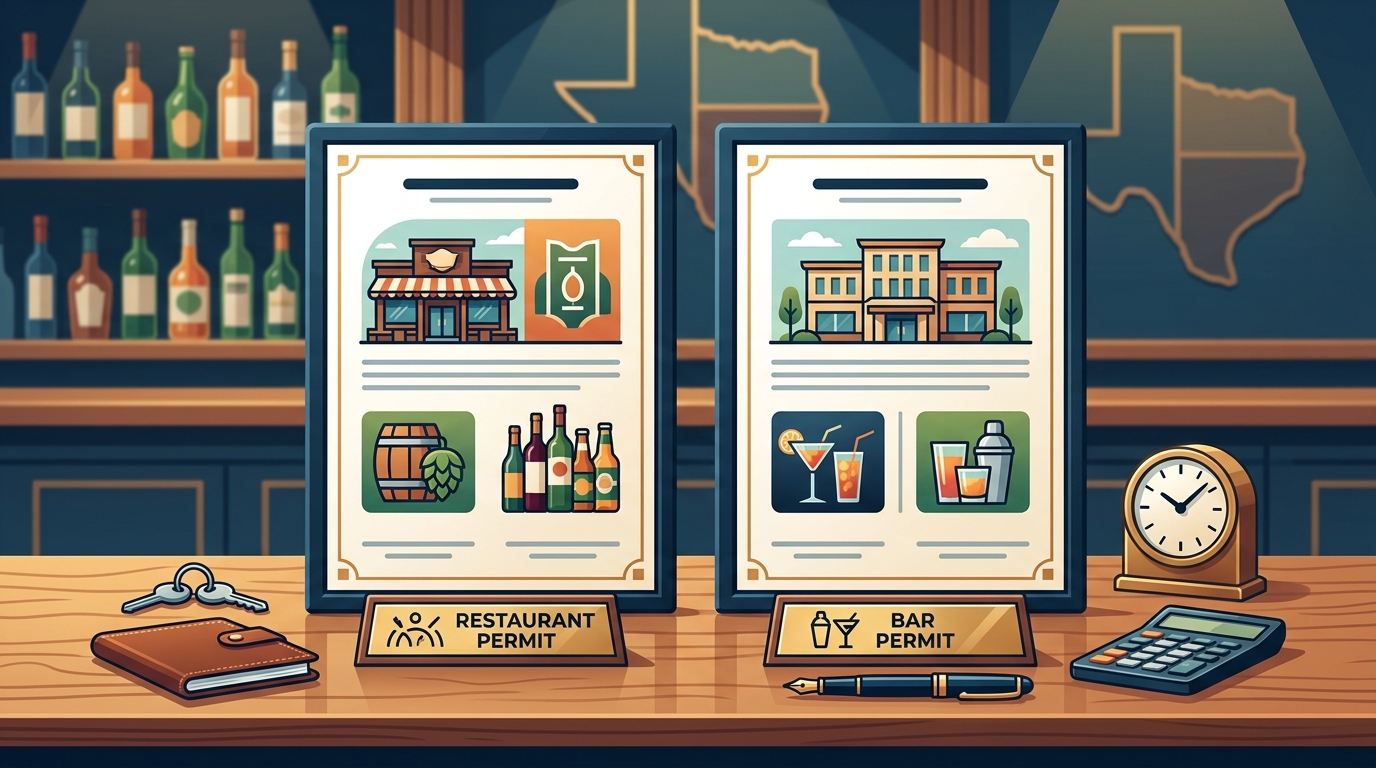
Identifying Your Permit Class
Once you understand the local requirements, you must select the correct permit class. The TABC offers several primary permit types, each with specific rules regarding hours of operation, types of alcohol, and consumption methods. Choosing the right class is a business decision that impacts your revenue and operational flexibility.
On-Premise Permits
On-premise permits allow customers to consume alcohol at your location. The most common on-premise permit is the Mixed Beverage Permit, which allows the sale of spirits, wine, and beer for on-site consumption. This is the standard permit for bars, nightclubs, and full-service restaurants. Another option is the Wine and Malt Beverage Retailer's Permit, which allows the sale of wine and beer but not spirits. This is often chosen by cafes and restaurants that do not want to carry a full spirits inventory.
Off-Premise Permits
Off-premise permits allow customers to purchase sealed containers of alcohol to take home. The Package Store Permit is the primary authorization for retail stores selling distilled spirits, wine, and beer. This permit comes with strict rules, including specific hours of operation and requirements for employee age. The Wine and Malt Beverage Off-Premise Permit is another option, allowing the sale of wine and beer in sealed containers but excluding spirits. This is common for convenience stores and grocery stores.
| Permit Class | Alcohol Types | Consumption | Typical Business |
|---|---|---|---|
| Mixed Beverage (MB) | Spirits, Wine, Beer | On-Premise | Bars, Restaurants, Clubs |
| Wine and Malt (BG) | Wine, Beer | On-Premise | Cafes, Restaurants |
| Package Store (P) | Spirits, Wine, Beer | Off-Premise | Liquor Stores |
| Wine and Malt Off-Premise (BQ) | Wine, Beer | Off-Premise | Convenience Stores, Grocers |
Surety Bonds and Financial Guarantees
These bonds are not insurance policies for the business owner. Instead, they are a form of collateral that the state can claim if the business fails to comply with TABC regulations. Gerald Franklin Agency issues these bonds in-house, ensuring that the bond is filed correctly with the TABC and does not hold up your permit issuance. Understanding the bond requirements is crucial for budgeting your startup costs, as the premium for the bond is an ongoing expense.
The Application and Approval Process
Once you have identified your permit class and secured your local certifications, you can submit your application to the TABC. The application process involves several steps, including background checks, fingerprinting, and a public hearing. The TABC reviews your application to ensure that all applicants meet the character and fitness requirements. This process can take several months, so it is important to start early.
After the TABC approves your application, you must pay the required fees and post your surety bond. The TABC will then issue your permit, allowing you to begin selling or serving alcohol. It is important to note that the permit is specific to the location and the business entity. If you move your business or change ownership, you may need to apply for a new permit or a transfer. Gerald Franklin Agency manages the entire application process, from initial filing to final issuance, ensuring that your business opens on time.
Key Takeaways
- There is no single "liquor license" in Texas; you must apply for a specific TABC permit class that matches your business model.
- Local certifications from the county clerk and city secretary are mandatory and can delay your application if not handled correctly.
- Distance rules from schools and churches vary by city and county, so verify your location before signing a lease.
- The Mixed Beverage Permit is the standard for bars and restaurants serving spirits, while the Wine and Malt Permit is for beer and wine only.
- Package Stores are the primary off-premise permit for selling spirits, with strict hours and employee age requirements.
- Most permits require a Conduct Surety Bond, which is a financial guarantee to the state, not insurance for the business.
- The application process involves background checks and public hearings, so start early to avoid delays.
- Working with a specialized agency like Gerald Franklin Agency can help navigate the complex local and state requirements.
Frequently Asked Questions
What is the difference between a TABC permit and a liquor license?
In Texas, the terms are often used interchangeably by the public, but the TABC issues specific permits, not a single license. The "permit" is the official state authorization, while "liquor license" is a colloquial term. You must identify the correct permit class (e.g., Mixed Beverage, Package Store) based on your business operations.
Do I need a local certification for my TABC permit?
Yes. Texas law requires local certifications from the county clerk and city secretary for most alcohol permits. These officials verify that your business complies with local zoning and distance rules. Without these signatures, the TABC will not issue your permit.
How far must my business be from a school?
Distance requirements vary by city and county. Some jurisdictions require a minimum distance of 1,000 feet from a school, while others may have different rules. It is essential to check the specific ordinances for your location before signing a lease. Gerald Franklin Agency can help verify these distances for you.
What is a Conduct Surety Bond?
Can I sell alcohol to go with a Mixed Beverage Permit?
Generally, no. A Mixed Beverage Permit allows for on-premise consumption only. To sell alcohol to go, you typically need a Food and Beverage Certificate or a specific off-premise permit, depending on your business type and local rules.
How long does the TABC application process take?
The timeline varies depending on the permit class and local jurisdiction. It can take several months due to background checks, public hearings, and local certification delays. Starting the process early is recommended to ensure you open on time.
Do I need a permit if I only serve beer and wine?
Yes. If you serve beer and wine on-premise, you need a Wine and Malt Beverage Retailer's Permit. If you sell them to go, you need a Wine and Malt Beverage Off-Premise Permit. You do not need a Mixed Beverage Permit if you do not serve spirits.
Can I use a permit from another state in Texas?
No. Alcohol licensing is state-specific. A permit from another state does not authorize you to sell or serve alcohol in Texas. You must apply for a TABC permit for your Texas location.
Conclusion
Navigating the Texas alcohol licensing landscape requires a clear understanding of the specific permit classes, local regulations, and financial guarantees involved. By identifying the correct TABC permit for your business model and ensuring compliance with local distance and zoning rules, you can avoid costly delays and operational issues. Gerald Franklin Agency, with its team of former TABC professionals, provides the expertise needed to guide your business through this complex process. To start your application or learn more about the specific permits available for your location, today.