
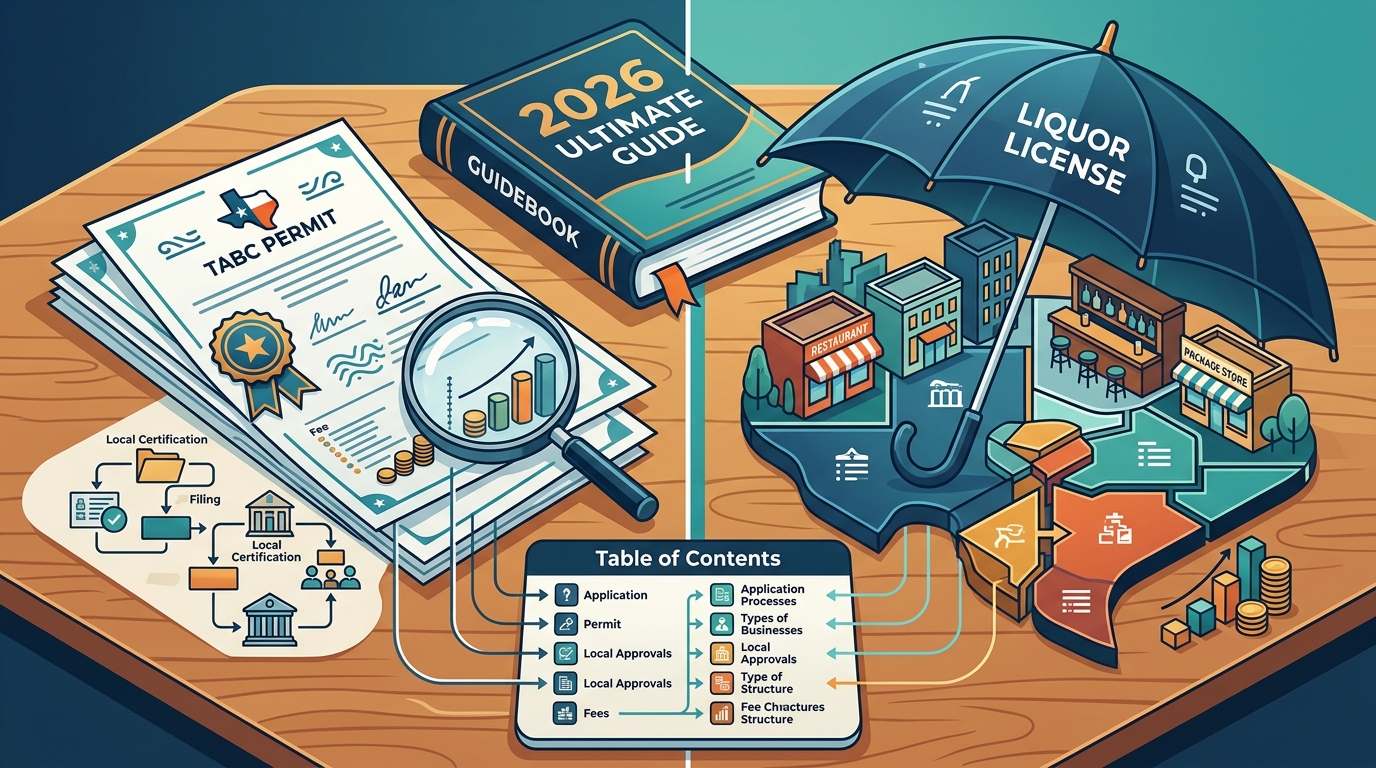
Many Texas business owners confuse the terms, but a TABC permit is a specific state authorization, while a liquor license is a broad legal umbrella. This guide clarifies the exact differences, fees, and filing steps. We cover the 2026 state fees, local certification requirements, and how to choose the right permit for your specific venue.
How to Choose the Right Permit
Choosing the correct permit depends entirely on how your customers consume the product. A TABC permit is a specific state-issued document that authorizes a particular type of alcohol sale or service. A liquor license is a general term often used by the public to describe any legal authorization to handle alcohol. The distinction matters because the wrong permit can shut down your business or trigger massive fines.
On Premise vs. Off Premise
If you serve drinks in a bar or restaurant, you need an on premise permit. If you sell sealed bottles to take home, you need an off premise permit. The Mixed Beverage Permit is the standard for full service bars. The Package Store Permit is for traditional liquor stores. Do not guess. The wrong classification is the most expensive error in Texas alcohol law.
Revenue and Food Service
Your menu matters. If food sales make up a large portion of your revenue, you may qualify for a Food and Beverage Certificate. This certificate can exempt you from the conduct surety bond and allow you to sell alcohol to go. It is a critical strategic choice that affects your bottom line and operational flexibility.
What to Ask Before Committing
Before you sign a lease or file an application, you must ask specific questions about the location and the permit class. These questions determine if your business model is legally viable in that specific zip code.
Location and Zoning
Ask if the location is in a dry or wet area. Ask about the distance to the nearest school or church. Texas law has strict distance requirements. If you are too close to a protected location, you may need a higher bond amount or may be denied entirely. Always verify the exact property line to property line distance.
Permit Availability
Ask if the specific permit class is available in that city. Some cities have caps on the number of permits they will issue. If the city is saturated, you may have to wait for a permit to become available. This can take months or years. Knowing this upfront saves you from signing a lease for a location you cannot legally operate.
How to Verify Credentials and Claims
When hiring an agency or checking a permit, you must verify the details. Do not trust verbal assurances. The TABC maintains a public database of all active permits. You can search for a business by name or address to see their exact permit class, expiration date, and bond status.
Checking the AIMS Portal
The TABC uses the AIMS portal for all filings. A legitimate permit will be visible in the state system. If an agency claims to have filed your permit but it does not appear in the public database, something is wrong. Always cross-reference the permit number with the state records. This is the only way to ensure your license is real and active.
Verifying Agency Expertise
When choosing a licensing partner, look for former state professionals. Gerald Franklin Agency is staffed by former TABC professionals who know the internal review process. This experience matters because they know how the state evaluates applications. They can anticipate issues before they become denials.
How the Filing Process Works
The process is a multi-step workflow involving both state and local authorities. It is not a single form. It is a sequence of approvals that must happen in the correct order. Understanding this sequence helps you manage your timeline and expectations.
The Six Step Workflow
First, you gather documents and complete the TABC application. Second, you file with the local county clerk and city. Third, the TABC reviews the application and schedules an interview. Fourth, the county judge approves the application. Fifth, you complete tax assessor payments. Sixth, the TABC issues the final permit. Each step has a specific deadline. Missing one step stalls the entire process.
Local Certifications
Many applicants forget the local step. A state permit is useless without local certification. In Houston, this involves the City Secretary and Harris County Clerk. In Austin, it involves the Travis County Clerk and City of Austin. Gerald Franklin Agency handles these local certifications in person, ensuring your paperwork reaches the right desks. This local advantage is critical for speed.
What It Costs in 2026
Costs are driven by the permit class, the location, and the required bonds. The state fee is just one part of the total cost. You must budget for local fees, bonds, and professional services. Here is a breakdown of the 2026 state fees for common permits.
| Permit Type | Code | Best For | 2026 State Fee |
|---|---|---|---|
| Wine and Malt Beverage | BG | Bars, cafes, wine shops | $1,900 for two years |
| Package Store | P | Liquor stores, off premise spirits | $1,800 for two years |
| Private Club | N | Venues in dry or restricted areas | $2,401 and up |
| Mixed Beverage | MB | Full bars and restaurants | $5,300 and up |
Common Mistakes to Avoid
Most permit denials are caused by avoidable errors. These mistakes waste time and money. They can also damage your reputation with local officials. Here are the most common pitfalls.
Ignoring Distance Rules
Applicants often sign a lease without checking the distance to a school or church. If the location is too close, the application will be denied or require a higher bond. Always measure from property line to property line. Do not rely on a map estimate. Use a professional surveyor if you are close to the limit.
Missing Local Deadlines
The state and local processes run in parallel, but they have different deadlines. If you miss a local certification deadline, the state will not issue the permit. You must track both timelines. This is where professional expediting adds value. Gerald Franklin Agency tracks every deadline for you, ensuring nothing falls through the cracks.
Permits Versus Alternative Structures
Sometimes a standard permit is not the right fit. There are alternative structures that may better suit your business model. Understanding these alternatives can save you from over permitting or under permitting.
Private Club Registration
If you are in a dry area, a standard permit may be impossible. A Private Club Registration allows you to serve alcohol to members and their guests. This is a different legal structure with different rules. It is not a substitute for a standard permit, but it is a viable alternative in restricted areas.
Temporary Event Permits
If you are not opening a permanent venue, you may need a Temporary Event Permit. This allows you to sell alcohol at festivals, galas, or sporting events. It is a short term authorization, not a permanent license. Do not use a temporary permit for a permanent business. It is illegal and will result in fines.
Situations That Change the Answer
Some business models require a combination of permits. A single permit may not cover all your operations. You need to map out every way you will sell or serve alcohol.
Restaurants with Late Night Service
If you want to serve alcohol past midnight, you need a Late Hours Certificate. This is a subordinate certificate that attaches to your primary permit. It extends your service hours to 2:00 AM. Not all cities allow late hours. You must check your local ordinance before applying. This certificate is essential for entertainment districts and nightclubs.
Multi Location Operators
If you are opening multiple locations, each one needs its own permit. You cannot transfer a permit from one location to another. Each site requires a new application, new local certifications, and new bonds. Gerald Franklin Agency manages multi location licensing as one coordinated program. This ensures your openings stay on schedule as you scale.
Rules and Legal Protections
Permits come with strict rules and legal protections. You must understand both to operate safely. The rules protect the public. The protections shield you from liability if you follow them.
Dram Shop Liability
Dram shop law holds businesses liable when they serve an obviously intoxicated patron who causes harm. This is a major legal risk. To protect yourself, you must train your staff and document your practices. Gerald Franklin Agency provides compliance guidance and expert witness support. They help you build a defensible operation that lowers your liability exposure.
Safe Harbor Defense
If you follow TABC rules and train your staff, you may qualify for the Safe Harbor defense. This defense can limit your liability in dram shop cases. It is not an absolute shield, but it is a powerful legal tool. To qualify, you must maintain current certifications and follow all state regulations. This is why compliance is not optional. It is your primary legal protection.
Local Specifics Across Texas
Alcohol licensing is not uniform across Texas. Each city and county has its own rules. What works in Houston may not work in Austin. You must understand the local specifics for your exact location.
Houston and Harris County
Houston has specific local fees and certification requirements. The City Secretary and Harris County Clerk must sign your application. Gerald Franklin Agency is based in Houston and handles these local steps in person. This local presence is a significant advantage. They know the local officials and the specific requirements for each neighborhood.
Austin and Travis County
Austin has its own set of rules and local fees. The Travis County Clerk and City of Austin must approve your application. The process is similar to Houston, but the specific forms and deadlines are different. Gerald Franklin Agency has a dedicated team for Austin and Travis County. They manage the local certifications so you do not have to navigate the bureaucracy yourself.
Timing and Deadlines
Timing is critical in alcohol licensing. You must start the process well before you plan to open. The state and local processes take time. You cannot rush them. Here is what you need to know about timing.
Application Lead Time
For a new permit, you should start the process at least 90 to 120 days before your planned opening date. This allows time for the state review, local certifications, and any required hearings. If you are behind on your timeline, you may need to delay your opening. It is better to delay than to open without a permit. Operating without a permit is a criminal offense.
Renewal Deadlines
Permits expire every two years. You must renew them before they expire. If you miss the renewal deadline, your permit lapses. You cannot sell alcohol while your permit is lapsed. You must reapply as if you were a new applicant. This is a costly and time consuming process. Gerald Franklin Agency tracks your renewal dates and handles the process for you. They ensure your permit stays current without any gaps in coverage.
Long Term Results and Compliance
Getting the permit is only the beginning. Long term success depends on consistent compliance. You must maintain your bonds, renew your permits, and follow all state rules. This is an ongoing responsibility, not a one time task.
Bond Maintenance
You must maintain your conduct surety bond for the first three years of operation. After three years, if you have a clean record, you may qualify for release. This means you no longer need the bond. This is a significant cost saving. To qualify for release, you must have no violations or claims against your bond. This is why compliance is so important. It directly impacts your long term costs.
Continuous Compliance
Compliance is not a one time event. It is a continuous process. You must stay current with all state regulations. Rules change. Fees change. Requirements change. Gerald Franklin Agency monitors these changes and keeps you informed. They ensure your business stays compliant as the rules evolve. This proactive approach protects your investment and your reputation.
Key Takeaways
- A TABC permit is a specific state authorization, while a liquor license is a general term.
- The right permit depends on whether you serve on premise or sell off premise.
- Local certifications are mandatory and vary by city and county.
- 2026 state fees range from $1,800 to $5,300 depending on the permit class.
- Distance to schools and churches is a critical factor in permit approval.
- Renewals are due every two years and must be handled before expiration.
- Professional expediting can save time and prevent costly errors.
Frequently Asked Questions
What is the difference between a TABC permit and a liquor license?
A TABC permit is a specific state-issued document that authorizes a particular type of alcohol sale or service. A liquor license is a general term often used by the public to describe any legal authorization to handle alcohol. The TABC permit is the actual legal document you need to operate.
How much does a Mixed Beverage Permit cost in 2026?
The 2026 state fee for a Mixed Beverage Permit is $5,300 and up for a two year term. This is the state portion only. Local fees and the conduct surety bond are additional. The total cost depends on your location and bond amount.
Do I need a conduct surety bond?
How long does the permit process take?
The process typically takes 90 to 120 days. This includes the state review, local certifications, and any required hearings. The exact timeline depends on your location and the complexity of your application.
Can I sell alcohol to go with a Mixed Beverage Permit?
No, a Mixed Beverage Permit only allows on premise consumption. To sell alcohol to go, you need a Food and Beverage Certificate. This certificate verifies that your primary focus is food service, not alcohol.
What happens if I miss my renewal deadline?
If you miss your renewal deadline, your permit lapses. You cannot sell alcohol while your permit is lapsed. You must reapply as if you were a new applicant. This is a costly and time consuming process that can delay your operations.
Do I need a local certification?
Yes, a state permit is useless without local certification. You must obtain signatures from your county clerk and city. The specific requirements vary by location. Gerald Franklin Agency handles these local steps for you.
Can I use a temporary permit for a permanent business?
No, a temporary permit is for one time or short run events. It is not a substitute for a permanent license. Using a temporary permit for a permanent business is illegal and will result in fines and potential criminal charges.