
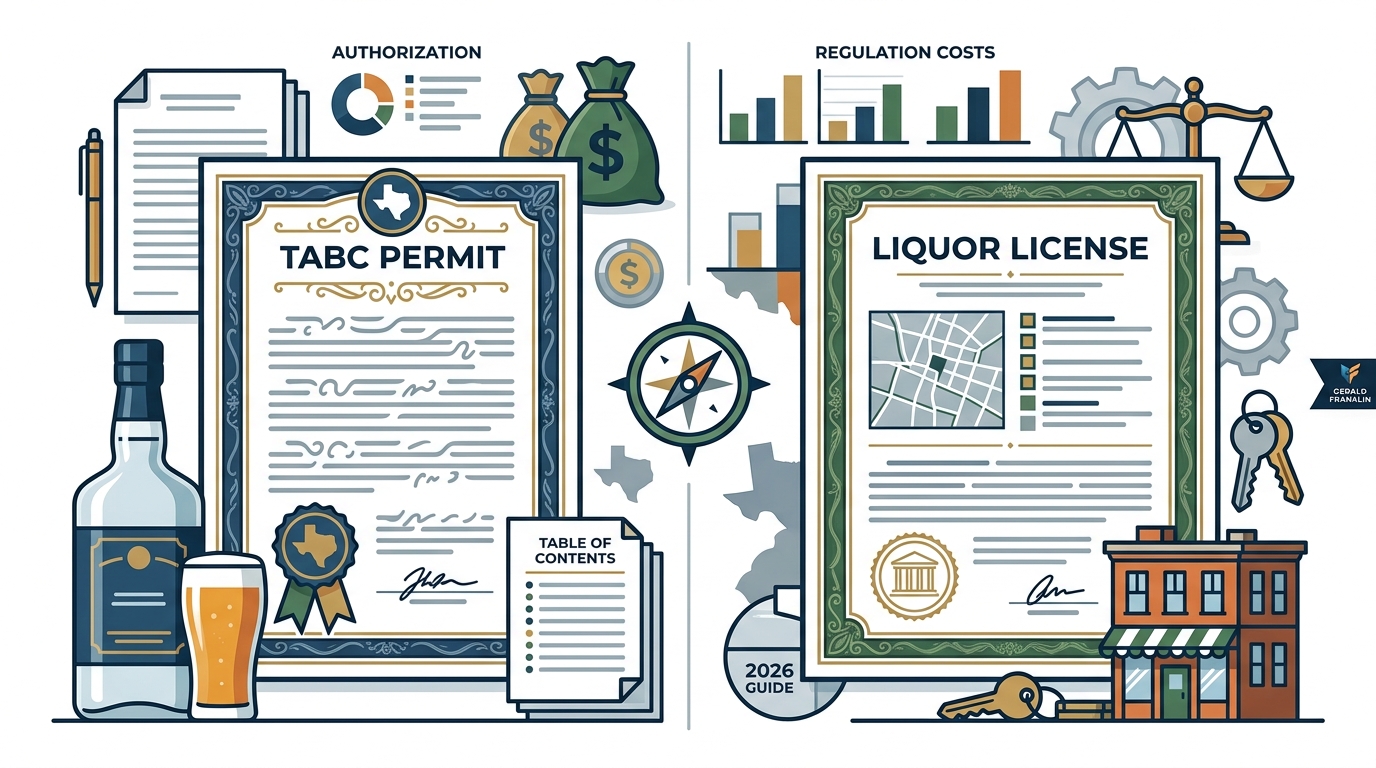
Many Texas business owners confuse TABC permits with liquor licenses, but they are distinct legal instruments. A TABC permit is a specific state authorization to sell or serve alcohol, while a liquor license is a broader, often local, regulatory approval. This guide clarifies the differences, explains the application process, and details the costs involved for 2026.
How to Choose the Right Permit
Choosing the correct permit depends on your business model and location. A TABC permit is a state-level authorization issued by the Texas Alcoholic Beverage Commission. It dictates what you can sell and how. For example, a Mixed Beverage Permit allows on-premise consumption of spirits, while a Package Store Permit allows off-premise sales of sealed containers. The choice is not arbitrary; it is driven by your revenue model and physical space.
On-Premise vs. Off-Premise
If you plan to serve drinks to customers in your establishment, you need an on-premise permit like the Mixed Beverage or Wine and Malt Beverage Retailer's Permit. If you plan to sell sealed bottles for customers to take home, you need an off-premise permit like the Package Store or Wine and Malt Beverage Off-Premise Permit. Mixing these up is a critical error that can lead to application denial.
Location Constraints
Your physical location dictates which permits are available. Proximity to schools, churches, and other licensed establishments affects eligibility. A location in a dry county may only qualify for a Private Club Registration Permit, which allows serving alcohol to members and their guests. Understanding these constraints is the first step in choosing the right permit.
What to Ask Before Committing
Before signing a lease or filing an application, you must ask specific questions about the property and the local jurisdiction. The most critical question is whether the location is in a wet or dry area. Wet areas allow alcohol sales, while dry areas do not. You must also ask about the distance to the nearest prohibited establishment, such as a school or church. Texas law sets specific distance requirements that can disqualify a location.
Lease and Zoning Questions
Ask your landlord if the property has ever held a liquor license. Previous violations or expired permits can complicate your application. You should also verify the zoning classification of the property. Some zones prohibit alcohol sales entirely, regardless of state permits. These questions save you from costly lease commitments that cannot be monetized with alcohol sales.
How to Verify Credentials
Verifying the status of a permit or the credentials of a professional is essential for due diligence. You can check the status of any TABC permit through the TABC's online database. This database provides public information on active permits, including the holder, location, and expiration date. For professionals, verify their experience with the TABC. Agencies like Gerald Franklin Agency employ former TABC professionals who understand the regulatory nuances.
Checking Permit Status
When buying a business, verify that the liquor permit is active and in good standing. A lapsed permit or one with unresolved violations can be a major liability. Use the TABC's public records to confirm the permit's status. This step ensures you are not inheriting compliance issues that could jeopardize your operations.
How the Process Works
The TABC permit application process is a multi-step procedure that involves both state and local authorities. It begins with a pre-application review, where you confirm your eligibility and location. Next, you file the application through the TABC's AIMS portal. The application then goes to your local county clerk and city secretary for certification. Finally, the county judge reviews and approves the application. This process ensures that local communities have a say in alcohol sales within their jurisdiction.
The Six-Step Process
1. Documents and application: Gather your documents and complete the TABC application. 2. Local filing: File with the county clerk, city, and Texas Comptroller. 3. TABC review: The TABC reviews the application and schedules an interview. 4. County judge approval: The judge reviews and approves the application. 5. Tax assessor payments: Complete the required tax payments. 6. Final processing: The TABC issues the permit. This structured approach ensures all regulatory requirements are met.
What It Costs
Fee Breakdown
State fees cover the TABC's administrative costs. Local fees cover the costs of the county and city review process. The conduct surety bond is a financial guarantee that you will comply with state alcohol laws. If you hold a Food and Beverage Certificate, you may be exempt from the conduct bond. This exemption can save you significant money. Understanding these costs helps you budget accurately for your startup or expansion.
Common Mistakes to Avoid
Many applicants make critical errors that delay or deny their permits. The most common mistake is failing to check the distance to prohibited establishments. Another frequent error is submitting incomplete applications. The TABC requires specific documentation, including background checks for all owners with a 20 percent or greater interest. Missing these documents can result in a denial. Finally, ignoring local ordinances can lead to rejection by the county judge.
Documentation Errors
Ensure all background checks are current and accurate. Any discrepancies in your criminal history or financial records can raise red flags. The TABC conducts thorough reviews, and any inconsistencies can lead to a denial. Working with an experienced agency can help you avoid these pitfalls. They know exactly what the TABC expects and can ensure your application is complete and accurate.
Permits vs. Local Licenses
A TABC permit is a state-level authorization, while a local license is a city or county approval. Both are required to operate legally. The TABC permit grants you the right to sell or serve alcohol under state law. The local license ensures that your business complies with local zoning and safety regulations. Without both, you cannot operate. This dual requirement is a key difference between TABC permits and other business licenses.
The Dual Requirement
Think of the TABC permit as your state-level permission slip and the local license as your neighborhood approval. Both are necessary. The TABC permit is valid statewide, but the local license is specific to your city or county. This means that if you move your business to a different city, you may need a new local license, even if your TABC permit remains valid. Understanding this distinction is crucial for multi-location operators.
Specific Business Scenarios
Different business types require different permits. A full-service restaurant serving spirits needs a Mixed Beverage Permit. A convenience store selling beer and wine to go needs a Wine and Malt Beverage Off-Premise Permit. A nightclub serving mixed drinks needs a Mixed Beverage Permit with a Late Hours Certificate. Each scenario has specific requirements and fees. Choosing the right permit for your specific business model is essential for compliance and profitability.
Restaurant vs. Bar
Restaurants often qualify for a Food and Beverage Certificate, which can exempt them from the conduct bond. Bars, which derive more than 60 percent of their revenue from alcohol, typically need the conduct bond. This distinction affects your costs and compliance obligations. Understanding these differences helps you choose the right permit structure for your business.
Rules and Protections
TABC permits come with specific rules and protections. The most important protection is the Safe Harbor defense, which protects businesses that train their staff and follow safe service practices. This defense can limit liability in dram shop cases. The rules include strict hours of operation, age verification requirements, and signage mandates. Compliance with these rules is mandatory. Violations can result in fines, permit suspension, or revocation.
Safe Harbor Defense
The Safe Harbor defense is a critical protection for alcohol sellers. It requires businesses to train their employees on responsible service and to document their training. This defense can significantly reduce liability in cases where an intoxicated patron causes harm. Implementing a robust training program is not just a legal requirement; it is a business protection strategy.
Local Specifics in Texas
Local specifics vary by city and county. In Houston, for example, the City Secretary and Harris County Clerk must certify your application. In Austin, the Travis County Clerk and City of Austin handle the local steps. These local certifications are a critical part of the process. They ensure that your business meets local safety and zoning standards. Understanding the specific requirements of your local jurisdiction is essential for a smooth application process.
City-Specific Requirements
Some cities have additional requirements, such as dance hall licenses or special event permits. Houston, for instance, requires a dance hall license for any venue with a dance floor. These local rules can add complexity to your application. Working with a local expert who knows the specific requirements of your city can save you time and money. They can navigate the local bureaucracy and ensure your application meets all local standards.
Timing Your Application
Timing is critical in the TABC permit process. The process can take several months, depending on the complexity of your application and the local review process. It is best to start the process as early as possible, ideally before you sign a lease. This allows you to verify that the location is eligible for a permit. If you wait until after you sign a lease, you may find that the location is not eligible, leaving you with a costly lease and no permit. Starting early gives you time to address any issues that arise during the review process.
Lead Times
Temporary event permits require at least 10 business days of lead time. Permanent permits can take longer. The TABC reviews applications in the order they are received, so early filing can give you an advantage. Additionally, local reviews can be delayed if the county judge's docket is busy. Planning for these delays is essential for meeting your opening date.
Long-Term Results
Long-term results depend on your compliance and business performance. A valid TABC permit allows you to operate legally and generate revenue from alcohol sales. Over time, a clean compliance record can qualify you for bond release after three years. This can save you money on bond premiums. Additionally, a strong compliance record can enhance your business's reputation and make it easier to expand or sell. Long-term success requires ongoing compliance and attention to detail.
Compliance and Growth
Maintaining a clean compliance record is essential for long-term success. It protects you from liability and ensures that your permit remains active. It also positions your business for growth, whether that means expanding to new locations or adding new product lines. A strong compliance foundation is a key asset in the alcohol industry.
Key Takeaways
- A TABC permit is a state-level authorization, while a local license is a city or county approval.
- Choosing the right permit depends on your business model and location.
- State fees vary by permit type, with Mixed Beverage Permits costing $5,300 for two years.
- The conduct surety bond is required for most on-premise permits unless exempted by a Food and Beverage Certificate.
- Local certifications are a critical part of the application process and vary by city and county.
- The Safe Harbor defense protects businesses that train their staff and follow safe service practices.
- Timing is critical; start the application process early to avoid delays.
- Long-term success requires ongoing compliance and a clean record.
Frequently Asked Questions
What is the difference between a TABC permit and a liquor license?
A TABC permit is a state-level authorization issued by the Texas Alcoholic Beverage Commission. A liquor license is a broader term that often refers to local approvals. Both are required to operate legally in Texas.
How long does the TABC permit process take?
The process can take several months, depending on the complexity of your application and the local review process. It is best to start early to avoid delays.
Do I need a conduct surety bond?
What is the Safe Harbor defense?
The Safe Harbor defense is a legal protection for businesses that train their staff and follow safe service practices. It can limit liability in dram shop cases.
Can I operate without a local license?
No. You need both a TABC permit and a local license to operate legally. The local license ensures that your business complies with local zoning and safety regulations.
How do I verify the status of a TABC permit?
You can check the status of any TABC permit through the TABC's online database. This database provides public information on active permits, including the holder, location, and expiration date.