
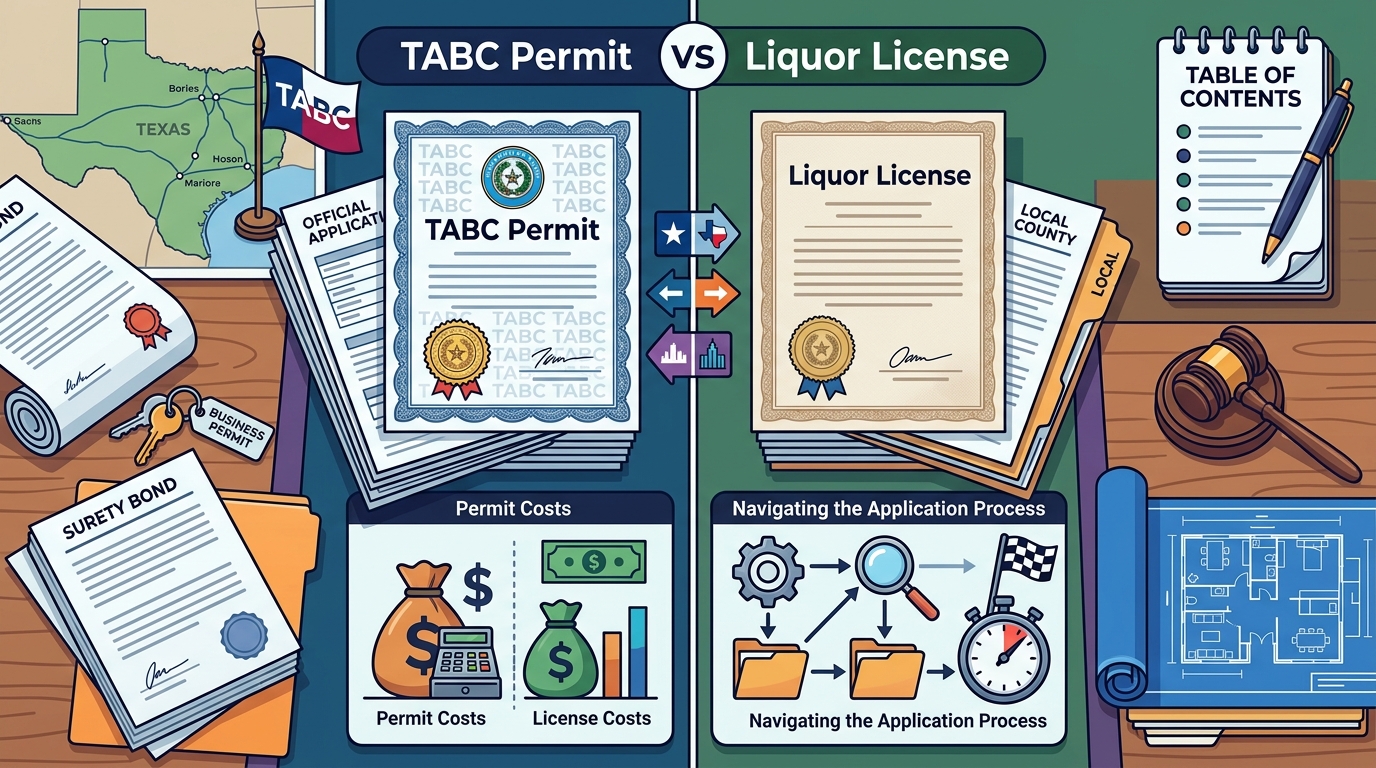
In Texas, a TABC permit is a specific state authorization to sell or serve alcohol, while a liquor license is a broader, often colloquial term for the same regulatory approval. The Texas Alcoholic Beverage Commission (TABC) issues these permits, which are legally distinct from local city or county approvals. This guide explains the exact differences, the costs involved, and how to navigate the application process to open your business on time.
How to Choose the Right Permit
Choosing the correct permit class is the most critical step in your application. A TABC permit is a legal document that authorizes specific alcohol activities, such as on-premise consumption or off-premise retail. The wrong choice can lead to rejected applications or costly compliance violations. You must match the permit to your business model and location.
On-Premise vs. Off-Premise
On-premise permits, like the Mixed Beverage Permit, allow customers to drink at your location. Off-premise permits, like the Package Store Permit, allow customers to take sealed containers home. The distinction dictates your physical layout, staffing requirements, and tax obligations.
Business Model Alignment
Your menu and service style determine the permit. A restaurant serving wine and beer needs a Wine and Malt Beverage Retailer's Permit. A bar serving cocktails needs a Mixed Beverage Permit. Aligning the permit with your actual operations prevents legal friction.
What to Ask Before Committing
Before signing a lease or filing an application, you must ask specific questions about the location and the regulatory environment. These questions determine if your business can legally operate at that address.
Location and Zoning
Ask if the location is in a wet or dry area. Dry areas prohibit alcohol sales entirely. Wet areas allow them, but local ordinances may restrict hours or types of alcohol. Verify the distance to schools, churches, and other licensed establishments.
Ownership and Background
Ask about the background of all owners with a 10% or greater interest. The TABC requires criminal history reports and financial disclosures. Any undisclosed issues can delay or deny your permit.
How to Verify Credentials and Claims
Verifying the status of a permit or the credentials of a consultant is essential for due diligence. You can check the TABC's public records to confirm if a business is licensed and in good standing.
Public Records Search
The TABC maintains a searchable database of active permits. You can verify if a competitor or a potential partner holds a valid license. This protects you from associating with unlicensed operators.
Consultant Credentials
When hiring a licensing expert, verify their experience with the TABC. Look for professionals who have worked within the agency or have a track record of successful filings. Gerald Franklin Agency is staffed by former TABC professionals who understand the internal review process.
How the Process Works
The TABC permit application is a multi-stage process involving state and local approvals. Understanding the sequence helps you manage expectations and prepare your documents.
State Filing
You file the application through the TABC's AIMS portal. The state reviews your forms, background checks, and financial disclosures. This stage can take several weeks depending on the completeness of your file.
Local Certification
After state review, your application goes to the local county clerk and city secretary. They certify that the location meets local zoning and distance requirements. The county judge then reviews and approves the application. This local step is where many applications stall if not handled correctly.
What It Costs
The cost of a TABC permit includes state fees, local fees, and surety bonds. The total investment varies by permit class and location.
| Permit Type | State Fee (2026) | Conduct Bond | Best For |
|---|---|---|---|
| Wine and Malt (BG) | $1,900 | Varies | Wine Shops, Cafes |
State fees are for a two-year term. Local fees are additional and vary by city. The conduct surety bond is a financial guarantee that you will follow state laws. It is required for most on-premise permits unless you hold a Food and Beverage Certificate.
What Goes Wrong
Common mistakes in the TABC application process include incomplete forms, incorrect distance measurements, and missing local certifications. These errors cause delays that can cost you thousands in lost revenue.
Distance Measurement Errors
The TABC measures distance from the property line to the property line of restricted locations, such as schools. Using a map app or street distance is incorrect. You must use a certified surveyor or a precise measurement tool to ensure compliance.
Local Filing Delays
Many applicants focus only on the state filing and ignore the local steps. If you do not hand-carry your paperwork to the county clerk and city secretary, your application will sit in a queue. Local officials often require in-person signatures that cannot be mailed.
Versus Alternatives
There are no true alternatives to a TABC permit if you want to sell alcohol in Texas. However, you can choose different permit classes that offer varying levels of flexibility and cost. Temporary event permits are an alternative for one-time sales, but they do not allow for a permanent business.
Temporary Event Permits
These permits allow non-profits or existing licensees to sell alcohol at specific events. They are cheaper and faster to obtain but do not authorize ongoing business operations. They are a supplement, not a replacement, for a primary permit.
For a Specific Situation
Your specific business situation dictates the best permit strategy. For example, a restaurant in a dry area may need a Private Club Registration to serve alcohol to members. A convenience store in a wet area needs a Wine and Malt Beverage Off-Premise Permit to sell beer and wine to go.
Restaurant with a Full Bar
If you are opening a restaurant that serves spirits, you need a Mixed Beverage Permit. If you also want to sell alcohol to go, you must obtain a Food and Beverage Certificate. This certificate verifies that food is your primary business, which can exempt you from the conduct bond and allow to-go sales.
Rules and Protections
TABC permits come with strict rules and specific protections for compliant businesses. The most important protection is the Safe Harbor defense, which protects businesses from dram shop liability if they follow training and service standards.
Safe Harbor Defense
The Safe Harbor defense is a legal protection that limits liability for serving intoxicated patrons. To qualify, you must train your staff, post required signs, and follow safe service practices. This protection is crucial for any business that serves alcohol.
Compliance Requirements
You must maintain your permit in good standing by paying taxes, renewing on time, and following service hours. Violations can result in fines, bond claims, or permit revocation. Staying compliant protects your investment and your legal standing.
Local Specifics
Local rules vary significantly across Texas. Houston, Austin, and Dallas have different local fees, zoning ordinances, and certification processes. Understanding these local specifics is key to a successful application.
Houston and Harris County
In Houston, you must coordinate with the City Secretary and the Harris County Clerk. The local process involves specific forms and in-person visits. Gerald Franklin Agency has a local office in Houston that handles these certifications in person, ensuring your application moves quickly.
Austin and Travis County
Austin requires certifications from the Travis County Clerk and the City of Austin. The process is similar to Houston but involves different local offices and fees. Knowing the specific local requirements prevents unnecessary delays.
Timing and Deadlines
Timing is critical in the TABC application process. You should start the process before signing a lease or beginning construction. The entire process can take several months, depending on the permit class and local review times.
Pre-Lease Analysis
Conduct a site analysis before you commit to a location. This analysis checks distance rules, zoning, and local saturation. If the location is not viable, you can avoid signing a lease for a space that cannot legally sell alcohol.
Renewal Deadlines
TABC permits are renewed every two years. You must file your renewal application before the expiration date. Missing the deadline can result in a lapse in your license, which stops you from selling alcohol until the renewal is processed.
Results Over Time
Over time, a well-managed TABC permit becomes a stable asset for your business. It allows you to build a customer base, establish brand reputation, and expand your operations. Consistent compliance ensures that your permit remains in good standing and that you avoid legal issues.
Long-Term Compliance
Long-term success requires ongoing compliance with TABC rules. This includes regular training for staff, accurate record-keeping, and timely tax payments. Businesses that prioritize compliance enjoy a smoother relationship with regulators and fewer disruptions to their operations.
Key Takeaways
- A TABC permit is a state authorization, while a liquor license is a general term for the same approval.
- Choose the permit class that matches your business model and location.
- Verify the location's wet or dry status and distance to restricted areas before signing a lease.
- The application process involves both state filing and local certifications.
- Costs include state fees, local fees, and surety bonds.
- Common mistakes include distance measurement errors and missing local filings.
- The Safe Harbor defense protects compliant businesses from dram shop liability.
- Local rules vary by city, so understand the specific requirements for your area.
Frequently Asked Questions
What is the difference between a TABC permit and a liquor license?
In Texas, the terms are often used interchangeably, but a TABC permit is the specific legal document issued by the state. A liquor license is a broader term that can refer to the permit or the general right to sell alcohol.
How long does it take to get a TABC permit?
The timeline varies by permit class and location. It can take several weeks to several months. The local certification step is often the longest part of the process.
Do I need a surety bond for my permit?
Most on-premise permits require a conduct surety bond. The amount depends on your distance from a school. A Food and Beverage Certificate can exempt you from this bond.
Can I sell alcohol to go with a Mixed Beverage Permit?
No, a Mixed Beverage Permit only allows on-premise consumption. To sell alcohol to go, you must also obtain a Food and Beverage Certificate.
What is the Safe Harbor defense?
The Safe Harbor defense is a legal protection that limits liability for serving intoxicated patrons if you follow TABC training and service standards.
How do I verify if a business has a valid TABC permit?
You can search the TABC's public records database to verify if a business holds an active permit and is in good standing.
What are the local fees for a TABC permit?
Local fees vary by city and county. They are in addition to the state fees and must be paid to the local authorities during the certification process.
Can I apply for a TABC permit in a dry area?
In most dry areas, you cannot obtain a standard TABC permit. However, you may be able to obtain a Private Club Registration to serve alcohol to members.
Conclusion
Understanding the difference between a TABC permit and a liquor license is essential for any business operating in Texas. The permit is the legal foundation of your alcohol sales, and navigating the application process requires careful planning and local knowledge. Gerald Franklin Agency, the largest private liquor licensing agency in Texas, helps you navigate this process with expertise and precision. Our team of former TABC professionals ensures that your application is complete, accurate, and filed on time. To start your application or learn more about our services, today.