
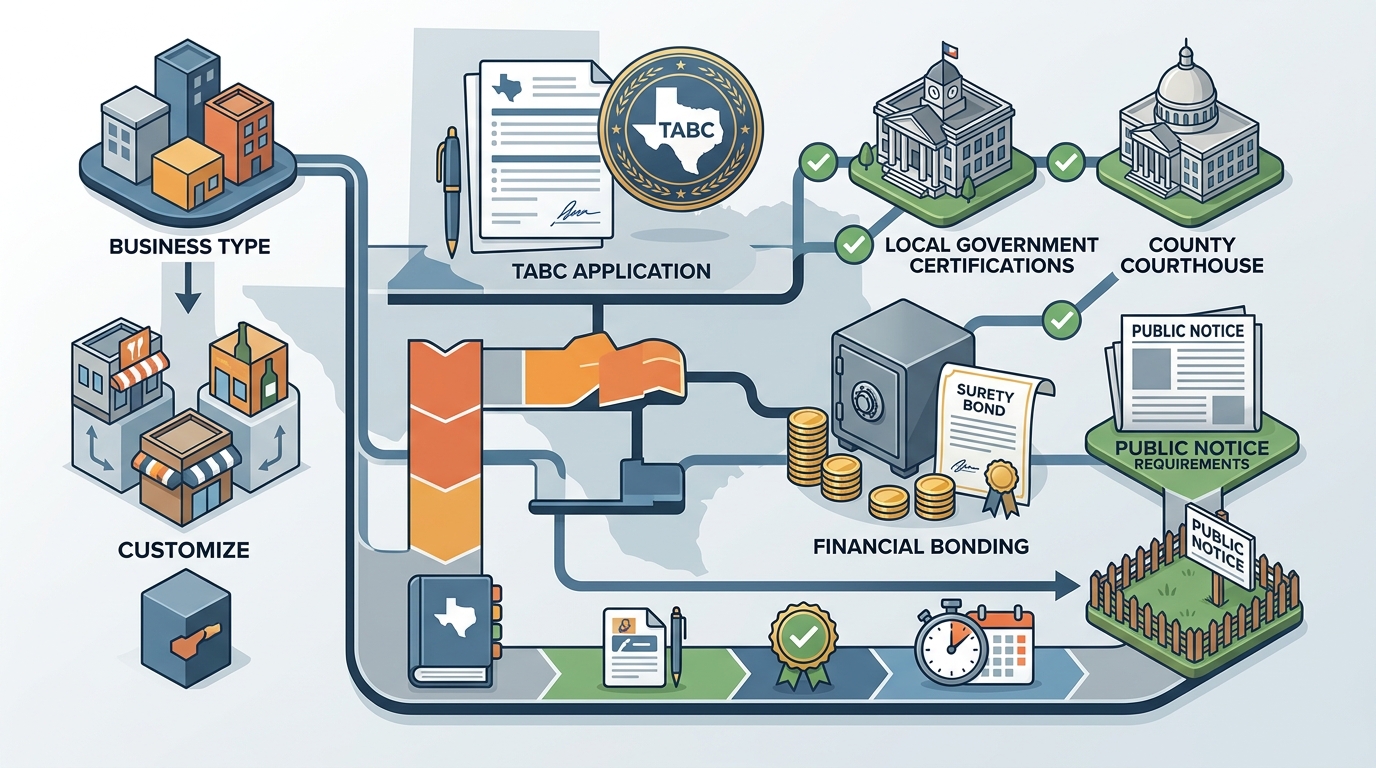
Getting a TABC permit in Texas requires a multi-step process involving state application, local government certifications, and financial bonding. The Texas Alcoholic Beverage Commission (TABC) regulates all alcohol sales, and the specific steps depend on your business type and location. This guide covers the permit types, public notice requirements, and processing timelines you need to know for 2026.
TABC Permit Types
Choosing the correct permit is the first critical step in the licensing process. A TABC permit is a legal authorization issued by the state that allows a business to sell, serve, or store alcoholic beverages. The wrong permit can lead to application rejection or significant delays. Understanding the distinctions between on-premise and off-premise permits is essential for any business owner in Texas.
On-Premise Permits
On-premise permits allow customers to consume alcohol within the business premises. The most common type is the Mixed Beverage Permit, which authorizes the sale of spirits, wine, and beer for on-site consumption. This permit is ideal for bars, restaurants, and hotels. Another option is the Wine and Malt Beverage Retailer's Permit, which allows for the sale of wine and beer on-premise but does not cover distilled spirits. For businesses in dry areas or member-based clubs, the Private Club Registration Permit provides a pathway to serve alcohol to members and their guests.
Off-Premise Permits
Off-premise permits allow customers to purchase sealed containers of alcohol to take home. The Package Store Permit is the license behind traditional liquor stores, authorizing the retail sale of distilled spirits, wine, and malt beverages. This permit comes with strict physical requirements, such as solid opaque wall separation from adjacent businesses. The Wine and Malt Beverage Off-Premise Permit, often called the BQ permit, allows convenience stores, grocery stores, and gas stations to sell sealed wine and beer. It offers broader hours than a package store but does not cover spirits.
Special Certificates and Bonds
Some businesses require additional certificates to modify their primary permit. The Food and Beverage Certificate verifies that a business is food-first, which can exempt it from the conduct surety bond and enable alcohol to go. The Late Hours Certificate extends alcohol service to 2:00 AM every night, compared to the standard midnight or 1:00 AM cutoff. Every permit application also requires a conduct surety bond, which guarantees that the business will follow state alcohol laws. Gerald Franklin Agency issues these bonds in-house to ensure they never hold up your permit.
| Permit Type | Code | Best For | Consumption |
|---|---|---|---|
| Mixed Beverage Permit | MB | Full bars, restaurants, hotels | On-Premise |
| Package Store Permit | P | Liquor stores, spirits retailers | Off-Premise |
| Wine and Malt Retailer | BG | Wine shops, cafes, bars | On-Premise |
| Wine and Malt Off-Premise | BQ | Convenience stores, groceries | Off-Premise |
| Private Club Registration | N | Member clubs, dry area venues | On-Premise |
Public Notice Requirements
Public notice is a mandatory legal requirement for most TABC permit applications. It serves to inform the local community and any potential objectors about the intent to sell alcohol. Failure to provide proper notice can result in the rejection of your application. The process involves publishing a notice in a local newspaper and posting a sign at the business location.
Newspaper Publication
Applicants must publish a notice of intent in a newspaper of general circulation in the county where the business is located. The notice must include specific details such as the name of the applicant, the location of the business, and the type of permit being sought. For Package Store Permits, this notice is particularly critical because it allows residents within a certain radius to file objections. The publication must occur before the application is filed with the TABC.
On-Site Signage
In addition to newspaper publication, applicants must post a sign at the business location. For off-premise permits like the BQ permit, the sign must state that it is a crime to consume liquor or beer on the premises. The letters on the sign must be at least two inches high. This sign must be visible from the public sidewalk or street. Proper signage is a compliance requirement that inspectors will check during the premises inspection.
Objection Period
Once the notice is published, there is a statutory period during which members of the public can file objections. If objections are filed, the county judge may schedule a hearing to review the application. This can significantly extend the processing timeline. Gerald Franklin Agency helps manage these local certifications and notices to ensure your application moves forward without unnecessary delays.
Processing Timeline
The timeline for obtaining a TABC permit varies depending on the permit type, the local jurisdiction, and whether objections are filed. On average, the process can take anywhere from 30 to 90 days, but complex cases can take longer. Understanding the stages of the process helps you plan your opening date realistically.
Application and Filing
The process begins with gathering the necessary documents and completing the TABC application. This includes background checks for all owners and officers, facility diagrams, and proof of financial standing. The application is filed through the TABC's AIMS portal. At the same time, you must file with your local county clerk and city secretary. These local certifications are a common stumbling block for applicants who file on their own.
Review and Inspection
Once the application is filed, the TABC reviews the documents and schedules an interview with the applicant. The TABC will also inspect the premises to ensure it meets all physical and safety requirements. For on-premise permits, this includes checking for proper storage, service areas, and signage. The inspection must pass before the application can move to the next stage.
Approval and Issuance
After the TABC review and inspection, the application is sent to the county judge for final approval. The judge reviews the application and any objections filed during the public notice period. If approved, the application is sent to the tax assessor for payment of the final fees. Once the fees are paid, the TABC issues the permit. Gerald Franklin Agency tracks the entire process to ensure your permit is issued on time.
Key Takeaways
- Choose the correct permit type based on whether you serve alcohol on-premise or sell it off-premise.
- Public notice is a legal requirement that involves newspaper publication and on-site signage.
- The conduct surety bond is required for most permits and guarantees compliance with state laws.
- Local certifications from the county clerk and city secretary are mandatory and can cause delays if mishandled.
- The processing timeline typically ranges from 30 to 90 days, but objections can extend this significantly.
- Food and Beverage Certificates can exempt restaurants from the conduct bond and enable alcohol to go.
- Working with an experienced agency can help navigate the complex local and state requirements.
Frequently Asked Questions
How long does it take to get a TABC permit?
The timeline varies by permit type and location, but most applications take between 30 and 90 days. Objections filed during the public notice period can extend this timeline significantly.
Do I need a bond for my TABC permit?
Yes, most TABC permits require a conduct surety bond. This bond guarantees that your business will follow state alcohol laws. Some restaurants may be exempt if they hold a Food and Beverage Certificate.
What is the difference between a license and a permit?
In Texas, the terms are often used interchangeably. What matters is matching the exact class to what you sell and how it is consumed. A Mixed Beverage Permit is a type of license that allows on-premise consumption of spirits.
Can I sell alcohol to go with a Mixed Beverage Permit?
No, a Mixed Beverage Permit only allows on-premise consumption. To sell alcohol to go, you need a Food and Beverage Certificate attached to your permit, which enables alcohol to go for restaurants.
What happens if someone objects to my permit?
If objections are filed, the county judge may schedule a hearing to review your application. This can delay the issuance of your permit. It is important to ensure your public notice is properly published to minimize objections.
Do I need a local permit in addition to the TABC permit?
Yes, Texas law requires local certifications from your county clerk and city secretary. These local steps are mandatory and must be completed before the TABC will issue your permit.
Conclusion
Getting a TABC permit in Texas is a complex process that requires careful attention to detail. From choosing the right permit type to managing public notice and local certifications, each step is critical to your success. By understanding the requirements and working with experienced professionals, you can navigate the process efficiently and open your business on time. Gerald Franklin Agency has been helping Texas businesses secure their liquor licenses since 1944. Our team of former TABC professionals handles the entire process, from application to final approval, so you can focus on running your business.