Choosing the right surety bond for your Texas alcohol business means matching the specific financial guarantee required by the TABC or Comptroller to your permit class and operational risk. This guide covers the primary bond types, the strict obligee requirements, and how to select a surety provider that keeps your license active without unnecessary cost.
Bond Types
Understanding the specific bond required for your permit is the first step in protecting your business. A surety bond is a three-party contract between the principal (your business), the surety company, and the obligee (the state agency). The bond guarantees that your business will follow state alcohol laws and commission rules. It protects the state, not the owner, by ensuring compliance with the Texas Alcoholic Beverage Code.
Conduct Surety Bond
The conduct surety bond is the guarantee most on-premise and retail permits need. It assures the state that your business will operate within the Texas Alcoholic Beverage Code. If the business violates the rules, the state can file a claim against the bond. Most new alcohol businesses that do not hold a Food and Beverage Certificate need one to obtain their permit.
Liquor and Beer Tax Bond
A liquor and beer tax bond is a financial guarantee required by the TABC Excise Tax Division so the State of Texas receives the excise taxes owed on alcohol entering the market. It protects against non-payment of tax by wholesale and import operations. The TABC generally sets the amount from an estimate of six weeks of excise tax liability. This figure scales with your volume, and the bond stays in place as long as your permit is active.
Sales and Use Permit Bond
A sales and use permit bond, also called a security bond, is a financial guarantee the Texas Comptroller of Public Accounts can require from certain businesses. It is often triggered for those in high-volume retail or those late or delinquent on sales and use tax filings. The bond guarantees the state that you will pay the sales and use tax you collect. The Comptroller sets the amount and may require collateral or a third-party guarantee.
| Bond Type | Primary Obligor | Typical Amount | Who Needs It |
|---|---|---|---|
| Liquor and Beer Tax Bond | TABC Excise Tax Division | ~6 weeks of excise tax | Wholesalers and importers |
| Sales and Use Permit Bond | Texas Comptroller | Set by Comptroller | High-volume or delinquent retailers |
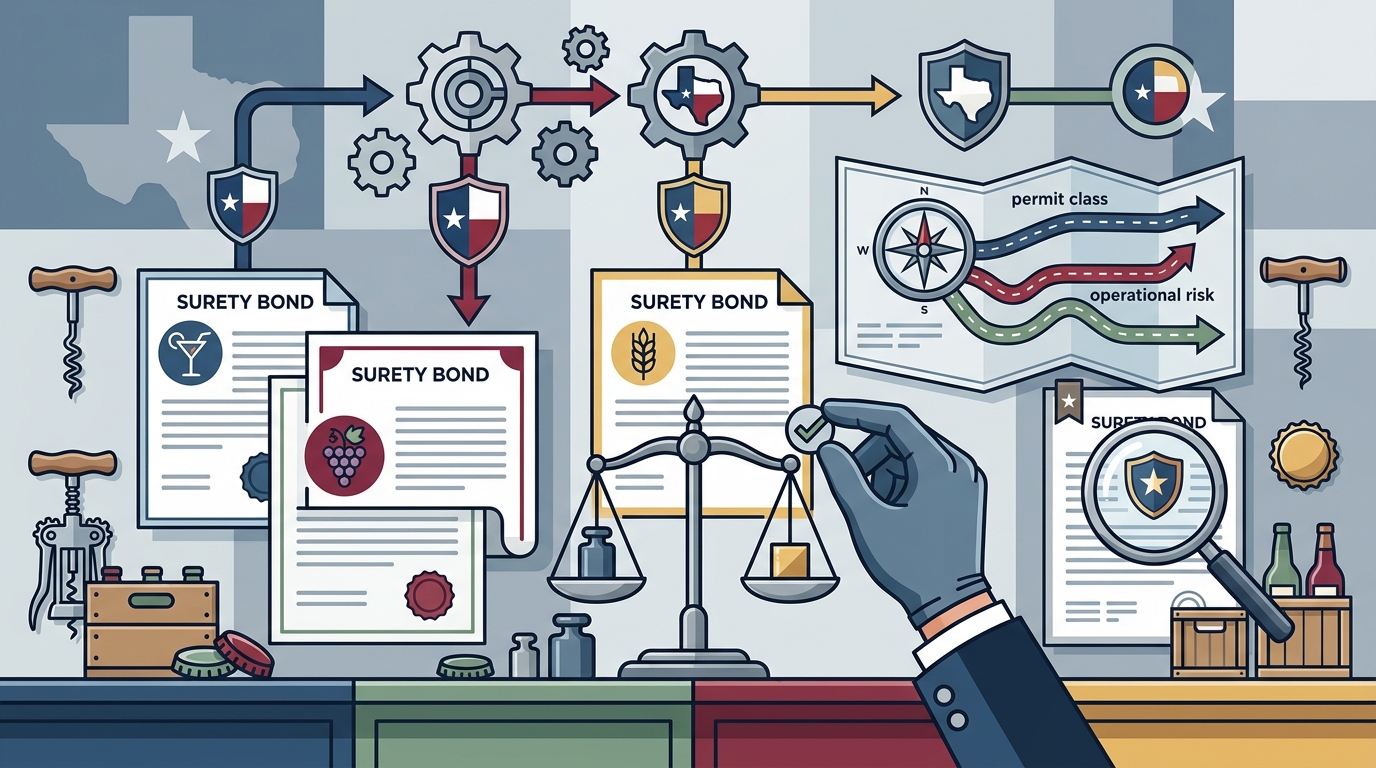
Obligee Requirements
The obligee is the government agency that requires the bond and benefits from its protection. In Texas, the Texas Alcoholic Beverage Commission (TABC) and the Texas Comptroller of Public Accounts are the primary obligees for alcohol businesses. Understanding their specific requirements is critical to avoiding application delays.
TABC Compliance Standards
The TABC requires good standing with the agency and current state taxes before issuing a permit. For the conduct bond, the TABC requires the bond to be filed into the AIMS portal. The bond must be maintained for the first three years of operation. After three years, a clean record may qualify you for release. You must provide thirty days written notice to cancel, with a replacement bond or Food and Beverage Certificate on file.
For the liquor and beer tax bond, the TABC Excise Tax Division requires monthly filings through AIMS. The bond amount is set from an estimate of six weeks of excise tax liability. The TABC may increase the bond when it finds your volume has grown. A 2 percent discount applies when filed and paid on time.
Comptroller Security Requirements
The Texas Comptroller of Public Accounts can require a sales tax security bond when a business is high-volume or behind on filings. The rules sit under 34 Texas Administrative Code section 3.327. The Comptroller sets the amount and may require collateral or a third-party guarantee. We confirm whether your situation triggers a bond before you file.
Businesses the Comptroller flags for a security bond include high-volume retailers, certain diesel equipment sellers, and owners who have fallen behind on sales and use tax. The bond guarantees the state that you will pay the sales and use tax you collect. Filing the Continuous Bond of Seller keeps your permit in good standing.
Surety Provider Selection
Selecting the right surety provider is as important as choosing the right bond. A reliable provider ensures your bond is issued quickly and filed correctly with the state. This prevents delays in your permit approval and keeps your business open on time.
In-House Issuance vs. Third-Party
Gerald Franklin Agency issues the conduct bond in-house and files it into the AIMS portal. This ensures the bond never holds up your permit. Working with a provider that understands the specific state requirements reduces the risk of errors. It also ensures the bond is sized correctly for your location and business type.
For the liquor and beer tax bond, the provider must size the bond to your volume and file it correctly. They should also review it as your business grows. This ensures the bond remains adequate as your sales increase. A provider that understands the TABC's requirements can help you avoid unnecessary increases or penalties.
Cost and Credit Considerations
When selecting a provider, consider their experience with Texas alcohol licensing. A provider that has filed thousands of bonds for TABC permits understands the nuances of the process. This expertise can save you time and money in the long run. It also ensures your bond is filed correctly the first time.
Key Takeaways
- The conduct surety bond is required for most on-premise and retail permits without a Food and Beverage Certificate.
- The liquor and beer tax bond is required for wholesalers and importers, sized from six weeks of excise tax.
- The Texas Comptroller may require a sales and use permit bond for high-volume or delinquent retailers.
- The bond must be maintained for the first three years of operation for the conduct bond.
- Monthly excise tax filings are due by the 15th of each month for the liquor and beer tax bond.
- Working with a provider that issues bonds in-house can prevent delays in permit approval.
Frequently Asked Questions
Who needs a conduct surety bond?
Locations that derive more than 60 percent of revenue from alcohol, which means no Food and Beverage Certificate, need a conduct surety bond. This includes Mixed Beverage, Private Club, Wine and Malt Beverage, on-premise retail, and package store permits.
How much does the conduct bond cost?
What if my credit is not perfect?
If your credit is not perfect, the premium may be higher. A provider that works with applicants with less-than-perfect credit can help you secure the bond without excessive cost.
Can I cancel the bond?
You must provide thirty days written notice to cancel the conduct bond. You must have a replacement bond or Food and Beverage Certificate on file before cancellation.
Who needs a liquor and beer tax bond?
Wholesalers holding a Wholesaler's Permit, General Class B Wholesalers distributing wine and malt beverages, and beer importers holding General or Branch Distributor's Licenses need a liquor and beer tax bond.
How is the liquor and beer tax bond amount set?
The TABC generally sets the amount from an estimate of six weeks of excise tax liability. The figure scales with your volume, and the bond stays in place as long as your permit is active.
Do I need a separate wine permit?
No, the Package Store Permit covers the retail sale of distilled spirits, wine, and malt beverages in sealed containers for off-premise consumption. You do not need a separate wine permit for a package store.
Can I sell to go cocktails with a BQ permit?
No, the BQ permit allows sales in original sealed containers only, with no repackaging. You cannot sell to go cocktails with a BQ permit.
Conclusion
Choosing the right surety bond for your Texas alcohol business requires understanding the specific requirements of the TABC and the Comptroller. By identifying the correct bond type, meeting the obligee requirements, and selecting a reliable surety provider, you can protect your business and keep your permit active. Gerald Franklin Agency, the largest private liquor license and TABC permit agency in Texas, handles surety bonds in-house and files them into the AIMS portal. To plan your visit, to discuss your specific bond needs.