
Yes, you can get a liquor license in Texas, provided your business meets specific location, ownership, and financial criteria. The Texas Alcoholic Beverage Commission (TABC) regulates all alcohol sales, and the process involves both state and local approvals. This guide covers the four main permit types, the step-by-step application process, strict eligibility rules, and the local certifications required to open your doors on time.
Liquor Permit Types in Texas
Choosing the right permit is the first critical step in your licensing journey. A Texas liquor license is not a single document but a specific class of permit that dictates what you can sell and how. The TABC categorizes these permits based on the type of alcohol and the location of consumption. Selecting the wrong class can result in denied applications or costly compliance violations later.
On-Premise Permits
On-premise permits allow customers to consume alcohol within your establishment. The Mixed Beverage Permit is the most common for bars and full-service restaurants, authorizing the sale of spirits, wine, and beer. It carries a 6.7 percent gross receipts tax and an 8.25 percent sales tax. For venues that focus on wine and beer without spirits, the Wine and Malt Beverage Retailer's Permit is a more cost-effective alternative. Restaurants that derive a significant portion of revenue from food may qualify for a Food and Beverage Certificate, which can exempt them from certain bond requirements.
Off-Premise Permits
Off-premise permits allow customers to purchase sealed containers to take home. The Package Store Permit is the license behind traditional liquor stores, allowing the sale of distilled spirits, wine, and beer. This permit has strict physical requirements, such as solid opaque walls separating the store from adjacent businesses. The Wine and Malt Beverage Off Premise Permit, often called the BQ permit, allows convenience stores and grocery stores to sell sealed wine and beer but excludes distilled spirits. Each permit class has distinct operating hours and tax implications that must be factored into your business plan.
Special and Temporary Permits
Not every business needs a permanent license. A Temporary Event Permit allows organizations to sell alcohol at festivals, galas, or sporting events. Nonprofits can apply for a temporary permit for up to 10 days, while existing licensees can extend their privileges to secondary locations. For venues in dry areas or member-based clubs, a Private Club Registration Permit is the appropriate path. Understanding these distinctions ensures you are applying for the exact authority your business model requires.
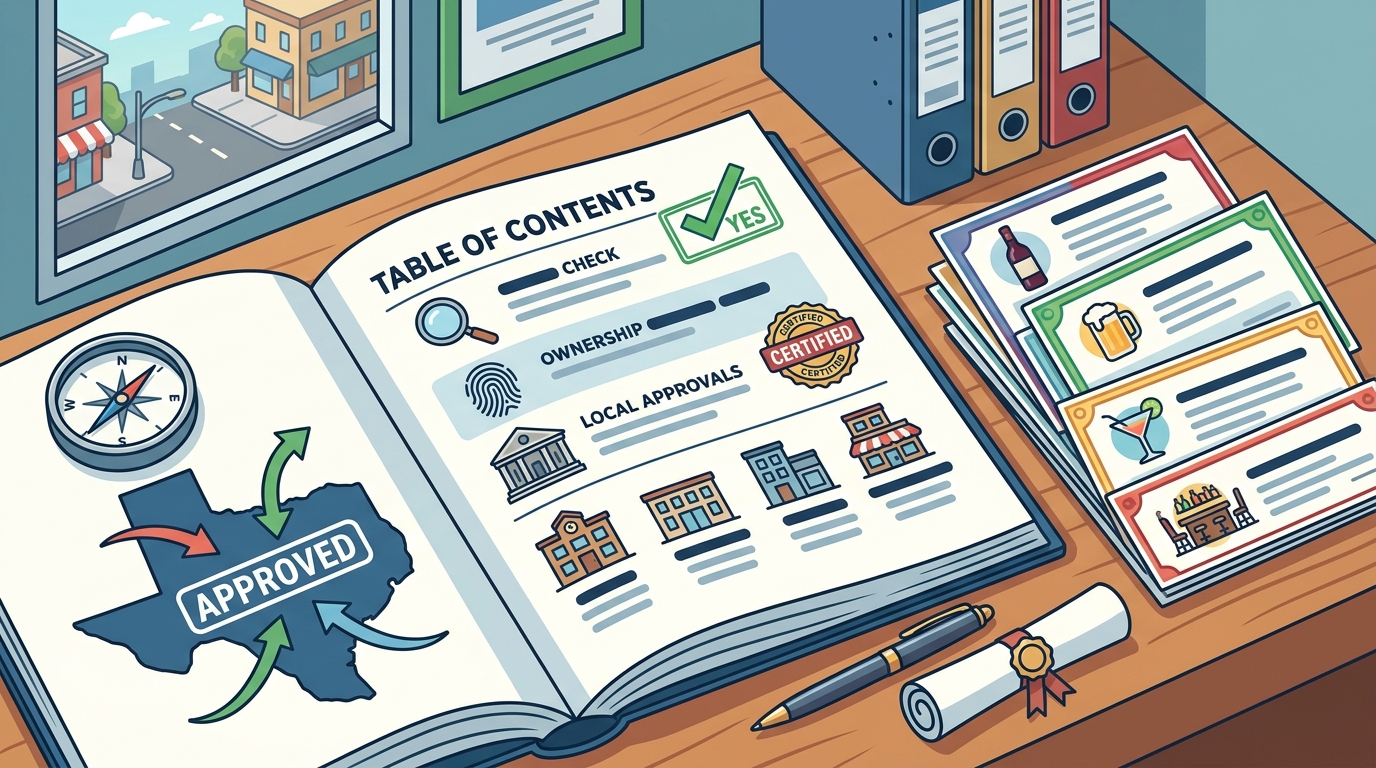
The TABC Application Process
The application process is a multi-stage workflow that moves from document preparation to final state issuance. It is not a simple online form; it involves physical inspections, background checks, and coordination between multiple government offices. The TABC uses the Alcohol Information Management System (AIMS) portal for most filings, but local steps often require in-person signatures.
Step 1: Document Preparation and AIMS Filing
You must gather all necessary documents before starting the application. This includes corporate formation documents, proof of ownership, and facility diagrams. The application is filed through the TABC AIMS portal. Accuracy is paramount here; errors in ownership percentages or facility descriptions can delay the process by weeks. The state fee for the permit is paid at this stage, and the TABC begins its initial review.
Step 2: TABC Review and Inspection
Once the application is filed, the TABC reviews the documents and schedules an interview with the applicants. A TABC inspector will also visit the premises to verify that the physical space meets code requirements. This includes checking for proper storage, signage, and separation from prohibited locations like schools or churches. The inspection is a critical checkpoint; failing it requires remediation and a re-inspection, which adds time and cost.
Step 3: Final Processing and Issuance
After the TABC approves the application, it is sent to the county judge for final review. Once the judge signs off, the file returns to the TABC for final processing. You will receive a notice to pay any remaining tax assessor fees. Upon payment, the TABC issues the physical permit. The entire process can take several months, depending on the complexity of the application and the workload of the local offices.
Eligibility Requirements and Background Checks
Eligibility is the most common reason for application denial. The TABC has strict rules regarding who can own and operate an alcohol business. These rules are designed to ensure that only responsible individuals control the sale of alcohol. Failing to meet these requirements means your application will be rejected, regardless of how well you handle the paperwork.
Ownership and Stakeholder Rules
Distance and Location Restrictions
Your business location must comply with strict distance rules. You cannot open a liquor store or bar within 1,000 feet of a public school, college, or church. This distance is measured from property line to property line. If your location is within this radius, you may still be able to operate if you can prove the establishment was in existence before the school or church was built, but this is a complex legal argument. Additionally, you must check with your local city and county to ensure the area is not designated as dry or restricted. In dry areas, only private clubs or specific exceptions can serve alcohol.
Surety Bonds and Financial Guarantees
Local Approvals and County Certifications
A Texas liquor license is not just a state filing. Texas law requires local certifications from your county and city before the state will issue the permit. This is where many applicants get stuck. The state will not process your application until the local officials have signed off. These local steps involve physical visits to government offices, which can be time-consuming if you are not familiar with the local bureaucracy.
County Clerk and City Secretary Signatures
Your application must be certified by the County Clerk and the City Secretary (or County Judge in unincorporated areas). These officials verify that your business complies with local zoning and ordinances. In Houston, for example, you must visit the City Secretary and the Harris County Clerk. In Austin, you must coordinate with the Travis County Clerk and the City of Austin. These signatures are not automatic; the officials may ask questions or request additional documentation. Having a local team that knows the specific requirements of each office can save weeks of back-and-forth.
County Judge Approval
The final local step is approval by the County Judge. The judge reviews the application to ensure it meets all state and local requirements. In some cases, the judge may schedule a public hearing, especially if there are objections from neighbors or local businesses. This is a critical stage where community relations matter. If the judge approves the application, it is sent back to the TABC for final issuance. If the judge denies it, you may have the right to appeal, but this is a lengthy and uncertain process.
The Value of Local Expertise
Navigating these local approvals requires knowledge of the specific rules in your city and county. Gerald Franklin Agency has offices in Houston, Austin, and New York, and our team of former TABC professionals handles the local certifications in person. We walk your paperwork to the right desks, ensuring that nothing falls between the state and the county. This local advantage is why we have been the largest private licensing agency in Texas since 1944.
Key Takeaways
- Choose the correct permit class (Mixed Beverage, Package Store, etc.) based on your business model and consumption type.
- The TABC application process involves state filing, inspection, and local certifications, taking several months to complete.
- All owners with a 10 percent or greater interest must pass criminal background checks.
- Your location must be at least 1,000 feet from schools and churches, measured property line to property line.
- Local approvals from the County Clerk, City Secretary, and County Judge are mandatory before state issuance.
- Working with a local agency that handles in-person certifications can significantly speed up the process.
- Keep your business in good standing with the TABC and pay all taxes on time to maintain your license.
Frequently Asked Questions
How long does it take to get a liquor license in Texas?
The timeline varies by permit type and location, but it typically takes 3 to 6 months. The process involves state review, inspection, and local certifications, each of which has its own processing time.
Can I get a liquor license in a dry area?
In most dry areas, you cannot get a standard on-premise or off-premise permit. However, you may be able to obtain a Private Club Registration Permit, which allows you to serve alcohol to members and their guests in a private setting.
What is a conduct surety bond?
Do I need a local health permit?
Yes, if you are serving food. You must obtain a local health department permit before the TABC will issue your alcohol license. The health permit ensures your kitchen and service areas meet safety standards.
Can I sell alcohol to go with a Mixed Beverage Permit?
No, a Mixed Beverage Permit only allows on-premise consumption. To sell alcohol to go, you need a Food and Beverage Certificate, which verifies that your business is food-first and meets specific revenue and kitchen requirements.
What happens if my application is denied?
If your application is denied, you will receive a notice explaining the reasons. You may have the right to appeal the decision, but this is a complex legal process. It is often better to address the issues and reapply, or to consult with a licensing expert to understand your options.
Start Your Application with Confidence
Getting a liquor license in Texas is a complex process, but it is achievable with the right guidance. By understanding the permit types, eligibility rules, and local approval requirements, you can avoid common pitfalls and open your business on time. Gerald Franklin Agency has been helping Texas businesses navigate these challenges since 1944. Our team of former TABC professionals handles the entire process, from application to final issuance, so you can focus on running your business. Contact us today to start your application.