
How to Choose the Right Surety Bond for Your Texas Alcohol Business
Choosing the right surety bond depends on your specific permit type, location, and revenue profile. Gerald Franklin Agency helps Texas businesses match the correct bond to their TABC permit, ensuring compliance without unnecessary cost. This guide covers bond selection, amount calculation, provider comparison, underwriting, and state regulations.
Bond Type Selection
Selecting the correct bond type is the first critical step in alcohol licensing. A surety bond is a three-party contract between the principal (your business), the surety company, and the obligee (the state or local government). In Texas, the type of bond required is directly tied to your specific TABC permit class. You cannot simply choose any bond; the law dictates which one applies to your operation.
Conduct Surety Bonds
The conduct surety bond is the most common requirement for on-premise and retail alcohol businesses. It guarantees that your business will follow state alcohol laws and commission rules. Most new alcohol businesses that do not hold a Food and Beverage Certificate need this bond to obtain their permit. It protects the state, not the owner, by ensuring compliance with the Texas Alcoholic Beverage Code.
Permit and Tax Bonds
Wholesale and import operations require different financial guarantees. A liquor and beer tax bond is required by the TABC Excise Tax Division to ensure the state receives excise taxes owed on alcohol entering the market. This bond is distinct from the conduct bond and is sized based on your estimated tax liability rather than a fixed statutory amount.
Certification Exemptions
Some businesses can avoid the conduct bond entirely by obtaining a Food and Beverage Certificate. This certificate verifies that your primary focus is food service, not alcohol. If you hold this certificate, you are often exempt from the conduct surety bond, which can save you significant upfront costs. Gerald Franklin Agency files this certificate alongside your permit to ensure you receive all applicable exemptions.
Bond Amount Determination
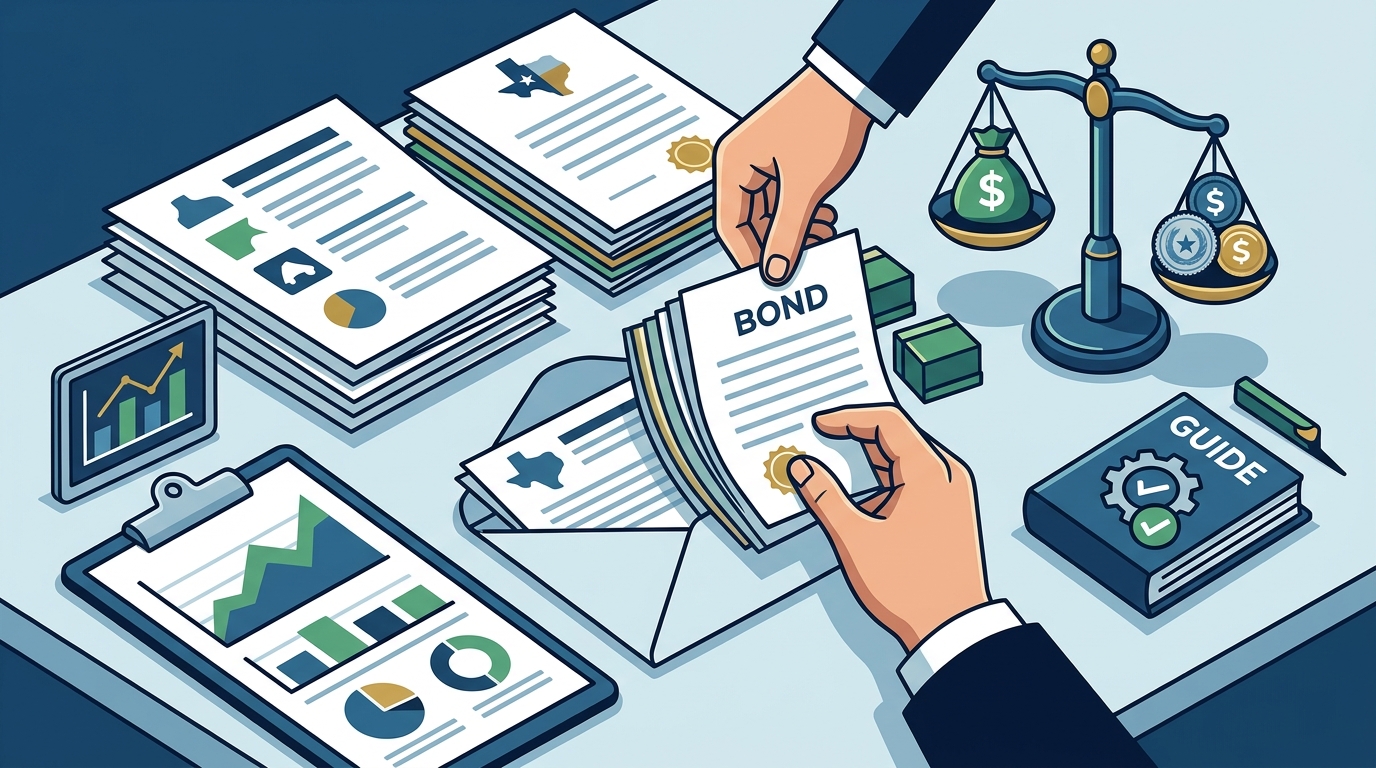
The amount of your bond is not arbitrary; it is determined by specific statutory rules and your business location. For conduct surety bonds, the amount depends on the distance between your premises and a public school. This geographic factor is the primary driver of the bond face value.
Distance-Based Requirements
Volume-Based Calculations
| Bond Type | Standard Amount | Trigger for Increase | Duration |
|---|---|---|---|
| Sales and Use Permit Bond | Varies | High volume or delinquent filings | Until Comptroller releases |
Surety Provider Comparison
Choosing a surety provider involves balancing cost, speed, and expertise. Not all surety companies specialize in alcohol licensing. A general surety provider may not understand the specific nuances of TABC requirements, leading to delays or errors in filing.
In-House vs. Third-Party
Gerald Franklin Agency issues conduct bonds in-house and files them directly into the TABC AIMS portal. This integrated approach ensures that the bond never holds up your permit application. When you use a third-party surety, there is a risk of miscommunication between the surety and the licensing agency, which can stall your approval.
Premium Considerations
Underwriting Requirements
Underwriting is the process by which a surety company evaluates your risk. For alcohol bonds, underwriters look at specific factors that indicate your likelihood of compliance. Understanding these requirements helps you prepare your application for faster approval.
Credit and Financials
Your personal and business credit scores are the primary underwriting factors. A higher credit score generally results in a lower premium. You may also need to provide financial statements, such as a balance sheet or income statement, depending on the bond amount and the surety company's requirements.
Compliance History
Your history with the TABC and other regulatory bodies is also considered. A clean record of compliance, current state taxes, and good standing with the TABC are essential. If you have a history of violations or delinquent taxes, the underwriting process may be more rigorous, and the premium may be higher.
State Specific Regulations
Texas has specific regulations that govern surety bonds for alcohol businesses. These rules are enforced by the TABC and the Texas Comptroller of Public Accounts. Understanding these regulations ensures that your bond is valid and that your permit remains in good standing.
TABC Requirements
The TABC requires that the conduct bond be maintained for the first three years of operation. After three years, if you have a clean record, you may qualify for release from the bond. To cancel the bond early, you must provide thirty days written notice and have a replacement bond or a Food and Beverage Certificate on file.
Comptroller Regulations
The Texas Comptroller of Public Accounts can require a sales and use permit bond, also called a security bond, from certain businesses. This is often triggered by high-volume retail operations or delinquent sales and use tax filings. The rules for this bond are found in 34 Texas Administrative Code section 3.327. Gerald Franklin Agency identifies when this bond is triggered and handles the filing to keep your permit in good standing.
Key Takeaways
- The conduct surety bond is required for most on-premise and retail alcohol businesses unless you hold a Food and Beverage Certificate.
- Wholesale and import bonds are sized based on six weeks of estimated excise tax liability.
- In-house bond issuance by a licensing agency can prevent delays in permit approval.
- The conduct bond must be maintained for the first three years, after which release may be possible.
- State regulations require good standing with the TABC and current state taxes for bond approval.
- Food and Beverage Certificates can exempt you from the conduct bond, saving significant costs.
Frequently Asked Questions
Who needs a conduct surety bond?
Locations that derive more than 60 percent of revenue from alcohol, which means they do not hold a Food and Beverage Certificate, need a conduct surety bond. This includes Mixed Beverage, Private Club, Wine and Malt Beverage, on-premise retail, and package store permits.
How much does the conduct bond cost?
What if my credit is not perfect?
You can still obtain a bond, but the premium will be higher. The underwriting process will take your credit history into account, and you may need to provide additional financial documentation.
Can I cancel the bond?
Yes, but you must provide thirty days written notice. You must also have a replacement bond or a Food and Beverage Certificate on file before the current bond is released.
How long must I keep the conduct bond?
You must maintain the conduct bond for the first three years of operation. After three years, if you have a clean record, you may qualify for release from the bond requirement.
Do I need a bond if I have a Food and Beverage Certificate?
Usually, no. The Food and Beverage Certificate exempts you from the conduct surety bond. This certificate verifies that your primary focus is food service, not alcohol.
What is a liquor and beer tax bond?
A liquor and beer tax bond is a financial guarantee required by the TABC Excise Tax Division for wholesale and import operations. It ensures the state receives excise taxes owed on alcohol entering the market.
How is the liquor and beer tax bond amount set?
The TABC sets the amount based on an estimate of six weeks of excise tax liability. This figure scales with your sales volume and must be increased as your business grows.