
The Conduct Surety Bond: Standard Amounts
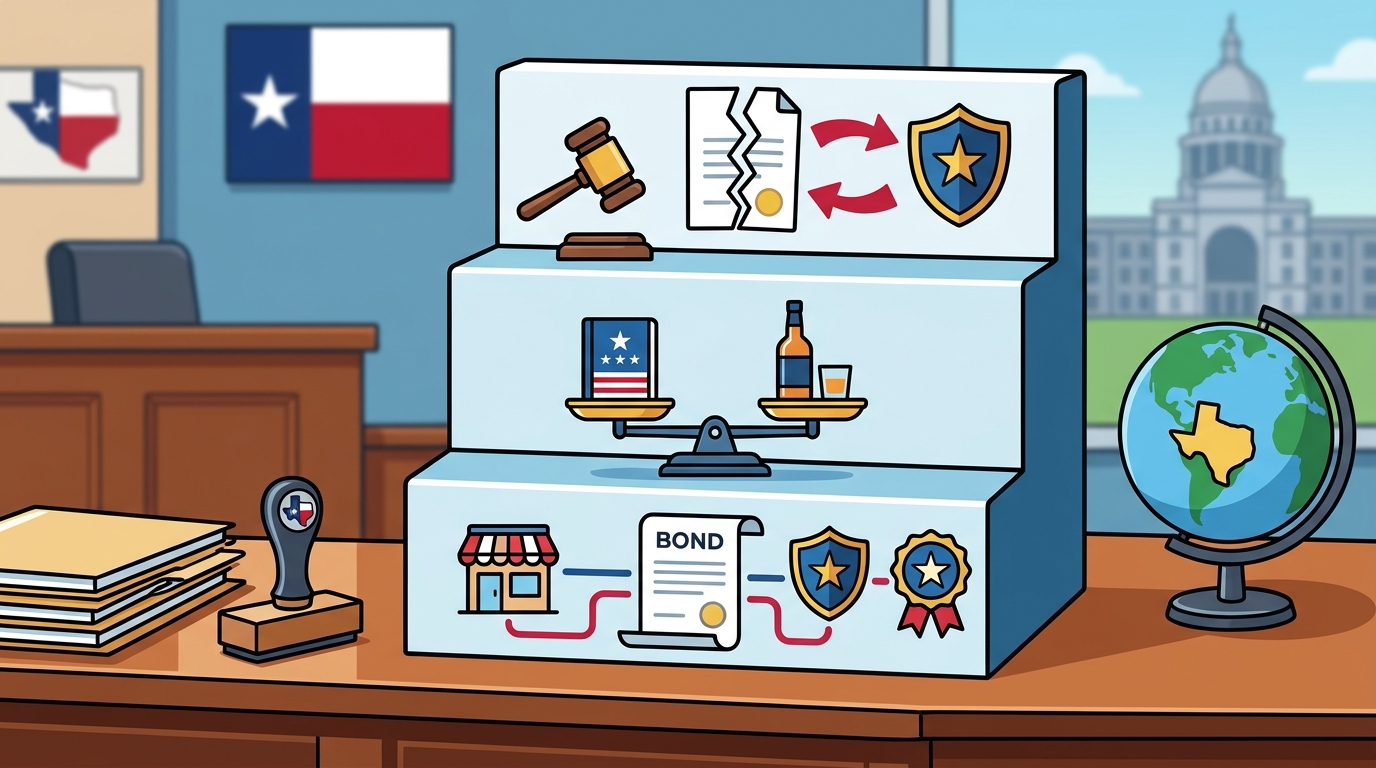
The conduct surety bond is the most common financial requirement for Texas alcohol businesses. A conduct surety bond is a three-party contract between your business, a surety company, and the Texas Alcoholic Beverage Commission (TABC). This bond guarantees that your establishment will comply with state alcohol laws and commission rules. If your business violates these regulations, the state can file a claim against the bond to recover damages.
Exemptions via the Food and Beverage Certificate
To qualify for this exemption, your business must derive a significant portion of its revenue from food sales. Historically, the guideline has been that at least 60 percent of gross receipts must come from food. You must also have a commercial kitchen capable of cooking multiple entrees and offer public, on-site dining. Ghost kitchens or businesses serving only prepackaged snacks do not qualify. By securing this certificate, you not only avoid the bond cost but may also gain the ability to sell alcohol to-go and operate in restricted areas.
Wholesale and Import Tax Bonds
Businesses operating in the wholesale or import tier of the alcohol industry face different bond requirements. A liquor and beer tax bond is a financial guarantee required by the TABC Excise Tax Division to ensure the state receives owed excise taxes. Unlike the fixed conduct bond, the amount of this bond is variable and scales with your business volume.
Bond Premiums and Ongoing Costs
Credit score is a major factor in determining the premium rate. Applicants with lower credit scores may face higher premiums, but surety companies often serve nearly all applicants regardless of credit history. It is important to note that the bond itself is not an expense that disappears; it is a financial instrument that must be maintained. You must keep the bond in good standing for the first three years of operation. After three years, if you have a clean record with no violations, you may qualify for the bond to be released.
Cancellation and Release Rules
Understanding how to cancel or release a bond is just as important as obtaining one. You cannot simply stop paying for a bond if you still hold an active permit. If you plan to close your business or change your permit type, you must provide thirty days written notice to cancel the bond. During this notice period, you must ensure a replacement bond or a Food and Beverage Certificate is on file if you are transitioning to a different operational model.
Failure to maintain the bond or provide proper notice can result in permit suspension or revocation. The bond protects the state's interest in regulatory compliance. Therefore, keeping your bond current and understanding the release process is critical for long-term business stability. Gerald Franklin Agency monitors your bond status and ensures it remains compliant as your business grows or changes.
Key Takeaways
- Businesses holding a Food and Beverage Certificate are generally exempt from the conduct bond.
- Wholesale and import businesses require a tax bond based on six weeks of estimated excise tax liability.
- You must maintain the conduct bond for the first three years of operation before potentially qualifying for release.
- Proper cancellation requires thirty days written notice and a replacement bond or certificate on file.
Frequently Asked Questions
Who needs a conduct surety bond in Texas?
Most on-premise and retail permit holders whose location earns more than 60 percent of revenue from alcohol need a conduct bond. This includes Mixed Beverage, Private Club, Wine and Malt Beverage, and Package Store permits. A Food and Beverage Certificate usually exempts you from this requirement.
How much does the conduct bond cost?
What if my credit is not perfect?
We work with surety companies that serve nearly all applicants regardless of credit score. While your premium may be higher than the minimum rate, you can still obtain the required bond to secure your license.
How long must I keep the bond?
You must maintain the conduct bond for the first three years of operation. After this period, if you have a clean record with no violations, you may qualify for the bond to be released.
Do wholesalers need a different bond?
Yes. Wholesalers and importers need a liquor and beer tax bond. This amount is not fixed; it is set by the TABC based on an estimate of six weeks of your excise tax liability, which scales with your sales volume.