
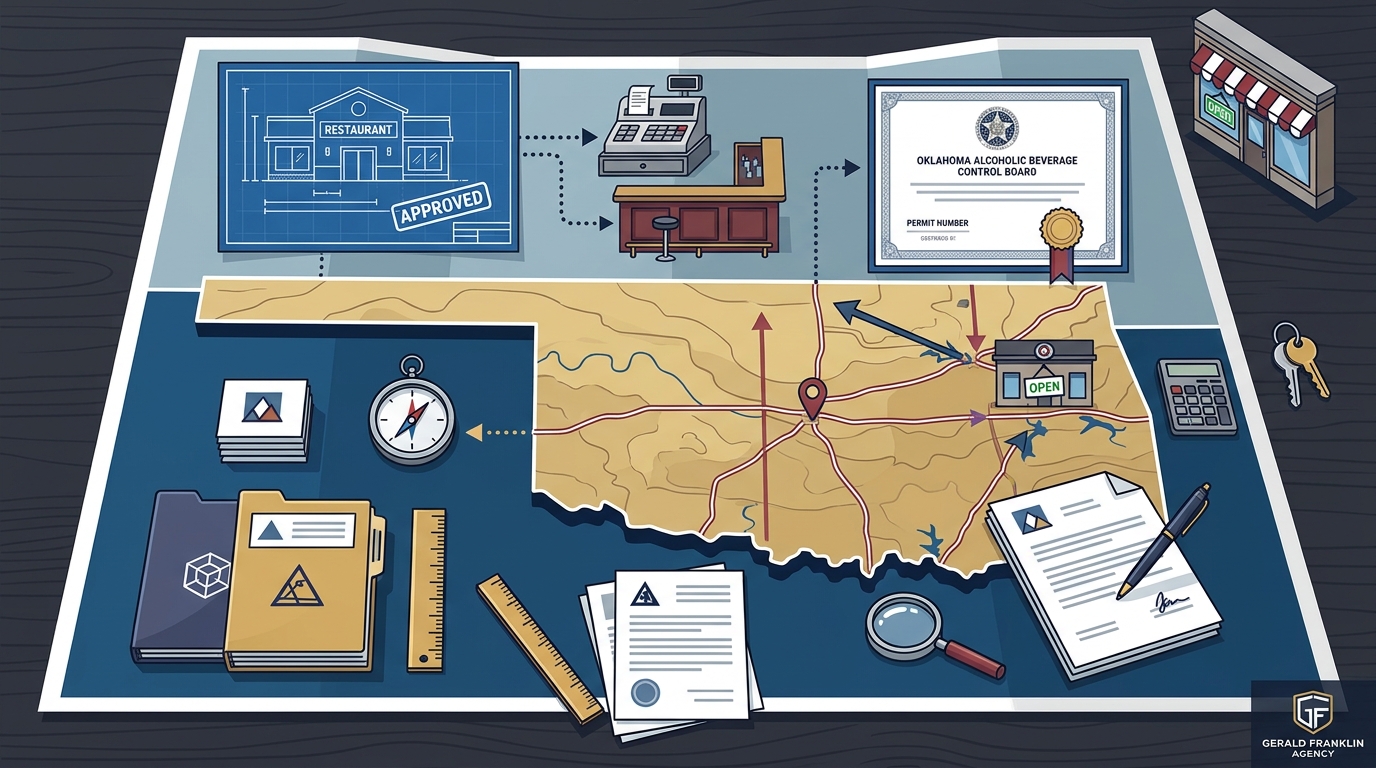
Opening a restaurant in Oklahoma requires navigating a specific regulatory framework to serve alcohol legally. The process involves securing a state-level license from the Oklahoma Alcoholic Beverage Control Board (ABC) and ensuring local municipal compliance. Gerald Franklin Agency helps operators understand these steps, preparing and filing applications to ensure your opening stays on schedule.
Understanding the Oklahoma ABC Board
Oklahoma is a state where the Alcoholic Beverage Control Board holds significant authority over the sale of alcohol. A restaurant liquor license is a legal authorization issued by the state that permits a business to sell and serve alcoholic beverages on its premises. The ABC Board regulates the entire supply chain, from production to retail, ensuring that all sales comply with state laws. Understanding the board's role is the first step in any licensing strategy.
The board sets the rules for who can hold a license, how much alcohol can be sold, and the specific conditions under which a restaurant can operate. For a new restaurant, this means the application is not just a formality but a rigorous review of the business's ownership, location, and operational plans. The state's regulatory environment is designed to prevent the sale of alcohol to minors and to ensure public safety. Operators must be aware that the ABC Board has the power to deny applications if they believe the license would be detrimental to the community or if the applicant does not meet the statutory requirements.
Gerald Franklin Agency works with restaurant owners to navigate these state-level requirements. Our team reviews the specific license class that fits your restaurant's concept, whether it is a full-service establishment or a venue with a specific focus on wine and beer. By understanding the ABC Board's priorities, we can prepare an application that addresses potential concerns before they become obstacles.
Local Municipal Approval and Zoning
In Oklahoma, state approval is only half the battle. Most municipalities have their own local option laws that determine whether alcohol can be sold within their boundaries. A local liquor license is a municipal authorization that must be obtained in addition to the state license. This dual requirement means that a restaurant must be approved by both the city or town and the state ABC Board. The local government often holds a veto power over state licenses, making the local process a critical component of the overall timeline.
Zoning is a major factor in this local approval. Cities in Oklahoma often have specific zoning districts where alcohol sales are permitted, restricted, or prohibited. For example, a restaurant located in a residential zone may face stricter scrutiny or outright denial compared to one in a commercial or mixed-use district. The local planning and zoning commission reviews the application to ensure the business fits the character of the neighborhood. This review can involve public hearings where residents can voice their opinions on the proposed alcohol sales.
Distance requirements are another common local regulation. Many Oklahoma cities enforce minimum distance rules between a new restaurant and existing sensitive locations such as schools, churches, or other liquor license holders. These distances can range from a few hundred feet to several hundred yards, depending on the local ordinance. Gerald Franklin Agency checks these local rules before you sign a lease, ensuring that your chosen location is viable for alcohol sales. This pre-lease analysis saves owners from costly mistakes and lease breakage fees.
Application Requirements and Documentation
The application process for an Oklahoma restaurant liquor license requires a comprehensive set of documents. The state application is a detailed form that asks for information about the business entity, its owners, and its operations. A key component of this application is the background check for all owners and officers. The ABC Board conducts a thorough review of the criminal history and financial standing of the individuals involved in the business. Any past convictions or financial irregularities can lead to a denial of the license.
In addition to the state form, applicants must provide a floor plan of the restaurant showing where alcohol will be stored and served. This plan must comply with state regulations regarding the separation of alcohol storage from other areas of the business. The application also requires a statement of intent, which outlines the restaurant's business plan and how it will comply with alcohol laws. This document is an opportunity to present your business in the best light, demonstrating your commitment to responsible service and community engagement.
Local applications often require similar documentation, including proof of business registration, health permits, and certificates of occupancy. The coordination between state and local filings is essential to avoid delays. Gerald Franklin Agency manages this documentation process, ensuring that all forms are completed accurately and submitted on time. We handle the background checks and prepare the floor plans, allowing you to focus on the build-out of your restaurant.
Public Notice and Hearing Procedures
Once the application is filed, it enters a public notice period. This is a legal requirement that allows the community to review the application and raise any objections. The notice is typically published in a local newspaper and posted at the proposed location. During this period, any member of the public can file a formal objection to the license. These objections can be based on a variety of grounds, including concerns about noise, traffic, or the impact on the neighborhood.
If objections are filed, a public hearing is scheduled. The hearing is presided over by the local licensing authority or the state ABC Board, depending on the jurisdiction. At the hearing, the applicant has the opportunity to present their case and respond to the objections. This can be a stressful process for new business owners, but it is a standard part of the licensing procedure. The outcome of the hearing can result in approval, denial, or approval with conditions. Conditions might include restrictions on operating hours or requirements for additional security measures.
Gerald Franklin Agency represents restaurant owners during these hearings. Our team prepares the applicant to present a clear and compelling case, addressing any concerns raised by the community. We also work with local officials to find common ground and resolve objections before they escalate. By managing the public notice and hearing process, we help ensure that your license is approved with the fewest possible restrictions.
Timeline and Operational Considerations
The timeline for obtaining an Oklahoma restaurant liquor license can vary significantly. The state process typically takes several months, while the local process can add additional time depending on the municipality's schedule. A realistic timeline is essential for planning your opening. Delays in the licensing process can impact your build-out, hiring, and marketing efforts. It is important to start the application process as early as possible, ideally before you sign a lease or begin construction.
Operational considerations also play a role in the licensing process. The ABC Board may require that you have a responsible manager on staff who is trained in alcohol service. This training is often mandatory and must be completed before the license is issued. The board may also require that you have a system in place for checking identification and refusing service to intoxicated patrons. These operational requirements are designed to minimize the risks associated with alcohol sales and to protect the public.
Gerald Franklin Agency provides guidance on these operational requirements, helping you set up the systems and training programs that the ABC Board expects. We also advise on the financial aspects of the license, including the costs of the application, the license fee, and any required bonds. By understanding the full scope of the process, you can make informed decisions about your business and avoid unexpected costs.
Key Takeaways
- Oklahoma requires both a state license from the ABC Board and a local municipal license.
- Local zoning and distance rules can significantly impact whether a location is viable for alcohol sales.
- Background checks for all owners and officers are a critical part of the state application.
- The public notice period allows the community to object to the license, which can lead to a hearing.
- Starting the application process early is essential to avoid delays in your opening.
- Operational requirements, such as staff training and ID checking systems, must be in place before the license is issued.
- Gerald Franklin Agency manages the entire process, from pre-lease analysis to final approval.
Frequently Asked Questions
How long does the Oklahoma restaurant liquor license process take?
The timeline varies by location and the complexity of the application. The state process can take several months, and the local process may add additional time. It is best to start as early as possible to ensure your opening is not delayed.
Do I need a local license if I have a state license?
Yes, in most cases. Oklahoma municipalities have their own licensing requirements, and you generally need both a state and a local license to operate legally.
What happens if my application is denied?
If your application is denied, you may have the right to appeal the decision. The grounds for appeal depend on the specific reasons for the denial. It is important to work with a professional to understand your options and prepare a strong appeal.
Can I serve alcohol before my license is approved?
No, you cannot serve alcohol until your license is fully approved and issued. Operating without a license can result in significant fines and legal penalties.
What is the role of the ABC Board in the process?
The Oklahoma ABC Board is the state agency that issues liquor licenses. It reviews applications, conducts background checks, and makes the final decision on state-level approvals.
How can Gerald Franklin Agency help with my application?
Gerald Franklin Agency manages the entire licensing process, including pre-lease analysis, application preparation, and representation at public hearings. We ensure that your application is complete and compliant with all state and local requirements.
Start Your Oklahoma Application
Navigating the Oklahoma restaurant liquor license process requires expertise and attention to detail. Gerald Franklin Agency has the experience to guide you through every step, from the initial application to final approval. To discuss your specific needs and get started, contact our team. Learn more: Contact Gerald Franklin Agency.