
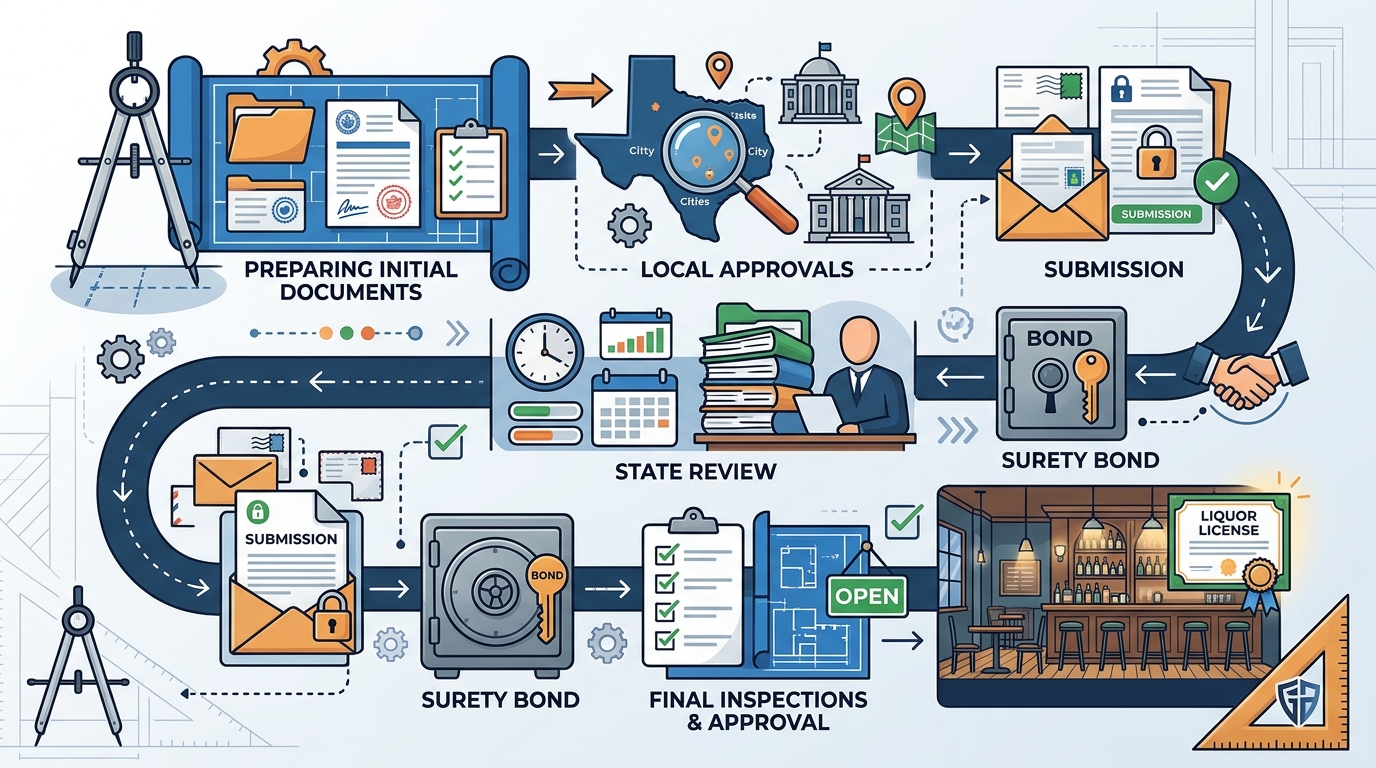
Navigating the Texas Alcoholic Beverage Commission (TABC) application process can feel overwhelming for business owners. The path from initial idea to a fully operational, licensed establishment involves multiple layers of state and local approval. Understanding the distinct phases of this journey helps you prepare the right documents and avoid costly delays. Gerald Franklin Agency, the largest private liquor license agency in Texas, guides businesses through every step of this complex regulatory landscape.
1. Business Structure and Entity Formation
Establish your legal entity before touching the TABC portal. Before you can apply for a liquor license, your business must exist as a legal entity. This means forming your LLC, corporation, or partnership and obtaining your Texas Taxpayer Registration Number. The TABC requires this foundational information to verify the ownership and liability structure of the applicant. Skipping this step is a common reason for immediate application rejection.
2. Local Zoning and Land Use Verification
Confirm your specific address is zoned for alcohol sales. Texas law requires that the physical location of your business be zoned appropriately for the type of alcohol you intend to sell or serve. You must obtain a zoning verification from your local city or county planning department. This document proves that your location is in a "wet" area and not in a dry county or a restricted zone that prohibits alcohol sales.
3. Local Certifications and Signatures
Secure the required signatures from local officials. In most Texas jurisdictions, a state license is not enough. You need local certifications from the county clerk, the county judge, and the city mayor or city manager. These officials must sign specific forms attesting to the location's compliance with local ordinances. Gerald Franklin Agency handles these in-person filings to ensure no signature is missed or delayed.
4. TABC AIMS Portal Filing
Submit your application through the official AIMS system. The Application and Information Management System (AIMS) is the digital gateway for all TABC applications. You must upload your local certifications, zoning documents, and business formation papers here. The system generates a unique application number that tracks your file through the review process. Accuracy in this digital filing is critical, as errors here can trigger a manual review that slows everything down.
5. TABC Review and Interview Scheduling
Prepare for the mandatory interview with a TABC agent. Once your application is complete, the TABC reviews the file for completeness and compliance. If the file passes, the TABC schedules an interview with the applicant or their designated representative. This interview is a formal meeting where the agent verifies the information provided and answers questions about the business plan. It is a critical checkpoint that determines if your application moves to the inspection phase.
6. Premises Inspection and Compliance Check
Ensure your physical space meets TABC safety and layout standards. A TABC agent will visit your business location to inspect the premises. They check for proper signage, age verification systems, and physical layout compliance with state regulations. The space must be ready to operate at the time of inspection. Any deficiencies found during this visit must be corrected and re-inspected before the license can be issued.
7. Final Approval and License Issuance
Receive your license and post it in the required location. After a successful inspection and final review, the TABC issues your license. You must post the physical license in a conspicuous place within the establishment. This final stage marks the transition from applicant to licensed operator. You are now legally authorized to sell or serve alcohol according to the specific privileges of your license type.
Choosing the Right Path for Your Business
Selecting the correct license type is the most important decision in this process. A Mixed Beverage permit allows for spirits, while a Wine and Malt Beverage permit restricts you to beer and wine. The choice depends on your business model, location, and target market. Consulting with an expert ensures you do not over-apply for privileges you do not need or under-apply for what your business requires.
Frequently Asked Questions
How long does the TABC application process take?
The timeline varies by county and license type, but it typically takes several months. The local certification phase and the TABC interview scheduling are often the longest bottlenecks. Working with an experienced agency can help expedite the local steps significantly.
Do I need a local license if I have a state license?
Yes, in most Texas counties, you need both. The state license from the TABC is the primary authorization, but local certifications from the county and city are mandatory prerequisites for the state to issue the license. Without the local signatures, the state application will not be processed.
What is the TABC AIMS portal?
The AIMS portal is the online system where all TABC applications are filed and tracked. It is the central hub for submitting documents, paying fees, and checking the status of your application. All digital filings must be made through this specific platform.
Can I apply for a license in a dry county?
Generally, no. If your location is in a dry county or a dry city, you cannot obtain a license for on-premises or off-premises alcohol sales. You must verify the local option status of your specific address before beginning the application process.
Who can represent me during the TABC interview?
The applicant or a designated representative can attend the interview. Many business owners hire a licensing agency to represent them, as these professionals are familiar with the specific questions and compliance standards the TABC agents look for during the meeting.
Start Your Application with Confidence
Mastering the TABC application process requires precision and local knowledge. Gerald Franklin Agency brings decades of experience to your side, ensuring your paperwork is flawless and your local certifications are secured. To begin your journey toward a fully licensed establishment, today.