
Securing a liquor license in New York City requires navigating a complex approval process that includes mandatory community board review. The community board acts as a local gatekeeper, evaluating whether a proposed alcohol establishment aligns with neighborhood needs and safety standards. Gerald Franklin Agency assists businesses in managing these local approvals alongside state filings to ensure a smooth path to opening.
1. Identify Your Specific Community Board District
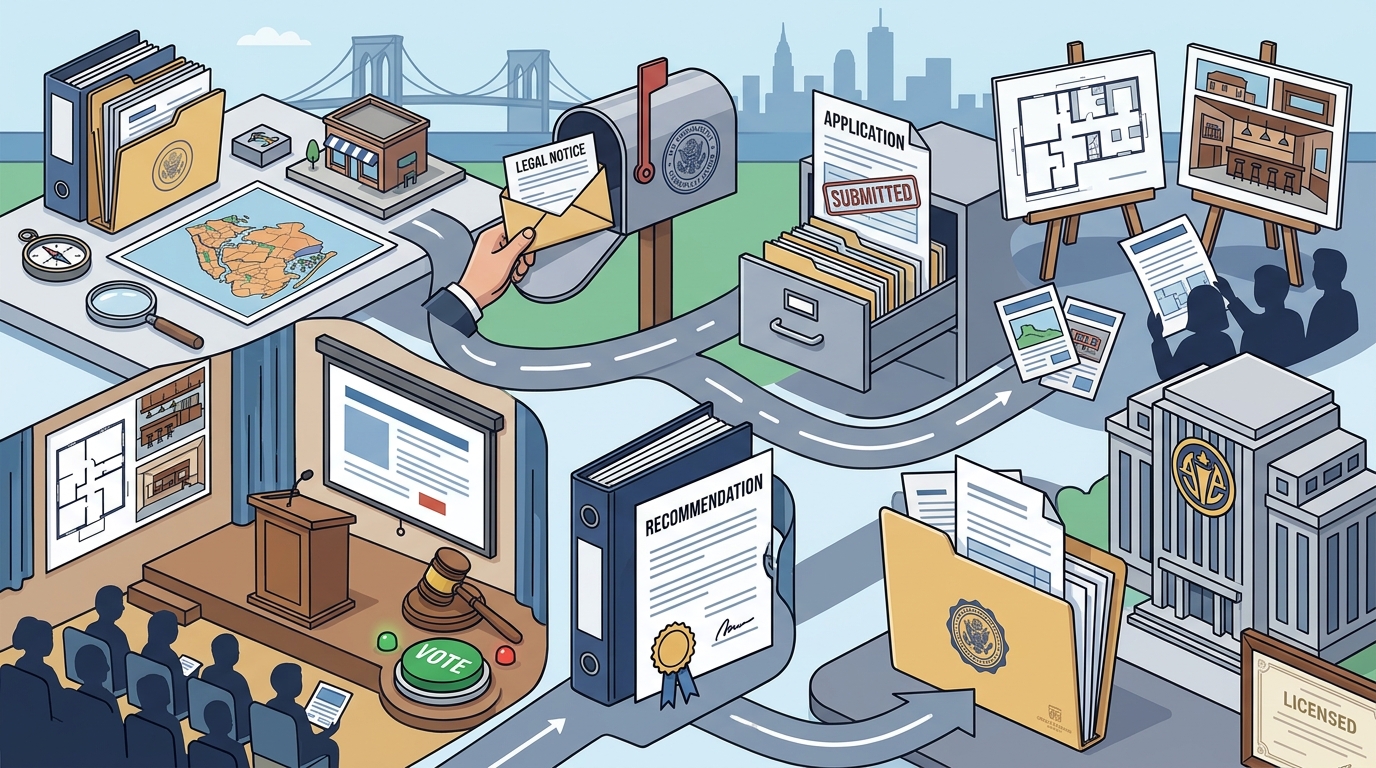
Know exactly which of the 59 community boards governs your specific address. New York City is divided into 59 community districts, each with its own board and specific rules. The board responsible for your location is determined by your exact street address, not just your borough. Identifying the correct board is the first critical step because each district has unique meeting schedules, application deadlines, and local ordinances that affect your timeline.
2. Verify Local Zoning and Ordinance Compliance
Confirm your location meets all local zoning and distance requirements before filing. Before submitting any paperwork, you must verify that your site complies with local zoning laws and distance restrictions from schools, parks, and other licensed establishments. Some community boards have additional local ordinances that restrict the number of licenses in a specific area. Failing to check these local rules can result in immediate rejection of your application by the board.
3. Prepare the Community Board Application Package
Assemble a complete and accurate application package for the local board. Each community board requires a specific set of documents, which often includes a site plan, business plan, and proof of state-level filings. The application must be tailored to the specific requirements of your district. Incomplete packages are a common reason for delays, so ensuring every form is signed and every document is attached is essential for moving the process forward.
4. Submit the Application and Pay Local Fees
File the application with the community board clerk and pay the required local fee. Once your package is ready, you must submit it to the community board clerk by the designated deadline. Local fees vary by district and are separate from state licensing fees. Paying the correct fee and receiving a receipt is crucial, as the board will not schedule your application for a hearing without proof of payment.
5. Attend the Public Hearing and Present Your Case
Appear at the scheduled public hearing to present your business plan to the board. Community boards hold public hearings where applicants must present their case and answer questions from board members and residents. You should be prepared to explain your business concept, hours of operation, and how you will mitigate any potential negative impacts on the neighborhood. Professional presentation and clear answers can significantly influence the board's decision.
6. Address Resident Comments and Objections
Respond professionally to any concerns raised by residents or board members. During the hearing, residents may voice objections regarding noise, traffic, or safety. It is important to listen to these concerns and provide factual, respectful responses. Addressing objections directly can help build goodwill with the board and the community, which is often a key factor in gaining approval. Ignoring or arguing with residents can lead to a negative recommendation.
7. Receive the Board Recommendation and Final Approval
Wait for the board's formal recommendation to the state licensing authority. After the hearing, the community board will vote on whether to recommend approval or denial of your license. This recommendation is sent to the New York State Liquor Authority (NYSLA). While the board's recommendation is not always binding, a positive recommendation significantly strengthens your application. Gerald Franklin Agency helps clients navigate this final step to ensure all local approvals are secured before state issuance.
Choosing the Right Approach for Your Application
When navigating the community board process, the most effective strategy is to start early and engage with the local community before your hearing. Building relationships with neighbors and understanding the specific concerns of your district can turn potential objections into support. For businesses seeking to streamline this complex process, Gerald Franklin Agency provides expert guidance on New York City liquor licensing requirements.
Frequently Asked Questions
How long does the community board process take in NYC?
The timeline varies by district, but it typically takes several weeks to a few months. This depends on the board's meeting schedule and the complexity of your application. Starting the process early is the best way to avoid delays in your opening date.
Can a community board deny a liquor license?
Yes, a community board can recommend denial if they believe the establishment will negatively impact the neighborhood. However, the final decision rests with the state licensing authority, which considers the board's recommendation along with other factors.
Do I need to attend the public hearing in person?
While you can sometimes submit a written statement, attending in person is highly recommended. It allows you to present your case directly, answer questions, and demonstrate your commitment to being a responsible neighbor.
What documents are typically required for the community board?
Requirements vary by district, but common documents include a site plan, business plan, proof of state filings, and a list of owners. It is essential to check the specific checklist for your community board to ensure you have everything needed.
How does Gerald Franklin Agency help with community board approvals?
Gerald Franklin Agency manages the entire local approval process, including identifying the correct board, preparing the application, and representing your business at the hearing. This ensures that all local requirements are met and that your application is presented in the best possible light.