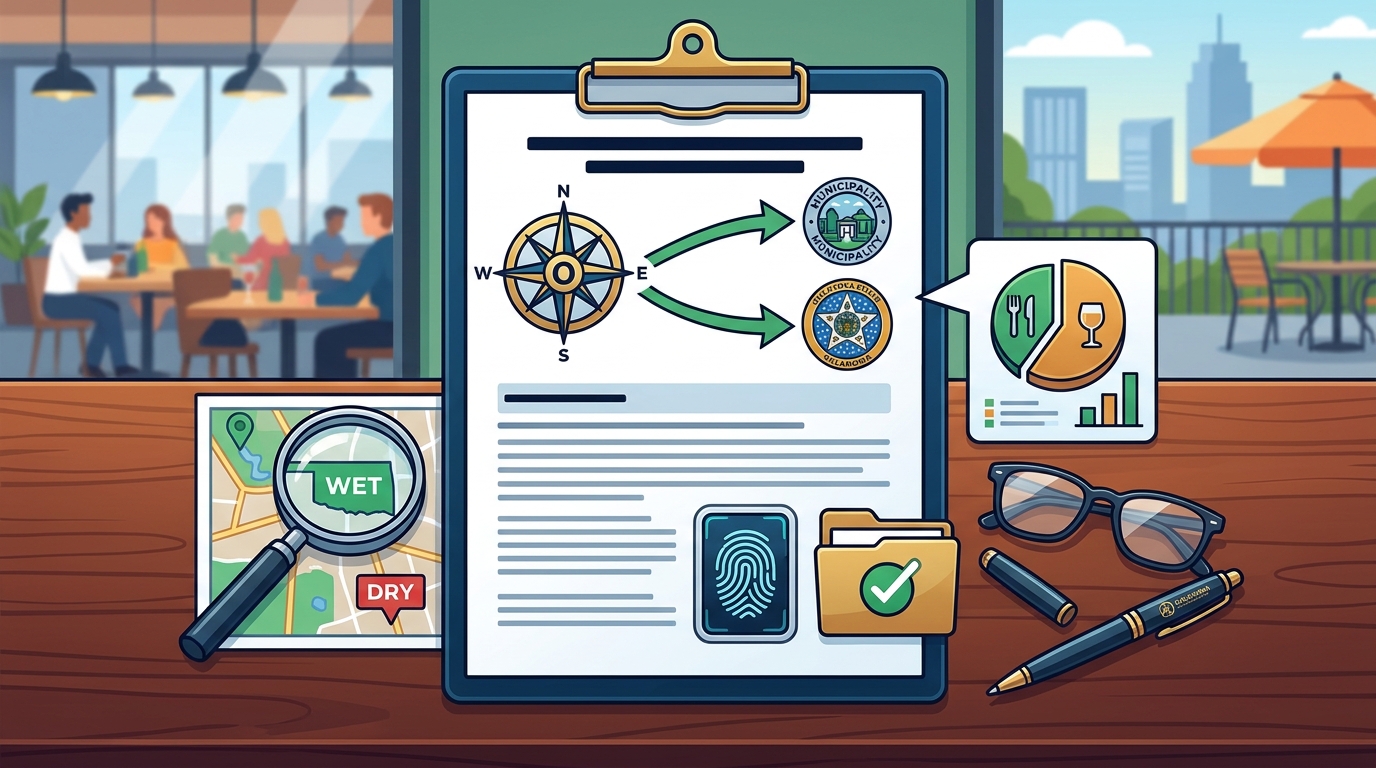
Getting a restaurant liquor license in Oklahoma requires securing approval from both the local municipality and the state. The process involves verifying your location's wet or dry status, passing background checks, and meeting specific food service ratios. Gerald Franklin Agency helps navigate these complex state and local rules to ensure your application is filed correctly the first time.
Understanding Oklahoma's Regulatory Framework
Oklahoma operates under a specific regulatory structure for alcohol sales. The Oklahoma Alcoholic Beverage Control Board (OABC) is the state agency responsible for issuing licenses and enforcing alcohol laws. However, the state does not act in a vacuum. Local governments hold significant power over whether alcohol can be sold in their jurisdictions. This dual-layer system means that a restaurant owner must satisfy two distinct sets of requirements before serving a single drink.
The first layer is the local option. Oklahoma counties and cities can vote to be wet, dry, or moist. A wet jurisdiction allows the sale of all types of alcohol. A dry jurisdiction prohibits alcohol sales entirely. A moist jurisdiction allows limited sales, such as beer and wine but not spirits. Before investing in a build-out, you must confirm the specific status of your city and county. If your location is in a dry area, a standard restaurant license is impossible without a specific local amendment or a private club structure, which carries different rules.
The second layer is the state license. Once local approval is secured, the business applies to the OABC. The state reviews the application for compliance with state statutes, including ownership disclosures and criminal history checks. This framework ensures that both community standards and state safety regulations are met. Understanding this split authority is the foundation of a successful licensing strategy.
Identifying the Correct License Class
Not all restaurant licenses are the same. Oklahoma defines specific license classes based on the type of alcohol served and the nature of the establishment. A restaurant license is distinct from a bar license or a package store license. The primary license for a full-service restaurant is the Restaurant License. This license allows the sale of spirits, beer, and wine for on-premises consumption. according to License and Permit
There are nuances to consider. For example, a restaurant that serves a full meal may have different requirements than a venue that primarily serves appetizers. The OABC looks at the ratio of food sales to alcohol sales. If a business derives the majority of its revenue from alcohol, it may be classified differently, potentially facing stricter scrutiny or different fee structures. Additionally, some restaurants may opt for a Beer and Wine license if they do not intend to serve spirits. This choice affects the cost of the license and the local approval process.
Choosing the right class is a strategic decision. It impacts your menu, your pricing, and your operational flexibility. A misclassification can lead to application delays or rejection. Gerald Franklin Agency reviews your business plan and menu to recommend the most appropriate license class for your specific concept.
Local Approval and Zoning Requirements
Local approval is often the most unpredictable part of the process. Cities and counties in Oklahoma have their own ordinances regarding where alcohol can be sold. Zoning is a critical factor. A restaurant may be zoned for commercial use, but that does not automatically mean it can sell alcohol. Some zones prohibit alcohol sales entirely, while others require a minimum distance from schools, churches, or other alcohol retailers.
The local approval process typically involves a public hearing. The local licensing authority, such as a city council or a county board, reviews the application. They may consider factors like the character of the neighborhood, the proposed hours of operation, and any objections from neighbors. This public nature of the process means that community relations matter. Engaging with your neighbors and local officials early can help mitigate potential objections.
Timing is also a local issue. Some jurisdictions have specific windows for filing applications. Missing a deadline can push your opening date back by months. The local process can take anywhere from a few weeks to several months, depending on the complexity of the application and the level of community opposition. Planning for this variability is essential for a realistic opening timeline.
State Application and Background Checks
Once local approval is in hand, the state application begins. The OABC requires a comprehensive application that includes detailed financial statements, ownership structures, and background checks for all owners and key employees. A background check is a criminal history review conducted by the state to ensure that the applicants are fit to hold a license. Any felony conviction or certain misdemeanor offenses can disqualify an applicant.
The application must be accurate and complete. Errors or omissions are a common cause of delays. The OABC has the authority to request additional information or to deny an application if the submitted documents do not meet statutory requirements. The state also requires a surety bond. A surety bond is a financial guarantee that the business will comply with state alcohol laws. The amount of the bond varies based on the license type and the location's proximity to schools.
Processing times at the state level can also vary. While the OABC aims to process applications within a set timeframe, complex cases or those requiring additional investigation can take longer. Keeping your application organized and responsive to any state inquiries is the best way to keep the process moving. Gerald Franklin Agency manages the state filing, ensuring that all documents are in order and that the application is tracked through the system.
Operational Compliance After Approval
Receiving the license is not the end of the process; it is the beginning of ongoing compliance. Oklahoma law imposes strict rules on how alcohol is sold and served. These rules include restrictions on hours of sale, minimum age verification, and responsible service practices. Violations can result in fines, suspension, or revocation of the license.
Staff training is a critical component of compliance. Servers and managers must be trained on how to identify signs of intoxication and how to refuse service appropriately. This training is not just a legal requirement; it is a risk management tool. Proper training helps protect the business from liability claims. Additionally, the business must maintain accurate records of alcohol purchases and sales. These records are subject to audit by the OABC.
Renewals are also a key operational task. Licenses in Oklahoma must be renewed periodically. Missing a renewal deadline can result in the loss of the license. Setting up a compliance calendar and keeping track of all regulatory deadlines is essential for long-term success. Gerald Franklin Agency provides ongoing support to help businesses stay compliant and avoid costly penalties.
Key Takeaways
- Oklahoma requires both local and state approval for restaurant liquor licenses.
- Verify the wet, dry, or moist status of your specific city and county before proceeding.
- Choose the correct license class, such as Restaurant or Beer and Wine, based on your menu. according to Business License Guide
- Local zoning and public hearings can significantly impact your timeline.
- Background checks and surety bonds are mandatory for state approval.
- Ongoing compliance with service rules and record-keeping is required to maintain the license.
Frequently Asked Questions
How long does it take to get a restaurant liquor license in Oklahoma?
The timeline varies by location. Local approval can take several weeks to months, followed by state processing. The total process often takes three to six months, depending on the complexity of the application and local opposition.
Can I sell alcohol in a dry county in Oklahoma?
Generally, no. Dry counties prohibit the sale of alcohol. However, some dry counties have local option votes that allow specific types of sales, such as beer and wine. You must check the specific status of your county.
What is a surety bond for a liquor license?
A surety bond is a financial guarantee filed with the state. It ensures that the business will comply with alcohol laws. If the business violates the law, the state can make a claim against the bond.
Do I need a local license if I have a state license?
Yes. In Oklahoma, you need both. The state license is issued by the OABC, but you must first obtain approval from your local municipality. You cannot operate with only a state license.
What happens if my application is denied?
If denied, you can appeal the decision. The appeal process involves a hearing where you can present evidence and arguments. It is important to understand the reason for the denial to build a strong appeal case.
Start Your Oklahoma Application
Navigating the dual requirements of local and state alcohol regulation in Oklahoma is complex. Gerald Franklin Agency brings decades of experience in licensing and permitting to help you secure your restaurant license. Our team prepares, files, and tracks your application through the entire process. To begin, for a consultation.