
For multi-state operators, the choice between Texas TABC permits and New York liquor licenses depends on your specific business model and location. Texas offers a more streamlined, single-agency process with clear fee structures, while New York requires navigating a complex web of local and state regulations. Gerald Franklin Agency helps businesses navigate both systems, ensuring you secure the right authorization for your market entry strategy.
Understanding the Regulatory Frameworks
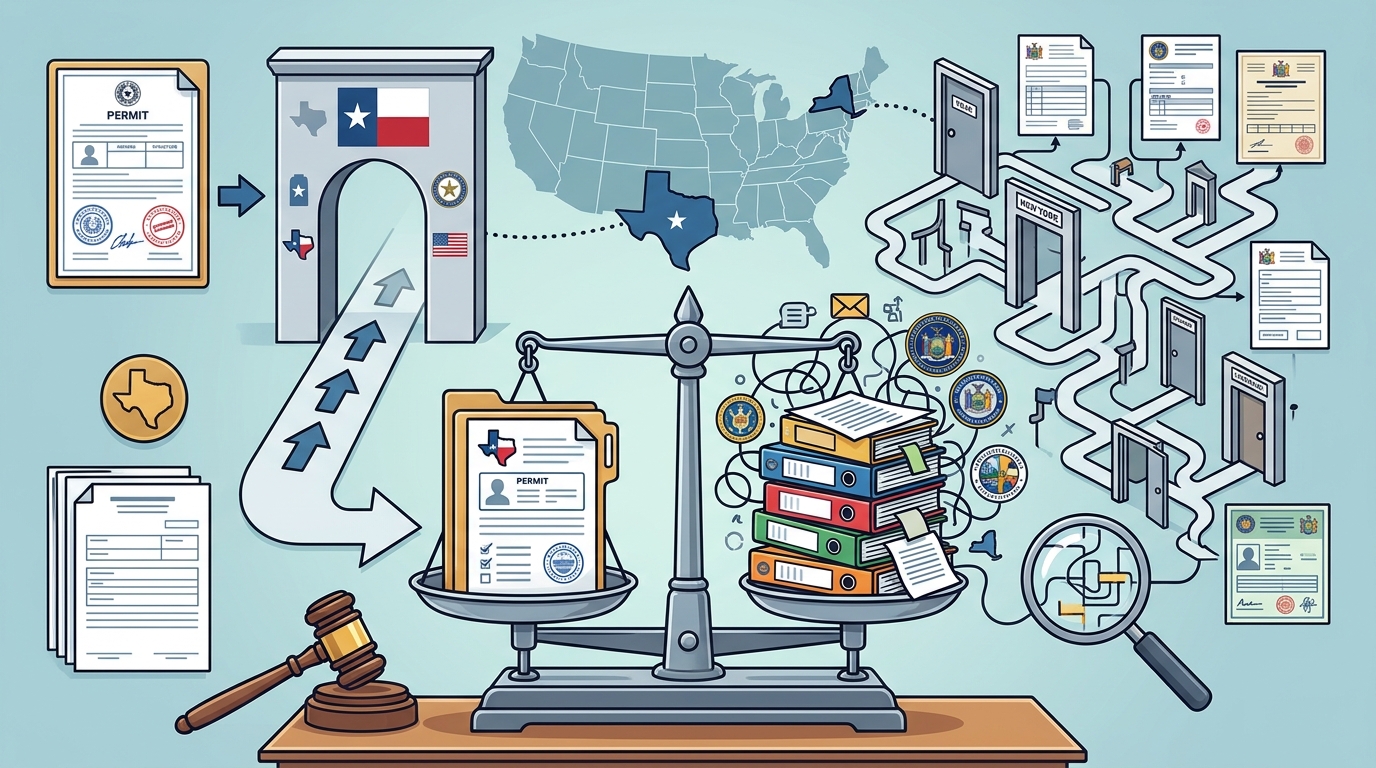
Texas Alcoholic Beverage Commission (TABC) permits are state-issued authorizations that allow businesses to sell, serve, or manufacture alcohol within Texas. A TABC permit is a specific legal document that grants rights for on-premise or off-premise alcohol sales, subject to local county and city certifications. In contrast, New York liquor licenses are governed by the New York State Liquor Authority (NYSLA) and often require additional local approvals from city or town boards. The fundamental difference lies in the level of local autonomy; New York grants significant power to local municipalities to restrict or deny licenses, whereas Texas relies more on state-level standards with local signature requirements.
Texas TABC Permits: Strengths and Limitations
Texas TABC permits are known for their standardized application process through the AIMS portal. The primary strength of the Texas system is its predictability. Once you meet the state requirements, such as distance from schools and local certifications, the approval process is largely administrative. This makes it easier for businesses to plan their opening timelines. However, the limitation is that Texas does not have a true quota system for most on-premise licenses, but local jurisdictions can still impose restrictions. For example, some counties may have specific rules regarding late hours or mixed beverage service. The Texas system suits businesses that value speed and a clear, state-centric regulatory path.
New York Liquor Licenses: Strengths and Limitations
New York liquor licenses are highly regulated and often involve a two-step process: state approval by the NYSLA and local approval by the municipality. The strength of the New York system is its strict control over the number of licenses in certain areas, which can protect existing businesses from oversaturation. However, this also means that obtaining a new license can be difficult or impossible in some cities if the quota is full. The process is slower and more complex, requiring public hearings and local board votes. This system suits businesses that are entering established markets where license scarcity adds value, but it requires patience and strong local relationships.
Comparison Table: TABC Permits vs. New York Licenses
| Criteria | Texas TABC Permits | New York Liquor Licenses |
|---|---|---|
| Regulatory Body | Texas Alcoholic Beverage Commission (TABC) | New York State Liquor Authority (NYSLA) and Local Boards |
| Application Process | State-centric via AIMS portal, local signatures required | State and local approval, public hearings often required |
| Quota System | Generally no quota for on-premise, local restrictions possible | Quota system in many cities, licenses often bought/sold |
| Processing Time | Typically 30-60 days, faster for standard permits | Can take months to over a year, depends on local board |
| Best For | Businesses seeking speed and state-level predictability | Businesses entering high-value, quota-limited markets |
Choosing the Right Path for Your Business
Choose Texas TABC permits if your priority is a faster, more predictable licensing process with a clear state-level framework. This is ideal for new businesses or those expanding into Texas where local restrictions are minimal. Choose New York liquor licenses if you are targeting a specific New York market where license scarcity adds strategic value, and you are prepared for a longer, more complex approval process involving local boards. Gerald Franklin Agency can help you evaluate both options and prepare the necessary documentation for either state.
Frequently Asked Questions
Can I use a Texas TABC permit to operate in New York?
No, TABC permits are only valid in Texas. You must obtain a separate New York liquor license to operate in New York. Each state has its own regulatory body and requirements.
How long does it take to get a New York liquor license?
It can take several months to over a year, depending on the local municipality and whether a quota is available. Public hearings and local board votes add significant time to the process.
Are there quotas for Texas TABC permits?
Generally, no. Texas does not use a quota system for most on-premise permits. However, local jurisdictions may have specific restrictions or requirements that can affect approval.
What is the main difference in local approval between Texas and New York?
In Texas, local approval typically involves signatures from the county clerk and city secretary. In New York, local approval often requires a public hearing and a vote by the local licensing board, which can be more subjective and time-consuming.
Can I transfer a New York license to Texas?
No, licenses are not transferable between states. You must apply for a new permit in each state where you intend to operate. The requirements and processes are entirely separate.
Next Steps for Multi-State Operators
Navigating alcohol licensing across state lines requires expertise in both regulatory frameworks. Gerald Franklin Agency, with its deep experience in Texas TABC permits and knowledge of other state systems, can guide you through the complexities of multi-state operations. To discuss your specific licensing needs, for a consultation.