
Renewing your TABC permit is a two-part process involving state and local fees. You must submit your renewal through the AIMS portal or by mail before your expiration date to avoid losing your license. This guide covers local fee requirements, timing windows, and the exact steps to keep your Texas alcohol license active.
Local Fee Requirements
Many business owners assume that paying the state fee to the Texas Alcoholic Beverage Commission (TABC) is the only cost involved in a renewal. This is a common misconception that leads to delayed approvals. A TABC permit renewal is not complete until both the state and local jurisdictions have received their respective fees. Local fees are determined by the specific city or county where your business operates. These fees vary significantly depending on the type of permit you hold, such as a Mixed Beverage or Wine and Malt permit.
For example, a Mixed Beverage permit holder in a major city like Houston or Dallas will face different local fee structures than a holder in a smaller rural county. The local fee is typically paid to the city secretary or the county clerk. It is critical to understand that the state will not issue your renewed permit until the local jurisdiction certifies that the local fee has been paid. This certification is a mandatory step in the renewal workflow. If you miss the local fee payment, your state renewal will remain in a pending status, potentially causing a gap in your legal authority to sell alcohol.
Who Collects Local Fees?
The entity that collects your local fee depends on your location. In most incorporated cities, the City Secretary handles the local fee and certification. In unincorporated areas or certain counties, the County Clerk may be the responsible party. Some jurisdictions require the fee to be paid directly to the city or county, while others may require it to be paid through a specific online portal. You must verify which office handles your specific location before you begin the renewal process.
Estimating Your Local Costs
Local fees are not standardized across Texas. They are set by local ordinances and can change from year to year. You should not rely on the fee amount from your previous renewal cycle. Instead, contact your local city secretary or county clerk to confirm the current fee for your specific permit type. This step ensures you have the correct amount ready when you proceed with the state filing. Underestimating this cost is one of the most common reasons for renewal delays.
Renewal Timing Windows
Timing is the most critical factor in a successful TABC permit renewal. The TABC operates on a strict timeline for when you can submit your renewal application. You cannot renew your permit too early, and you cannot let it expire without consequence. Understanding these windows prevents you from making errors that could result in a lapse in your license. The TABC allows you to begin the renewal process within a specific window before your expiration date.
Generally, you can submit your renewal application up to 90 days before your permit expires. This early window gives you ample time to gather documents, pay fees, and resolve any issues that may arise during the review process. However, you must be careful not to wait until the last minute. If you miss the expiration date, your permit is considered lapsed. A lapsed permit requires a different and more complex process to reactivate, often involving additional fees and a new application rather than a simple renewal.
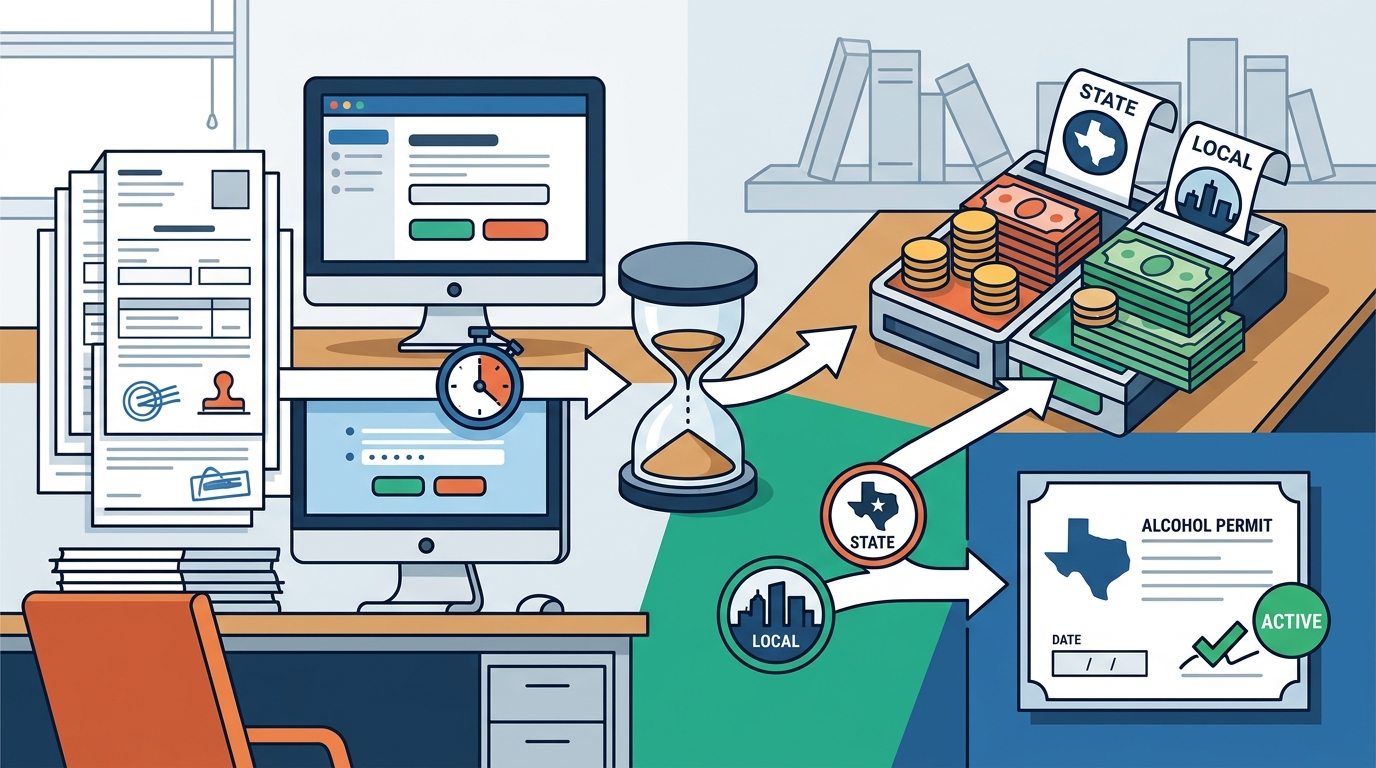
The 90-Day Window
The 90-day window is your safe zone for starting the renewal. During this period, the TABC system will accept your renewal application. It is recommended that you start the process at least 60 days before your expiration date. This buffer allows time for the local certification process, which can sometimes take several weeks. If you start too early, the system may not yet be ready to accept your renewal, depending on the specific permit type and jurisdiction.
Consequences of Missing the Deadline
If your permit expires, you lose the legal right to sell alcohol immediately. You cannot operate your business with an expired permit. To reactivate a lapsed permit, you must file a new application, which is treated as a new license request. This process is longer, more expensive, and involves a new background check and inspection. Avoiding this scenario is the primary goal of proper renewal timing. Always set reminders for your expiration date and begin the process well in advance.
AIMS Online Portal
The Alcohol Industry Management System (AIMS) is the primary platform for managing TABC licenses and permits. AIMS is an online portal that allows you to apply for, renew, and manage your TABC permits. It is the fastest and most efficient way to handle your renewal. The TABC strongly encourages all permit holders to use AIMS for their transactions. Using the portal reduces processing times and provides real-time status updates on your application.
To use AIMS, you must have a valid user account. If you do not have an account, you will need to create one before you can begin your renewal. The portal requires you to log in with your credentials and navigate to the specific permit you wish to renew. The system will guide you through the required fields and fee payments. It is essential to ensure that your contact information in AIMS is up to date, as all notifications and status changes will be sent to the email address on file.
Creating and Managing Your Account
If you are a new user or have not used AIMS in a while, you may need to reset your password or create a new account. The account creation process requires basic business information and a valid email address. Once your account is active, you can link your permit to your profile. This linkage allows you to view the status of your permit and initiate renewals directly from your dashboard. Keep your login credentials secure, as they are the key to managing your license.
Benefits of Using AIMS
Using AIMS offers several advantages over paper forms. You receive immediate confirmation of submission, which is not available with mail-in applications. You can track the status of your renewal in real time, seeing when the state has received your payment and when the local certification is pending. The portal also allows you to pay fees electronically, which speeds up the processing time. For most permit holders, AIMS is the recommended and most efficient method for renewal.
AIMS Renewal Process
Once you are logged into the AIMS portal, the renewal process follows a structured sequence of steps. You must complete each step in order to ensure your application is processed correctly. The process involves verifying your business information, selecting the renewal option, and paying the required fees. It is important to review all information carefully before submitting, as errors can cause delays or rejections.
The first step is to locate your permit in the AIMS dashboard. You will see a list of all permits associated with your account. Select the permit you wish to renew. The system will display the expiration date and the current status. If you are within the renewal window, you will see an option to initiate the renewal. Clicking this option will take you to the renewal form. You will need to confirm your business details, including the address, ownership, and contact information. Any changes to these details must be reported separately before you can proceed with the renewal. according to TABC New License
Step-by-Step Renewal in AIMS
After confirming your business details, you will proceed to the fee payment section. The system will calculate the total amount due, which includes the state fee. You will need to provide a valid credit card or other payment method to pay the state fee. Once the payment is processed, the system will generate a receipt. You should save this receipt for your records. The next step is to wait for the local certification. The TABC will send a notification to your local jurisdiction, and you will need to ensure that the local fee is paid and certified.
Monitoring Your Application Status
After submitting your renewal in AIMS, you can monitor the status of your application in real time. The status will typically change from "Submitted" to "Pending Local Certification" and then to "Approved." You should check the status regularly, especially if you are close to your expiration date. If the status remains pending for an extended period, you may need to contact your local jurisdiction to ensure they have received the certification request. The AIMS portal provides a clear view of where your application stands in the process.
Paper Form Alternatives
While AIMS is the preferred method, the TABC also accepts paper forms for permit renewals. This option is available for those who prefer not to use the online portal or who may have technical difficulties. However, using paper forms is generally slower and less efficient than using AIMS. You must be aware of the specific requirements for submitting paper forms to avoid delays.
To renew by mail, you must download the correct renewal form from the TABC website. The form must be completed accurately and signed by the authorized representative of the business. You must include the required state fee payment, usually in the form of a check or money order made payable to the TABC. The form and payment must be mailed to the TABC office. It is important to use a trackable mailing method, such as certified mail, so you can confirm that the TABC has received your application.
Requirements for Paper Submissions
When submitting a paper renewal, you must ensure that all required fields are filled out. Missing information is a common reason for rejection. You must also include any required local certifications or fees, depending on your jurisdiction. Some local jurisdictions may require you to submit the local fee directly to them, while others may accept it through the TABC. You should verify this with your local city secretary or county clerk. The paper process does not provide real-time status updates, so you must follow up by phone or mail if you do not receive a confirmation within a reasonable time.
When to Use Paper Forms
Paper forms are best used as a backup option or if you have specific reasons for not using AIMS. If you are comfortable with the online portal, AIMS is the faster and more reliable choice. If you choose to use paper forms, allow extra time for processing. The mail-in process can take several weeks longer than the online process. Ensure that you submit your paper renewal well before your expiration date to account for the longer processing time.
Local Fees Verification
Verifying your local fees is a critical step in the renewal process that many business owners overlook. The local fee is not paid to the TABC; it is paid to your local city or county. You must ensure that this fee is paid and certified before the TABC will issue your renewed permit. Failure to verify and pay the local fee is a leading cause of renewal delays.
To verify your local fees, you should contact your city secretary or county clerk. Ask them for the current fee amount for your specific permit type. Confirm the method of payment, whether it is online, by mail, or in person. Once you have paid the local fee, request a certification of payment. This certification is what the TABC requires to finalize your renewal. You should keep a copy of this certification for your records. If you are using AIMS, the system will notify you when the local certification is received, but it is still wise to confirm directly with your local jurisdiction.
How to Contact Your Local Jurisdiction
Your local jurisdiction is determined by the location of your business. If your business is in a city, contact the City Secretary. If it is in an unincorporated area, contact the County Clerk. You can find contact information for these offices on their respective websites. When you call, have your permit number and business name ready. Ask specifically about the renewal fee and the certification process. Some jurisdictions may have specific deadlines for local fee payments, so it is important to confirm these as well.
Common Local Fee Issues
One common issue is that the local fee amount has changed since your last renewal. Always confirm the current amount. Another issue is that the local jurisdiction may require additional documentation, such as a current business license or proof of insurance. Ask your local contact if any additional documents are required. Resolving these issues before you submit your state renewal can save you significant time and frustration.
Local Tax Clearance
In addition to the local fee, some jurisdictions require a tax clearance certificate as part of the renewal process. A tax clearance certificate is a document that verifies your business is in good standing with the local tax authorities. This requirement varies by city and county. Some jurisdictions require it for all permit renewals, while others may only require it for specific types of permits or if there are outstanding tax issues.
To obtain a tax clearance certificate, you must contact your local tax office. You will need to provide your business information and any outstanding tax balances. If you have no outstanding taxes, the office will issue a clearance certificate. If you have outstanding taxes, you must resolve them before the certificate will be issued. This certificate must be submitted to the TABC or your local jurisdiction, depending on their requirements. Failing to obtain this certificate can delay your renewal.
Understanding Tax Clearance Requirements
Not all jurisdictions require a tax clearance certificate. You must verify this with your local city secretary or county clerk. If it is required, ask for the specific form or process to obtain it. Some offices may issue the certificate online, while others may require you to visit in person. The process can take several days, so it is important to start early. Ensure that your business tax records are up to date to avoid delays in obtaining the certificate.
Resolving Outstanding Tax Issues
If you have outstanding local taxes, you must resolve them before you can obtain a clearance certificate. This may involve paying the outstanding balance or setting up a payment plan. Contact your local tax office to discuss your options. Once the issue is resolved, you can request the clearance certificate. Keeping your tax records current is the best way to avoid this complication during your renewal process.
Key Takeaways
- Renewing your TABC permit requires both state and local fees.
- You can begin the renewal process up to 90 days before your expiration date.
- The AIMS online portal is the fastest and most efficient way to renew.
- Local fees are paid to your city secretary or county clerk, not the TABC.
- You must verify the current local fee amount before paying.
- Some jurisdictions require a tax clearance certificate for renewal.
- Missing the expiration date results in a lapsed permit, which is harder to reactivate.
- Always keep a copy of your payment receipts and local certifications.
Frequently Asked Questions
How early can I renew my TABC permit?
You can begin the renewal process up to 90 days before your permit expires. It is recommended to start at least 60 days in advance to allow time for local certification.
Do I have to pay local fees to the TABC?
No, local fees are paid to your city secretary or county clerk. The TABC requires certification from the local jurisdiction that the fee has been paid.
What happens if my permit expires?
If your permit expires, you lose the legal right to sell alcohol. You must file a new application to reactivate it, which is a longer and more expensive process.
Can I renew my permit by mail?
Yes, the TABC accepts paper forms for renewals. However, the AIMS online portal is faster and provides real-time status updates.
Do I need a tax clearance certificate?
Some jurisdictions require a tax clearance certificate. You must verify this with your local city secretary or county clerk.
How do I check the status of my renewal?
If you used AIMS, you can check the status in your dashboard. If you used a paper form, you must contact the TABC or your local jurisdiction for an update.