
How to Get a TABC Permit in Texas: The 2026 Process
Getting a TABC permit in Texas requires a multi-step process involving state filings, local government certifications, and surety bonds. The Texas Alcoholic Beverage Commission (TABC) regulates all alcohol sales, and the specific steps depend on your business type and location. This guide covers the four critical phases of the process: selecting the right permit type, fulfilling public notice requirements, understanding the processing timeline, and navigating the application review. We will break down exactly how to move your application from initial concept to final approval.
TABC Permit Types
Choosing the correct permit is the first and most critical step in the licensing process. A TABC permit is a legal authorization issued by the state that allows a business to sell, serve, or distribute alcoholic beverages. The wrong choice can lead to rejected applications, wasted fees, and significant delays. Texas law categorizes permits based on the type of alcohol sold and the location of consumption.
On-Premise Permits
On-premise permits allow customers to consume alcohol within the establishment. The most common type is the Mixed Beverage Permit, which authorizes the sale of spirits, wine, and beer for on-site consumption. This is the standard permit for bars, nightclubs, and full-service restaurants. Another key on-premise option is the Wine and Malt Beverage Retailer's Permit, which allows the sale of wine and beer but excludes distilled spirits. This is often preferred by cafes and wine bars that do not want to carry hard liquor.
Off-Premise Permits
Off-premise permits allow customers to purchase sealed containers of alcohol to take home. The Package Store Permit is the license for traditional liquor stores, allowing the sale of spirits, wine, and beer. This permit comes with strict requirements, including specific operating hours and physical separation from other businesses. The Wine and Malt Beverage Off-Premise Permit, often called the BQ permit, allows convenience stores and grocery stores to sell sealed wine and beer. It does not cover distilled spirits and has different operating hours than the Package Store Permit.
Certificates and Special Permits
Some businesses need additional certificates to modify their primary permit. The Food and Beverage Certificate is a subordinate certificate that verifies a business is primarily a food establishment. It can exempt the business from the conduct surety bond and allow for "alcohol to go" sales. The Late Hours Certificate extends operating hours to 2:00 AM, which is essential for nightlife venues. Temporary Event Permits allow one-time or short-run alcohol sales at festivals, galas, and sporting events. Understanding these distinctions ensures you apply for the exact authorization your business model requires.
| Permit Type | Code | Best For | Consumption |
|---|---|---|---|
| Mixed Beverage Permit | MB | Bars, Restaurants, Clubs | On-Premise |
| Wine and Malt Retailer | BG | Wine Shops, Cafes | On-Premise |
| Package Store Permit | P | Liquor Stores | Off-Premise |
| Wine and Malt Off-Premise | BQ | Convenience Stores, Grocers | Off-Premise |
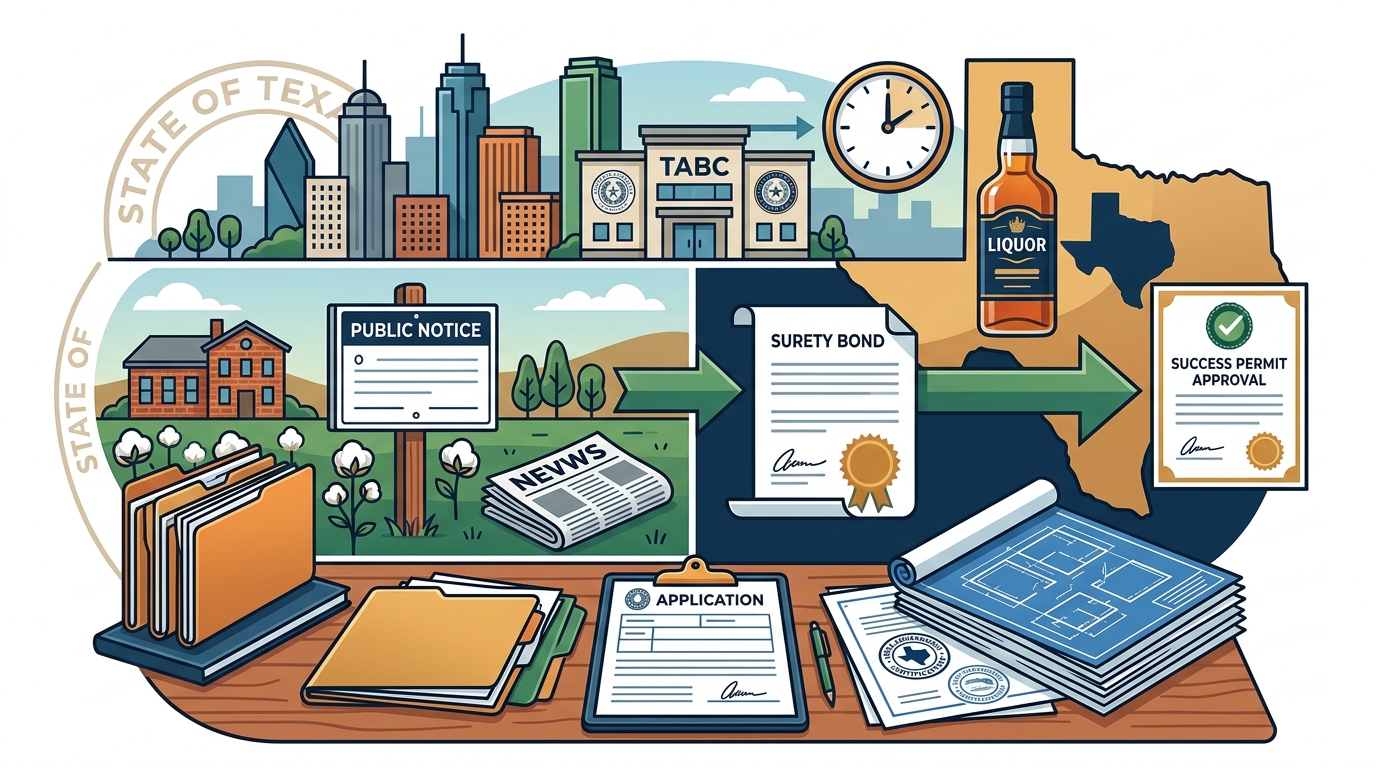
Public Notice Requirements
Public notice is a mandatory legal requirement for most TABC permit applications. The purpose of public notice is to inform the community and local officials about the intent to operate an alcohol establishment. This transparency allows neighbors, competitors, and local authorities to review the application and file objections if necessary. Failure to provide proper public notice can result in the rejection of your application or the revocation of a permit after issuance.
Newspaper Publication
For most permit types, you must publish a notice in a newspaper of general circulation in the county where the business is located. The notice must include specific details, such as the name of the applicant, the location of the business, the type of permit sought, and the date of the public hearing. The publication must occur at least 30 days before the scheduled hearing date. This requirement ensures that the community has adequate time to review the application and prepare any objections.
Local Government Notifications
In addition to newspaper publication, you must notify specific local government officials. This typically includes the county clerk, the city secretary or mayor, and the county judge. These officials are responsible for certifying the application and scheduling the public hearing. The county judge plays a crucial role in the process, as they must approve the application and preside over any public hearings. Proper notification to these officials is essential for moving the application forward in the local certification phase.
Objections and Hearings
After public notice is published, interested parties have the right to file objections to the application. Objections can be based on various grounds, including zoning issues, proximity to schools or churches, or concerns about the character of the applicant. If objections are filed, a public hearing is scheduled before the county judge. The applicant has the right to present their case and respond to objections. The county judge then makes a final decision on the local certification. Navigating this phase requires careful preparation and an understanding of local regulations.
Processing Timeline
The processing timeline for a TABC permit varies significantly based on the permit type, the location, and the complexity of the application. On average, the entire process can take anywhere from 60 to 120 days. However, this timeline is not guaranteed and can be extended by various factors, including incomplete applications, local objections, or TABC review delays. Understanding the different phases of the timeline helps you plan your business opening and manage expectations.
Local Certification Phase
The first phase of the timeline is the local certification process. This phase begins when you file your application with the county clerk and city secretary. The local officials review the application for completeness and compliance with local ordinances. They then schedule a public hearing and publish the required notices. This phase typically takes 30 to 60 days, depending on the local government's processing speed and whether objections are filed. If the local certification is approved, the application moves to the state level.
State Review Phase
Once the local certification is complete, the application is submitted to the TABC for state review. The TABC reviews the application for compliance with state laws and regulations. This includes background checks on the applicants and a review of the business's financial and legal history. The TABC may also schedule an interview with the applicant and inspect the premises. This phase typically takes 30 to 60 days. If the TABC approves the application, the permit is issued and the business can begin operations.
Factors Affecting Timeline
Several factors can affect the processing timeline. Incomplete or inaccurate applications are the most common cause of delays. Ensuring that all required documents are submitted correctly the first time can save weeks of processing time. Local objections can also extend the timeline, as they require a public hearing and a decision by the county judge. Additionally, the TABC's workload can impact processing times, especially during peak application periods. Working with an experienced licensing agency can help mitigate these risks and keep your application on track.
Application Processing Timeline
The application processing timeline is a detailed breakdown of the specific steps involved in filing and reviewing a TABC permit. This section focuses on the practical aspects of the application process, from initial preparation to final issuance. Understanding these steps helps you prepare the necessary documents and anticipate the next actions required from you or the authorities.
Preparation and Filing
The first step in the application process is preparing the required documents. This includes the TABC application form, financial statements, background checks, and local certifications. The application must be filed through the TABC's AIMS portal, which is the state's online system for alcohol licensing. Filing through AIMS ensures that your application is tracked and processed efficiently. It is crucial to ensure that all information is accurate and consistent across all documents. Any discrepancies can lead to delays or rejection.
Review and Inspection
After filing, the TABC reviews the application for completeness and compliance. This review includes a check of the applicant's background and a review of the business's financial history. The TABC may also schedule an inspection of the premises to ensure that it meets state safety and health standards. The inspection is a critical part of the process, as it verifies that the business is ready to operate in compliance with TABC regulations. Preparing for the inspection involves ensuring that the premises are clean, safe, and equipped with the necessary signage and safety features.
Approval and Issuance
If the application passes the review and inspection, the TABC issues the permit. The permit is then delivered to the applicant, and the business can begin operations. It is important to note that the permit must be displayed in a conspicuous place within the establishment. The business must also comply with all TABC regulations, including operating hours, age verification, and safe service practices. Failure to comply with these regulations can result in fines, suspension, or revocation of the permit. Regular compliance checks and training for staff are essential for maintaining a valid permit.
Key Takeaways
- Choosing the correct TABC permit type is the foundation of a successful application.
- Public notice is a mandatory requirement that involves newspaper publication and local government notifications.
- The processing timeline typically ranges from 60 to 120 days, depending on the permit type and location.
- Local certification is the first phase of the timeline, involving the county clerk, city secretary, and county judge.
- State review by the TABC includes background checks, financial reviews, and premises inspections.
- Incomplete applications and local objections are the most common causes of delays.
- Working with an experienced licensing agency can help navigate the complex process and ensure timely approval.
- Compliance with TABC regulations is ongoing and essential for maintaining a valid permit.
Frequently Asked Questions
What is the first step in getting a TABC permit?
The first step is determining the correct permit type for your business. This involves understanding what type of alcohol you plan to sell and where customers will consume it. Once you have identified the right permit, you can begin preparing the application and local certifications.
How long does the public notice process take?
The public notice process typically takes 30 to 60 days. This includes the time required for newspaper publication and the scheduling of the public hearing by the county judge. The exact timeline depends on the local government's processing speed.
Can I operate my business while the permit is being processed?
No, you cannot operate your business or sell alcohol until the TABC permit is officially issued. Operating without a valid permit is a violation of Texas law and can result in significant fines and legal consequences.
What happens if my application is rejected?
If your application is rejected, you will receive a notice explaining the reasons for the rejection. You can appeal the decision or submit a new application with the necessary corrections. It is important to address the specific issues cited in the rejection notice before resubmitting.
Do I need a surety bond for my TABC permit?
Most TABC permits require a conduct surety bond. This bond guarantees that your business will comply with state alcohol laws. The amount of the bond varies by permit type and location. Some permits, such as those with a Food and Beverage Certificate, may be exempt from the conduct bond.
How can I speed up the processing timeline?
You can speed up the processing timeline by ensuring that your application is complete and accurate from the start. This includes providing all required documents, meeting local certification requirements, and preparing for the TABC inspection. Working with an experienced licensing agency can also help identify and resolve potential issues early in the process.
What is the role of the county judge in the TABC permit process?
The county judge is responsible for approving the local certification and presiding over any public hearings. They review the application and any objections filed by the community. Their approval is required before the application can move to the state level for TABC review.
Can I apply for multiple permits at once?
Yes, you can apply for multiple permits if your business requires them. For example, a restaurant might apply for a Mixed Beverage Permit and a Food and Beverage Certificate. However, each permit requires its own application and processing timeline. It is important to coordinate the filings to ensure that all permits are issued before you begin operations.