
Opening a new bar in Texas requires navigating a complex regulatory landscape. The Texas Alcoholic Beverage Commission (TABC) oversees all alcohol licensing, and a single error can delay your opening. Gerald Franklin Agency, a Houston based firm staffed by former TABC professionals, helps you navigate these steps to ensure your application is filed correctly the first time.
1. Verify Your Location and Zoning
Confirm your specific address is in a wet jurisdiction and zoned for alcohol sales. Texas law designates certain areas as dry, where alcohol sales are prohibited entirely. You must verify that your city and county allow the specific type of license you are seeking, such as a Mixed Beverage Permit. Zoning ordinances also dictate where bars can operate relative to schools, churches, and other sensitive locations.
2. Select the Correct Permit Class
Choose the permit that matches your business model and service style. A Mixed Beverage Permit allows you to serve spirits, wine, and beer on premise. If you plan to sell alcohol to go, you may need a Food and Beverage Certificate attached to your permit. Selecting the wrong class is a common cause of application rejection, so define your menu and service style before filing.
3. Prepare Required Documentation
Assemble all legal and financial documents before starting the online portal. You will need your business formation documents, such as Articles of Organization or Incorporation. You must also provide a floor plan of the establishment and a list of all owners and officers. Each individual owner must complete a separate application and pass a background check.
4. Secure the Conduct Surety Bond
Obtain the required surety bond to guarantee compliance with state laws. Most on premise permits require a conduct surety bond, which protects the state if you violate alcohol regulations. The bond amount varies by permit type and location. Gerald Franklin Agency issues these bonds in house and files them directly into the TABC AIMS portal to prevent delays.
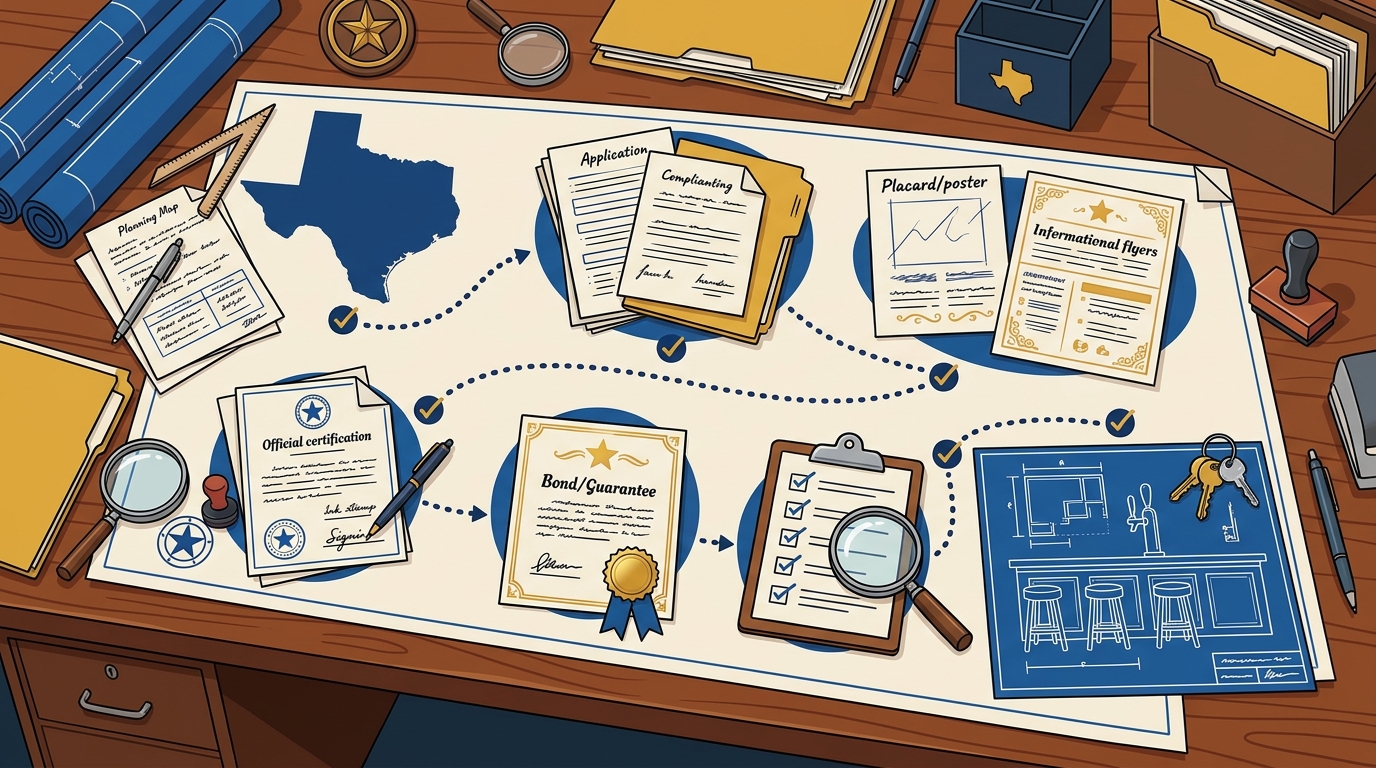
5. File the Application in AIMS
Submit your application through the TABC AIMS portal with all supporting documents. The AIMS system is the central hub for all TABC applications. You must upload your floor plan, bond, and owner disclosures. Ensure that every field is completed accurately, as the system may flag inconsistencies between your business registration and your TABC application.
6. Manage Local Certifications
Obtain the necessary local city and county approvals. In many Texas jurisdictions, the local government must certify your application before the TABC will issue the license. This step involves local background checks and zoning verification. Failing to secure local certification is a frequent reason for state level delays, so coordinate with your local clerk early.
7. Track and Follow Up on Your Application
Monitor your application status and respond to any requests for additional information. The TABC may request clarification or additional documents during the review process. Prompt responses keep your application moving. Gerald Franklin Agency tracks every application from filing to final approval, ensuring you are notified of any issues immediately.
Frequently Asked Questions
How long does a TABC application take?
Timelines vary by location and permit type, but most applications take several weeks to process. Local certifications and background checks can add time. Working with an experienced agency can help identify and resolve bottlenecks faster.
Do I need a lawyer for a TABC application?
You do not legally need a lawyer to file a TABC application, but you do need expertise. A licensing specialist who understands the TABC rules can prevent costly errors. Gerald Franklin Agency provides this expertise without the high cost of legal representation for routine filings.
What is a Mixed Beverage Permit?
A Mixed Beverage Permit is a TABC license that allows a business to serve distilled spirits, wine, and beer on premise. It is the standard permit for bars and restaurants that serve full service alcohol.
Can I serve alcohol to go with a Mixed Beverage Permit?
Generally, no. A standard Mixed Beverage Permit is for on premise consumption only. To sell alcohol to go, you typically need a Food and Beverage Certificate, which verifies that your primary business is food service.
What happens if my application is denied?
If your application is denied, you can appeal the decision. However, prevention is better than cure. Ensuring your documentation is complete and your location is compliant before filing significantly reduces the risk of denial.
Choosing the Right Path
Success in the TABC application process depends on preparation and precision. Verify your location, choose the right permit, and secure your bonds before you file. For a streamlined process, contact Gerald Franklin Agency to have your application handled by former state regulators. Learn more: Contact Gerald Franklin Agency.