
Applying for a TABC permit in Texas requires verifying your location's wet or dry status, selecting the correct permit class, and securing required surety bonds. The Texas Alcoholic Beverage Commission regulates all alcohol sales, and errors in the initial filing can delay your opening by months. Gerald Franklin Agency, the largest private liquor license agency in Texas, helps businesses navigate these complex state and local requirements to ensure your application is approved on the first attempt.
Understanding the TABC Permit Structure
The Texas Alcoholic Beverage Commission, or TABC, is the state agency responsible for regulating the production, distribution, and sale of alcoholic beverages. A TABC permit is the official authorization that allows a business to legally sell or serve alcohol within the state. Unlike some states that use a single license for all alcohol types, Texas divides permits into specific classes based on the type of beverage and the method of sale. according to FAQs TABC
Most businesses fall into one of two primary categories: on-premise or off-premise. On-premise permits, such as the Mixed Beverage Permit, allow customers to consume alcohol at the establishment. Off-premise permits, like the Package Store Permit, allow customers to take alcohol home. Choosing the wrong class is a common error that results in immediate rejection. For example, a restaurant serving wine and beer needs a Wine and Malt Beverage Permit, while a bar serving cocktails needs a Mixed Beverage Permit. Gerald Franklin Agency confirms the correct class for your specific business model before any filing begins.
Verifying Location and Local Restrictions
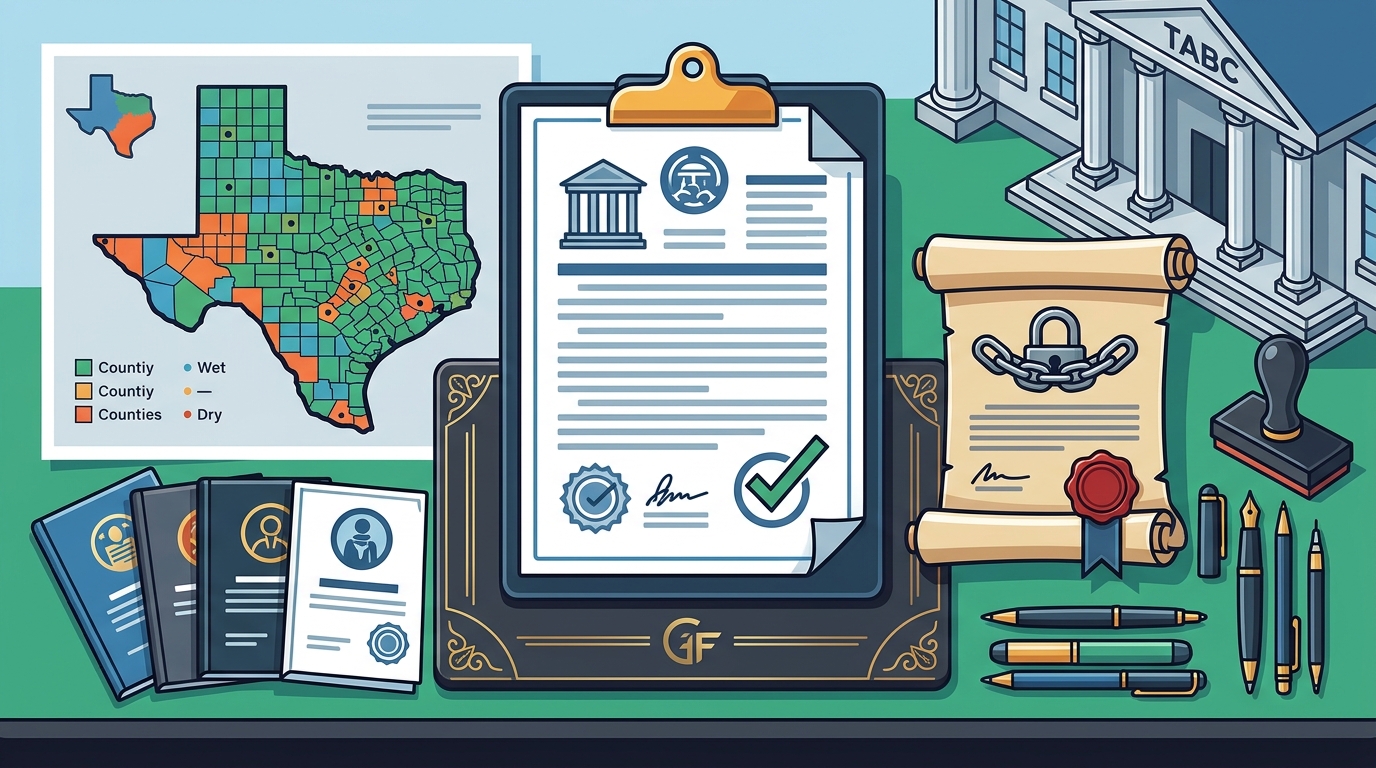
Before you spend money on applications, you must verify that your specific location is in a wet area. Texas operates under a local option system where counties and cities can vote to prohibit or restrict alcohol sales. A location in a dry county cannot obtain a TABC permit for most alcohol types, regardless of how well the application is prepared. You must check with the county clerk and city secretary to confirm the local status of your address.
Even in wet areas, local ordinances impose specific restrictions. Some cities require a local permit in addition to the state TABC permit. For instance, the City of Houston requires a separate dance hall license for any venue with a dance floor, regardless of the TABC permit held. These local rules vary significantly by municipality. Gerald Franklin Agency reviews your exact address against local codes to identify any additional city or county requirements that could block your state approval.
Securing Required Surety Bonds
You can avoid the Conduct Surety Bond if you obtain a Food and Beverage Certificate. This certificate verifies that your business is food-first, meaning food sales constitute a significant portion of your revenue. It also allows you to sell alcohol to go in many cases. The bond must be maintained for the first three years of operation. After that, a clean record may qualify you for release. Gerald Franklin Agency issues these bonds in-house and files them directly into the TABC AIMS portal, ensuring they never hold up your permit issuance.
Preparing the Application and Background Checks
The TABC application requires detailed information about the business and every individual with a significant interest in the company. You must submit criminal history reports for all owners, officers, and directors with a 20 percent or greater interest. These reports must be certified and recent. Any undisclosed criminal history or failure to disclose a required party can lead to denial or revocation of the permit later.
The application is filed through the TABC AIMS portal, which is the state's online system for alcohol licensing. You must also provide facility diagrams, lease agreements, and proof of local approvals. The TABC reviews these documents for compliance with state codes, including distance requirements from schools and churches. A single missing document can pause the review process for weeks. Gerald Franklin Agency assembles the complete package, including all supporting documents and disclosures, to ensure a smooth review.
Managing the Review and Approval Timeline
After filing, the TABC reviews your application, which can take several weeks to months depending on the permit type and local approvals. During this time, the application is posted for public notice, allowing neighbors and community members to file protests. If a protest is filed, the TABC may schedule a hearing where you must defend your application. This process can add significant time to your opening schedule.
Timelines vary by permit class and locality. A Mixed Beverage Permit in a busy urban area may take longer than a Package Store Permit in a rural county. You should plan your opening date with a buffer for the review period. Gerald Franklin Agency tracks your application through the AIMS portal and manages any protests or hearings, keeping the process moving so you open on schedule.
Key Takeaways
- Verify your location is in a wet area and check for local city or county restrictions before applying.
- Select the correct TABC permit class based on your business model, such as Mixed Beverage or Wine and Malt.
- Submit certified criminal history reports for all owners and officers with a 20 percent or greater interest.
- File through the TABC AIMS portal and be prepared for a public notice and protest period.
- Plan for a review timeline of several weeks to months, depending on the permit type and local approvals.
- Use a specialized agency to manage the complex state and local requirements and avoid delays.
Frequently Asked Questions
How long does it take to get a TABC permit in Texas?
Timelines vary by permit class and locality, but most applications take several weeks to months. The review period includes a public notice and protest window, which can extend the process if objections are filed.
What is the difference between a license and a permit in Texas?
Texas uses both terms across different classes. A permit is the general authorization to sell or serve alcohol, while a license may refer to specific local or state authorizations. The key is matching the exact class to your business needs.
Do I need a local permit in addition to the TABC permit?
Yes, many cities and counties require their own permits or approvals. You must check with your local government to determine if additional local requirements apply to your specific address.
What is a Conduct Surety Bond?
A Conduct Surety Bond is a financial guarantee that your business will comply with Texas alcohol laws. It protects the state and is required for most on-premise and retail permits unless you hold a Food and Beverage Certificate.
Can I apply for a TABC permit if I have a criminal record?
You must disclose all criminal history for owners and officers. The TABC reviews these records to determine eligibility. Some records may disqualify you, while others may be considered with additional documentation.
How do I file a TABC permit application?
Applications are filed through the TABC AIMS portal. You must submit the application form, supporting documents, criminal history reports, and the required surety bond. Gerald Franklin Agency handles the entire filing process for you.
Start Your TABC Permit Application
Navigating the TABC permit process requires knowledge of state regulations, local ordinances, and financial requirements. Gerald Franklin Agency has managed alcohol licensing since 1944 and brings that experience to your application. Our team of former state alcohol regulators prepares, files, and tracks your application from the first question to final approval. To plan your visit, to discuss your specific business needs and location.