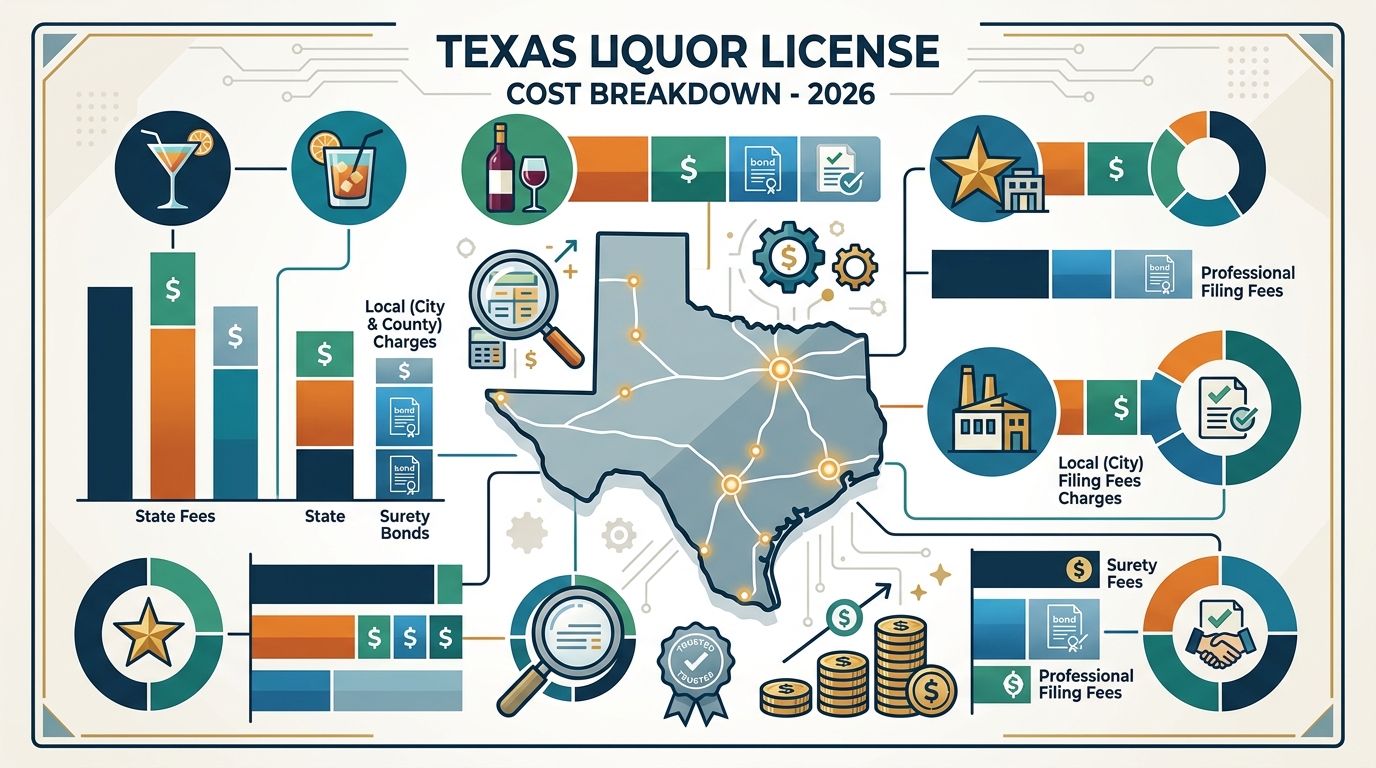
A Texas liquor license cost in 2026 ranges from $1,800 to $5,300+ for state fees, plus local city and county charges, surety bonds, and professional filing fees. This guide breaks down the exact state fees for each permit type, explains how local jurisdictions add to the total, and details the required surety bonds. It covers the full financial picture so you can budget accurately before applying.
Local City and County Fees
Local fees are the most variable component of your total cost. Texas law requires local certifications from your city secretary or county clerk, and these local entities set their own fee schedules. In many jurisdictions, local fees are approximately 50 percent of the state fee, but this ratio varies significantly by city and county. For example, a Mixed Beverage Permit in a major metro area may incur local fees that double the state cost, while smaller towns may charge less. You must verify the specific fee schedule for your exact location before signing a lease, as these fees are not standardized statewide. Gerald Franklin Agency coordinates these local filings in person, ensuring you understand the exact local costs for your specific address before you commit to the application.
Why Local Fees Vary
Local governments use these fees to fund their own regulatory oversight, including inspections and compliance monitoring. The amount often depends on the population of the city or county and the specific type of permit. A Package Store Permit in a large city will have different local fees than the same permit in a rural county. Because these fees are set locally, there is no single statewide number you can rely on for budgeting. Always request a fee estimate from your specific city or county clerk's office.
Hidden Local Costs
Beyond the base local fee, you may face costs for newspaper notices, which are required for certain permit types like Package Stores. You must also budget for any local operating permits, such as health department permits or certificates of occupancy, which are separate from the alcohol license but required to open. These local operating costs can add several thousand dollars to your total startup budget. Planning for these hidden costs prevents delays and ensures you have the funds ready when the local office issues its invoice.
Liquor Permit Types and State Fees
The type of permit you need determines your base state fee. Texas uses specific codes for each permit class, and the fees for 2026 are set by the state. Understanding which permit fits your business model is the first step in calculating your total cost. The following table summarizes the primary permits and their 2026 state fees.
| Permit Type | Code | Best For | 2026 State Fee |
|---|---|---|---|
| Wine and Malt Beverage Retailer | BG | Beer and wine, bars, cafes | $1,900 for two years |
| Package Store | P | Liquor stores, off premise spirits | $1,800 for two years |
| Private Club | N | Venues in dry or restricted areas | $2,401 and up |
| Mixed Beverage | MB | Full bars and restaurants serving spirits | $5,300 and up |
The Mixed Beverage Permit is the most expensive option because it allows the sale of distilled spirits, which carry higher regulatory scrutiny. The Package Store Permit is the most affordable for off-premise sales but comes with strict physical and operational requirements. The Wine and Malt Beverage Retailer permit is a middle ground, allowing beer and wine sales without the high cost of spirits. Your choice of permit should align with your business concept, not just the lowest price, as the wrong permit can limit your revenue potential.
Choosing the Right Permit
If you plan to serve cocktails and spirits in a restaurant, you need the Mixed Beverage Permit. If you are opening a traditional liquor store, the Package Store Permit is the correct choice. For a wine bar or a restaurant that only serves beer and wine, the Wine and Malt Beverage Retailer permit is sufficient. Selecting the correct permit ensures you are not paying for unnecessary privileges or missing out on revenue opportunities. Gerald Franklin Agency helps you match your business concept to the correct permit class during the initial consultation.
TABC State Fees and Bond Requirements
State fees are only part of the equation. You must also budget for surety bonds, which are financial guarantees required by the Texas Alcoholic Beverage Commission (TABC). A Texas conduct surety bond is a three-party contract between your business, the surety company, and the TABC. It guarantees that your business will follow state alcohol laws. Most new alcohol businesses that do not hold a Food and Beverage Certificate need a conduct bond to obtain their permit.
Conduct Surety Bond Costs
Food and Beverage Certificate Exemption
Other Required Bonds
Key Takeaways
- State fees for 2026 range from $1,800 for a Package Store to $5,300+ for a Mixed Beverage Permit.
- Local city and county fees are variable and often equal 50 percent of the state fee, but you must verify locally.
- The Food and Beverage Certificate can exempt you from the conduct bond, saving significant capital.
- Wholesale and import businesses require a separate liquor and beer tax bond based on estimated tax liability.
- Professional filing fees are an additional cost that can save you time and prevent application errors.
- Always check the distance to schools, as this determines your bond amount.
- Local operating permits like health and occupancy are separate from alcohol license fees.
Frequently Asked Questions
How much does a Mixed Beverage Permit cost in total?
Do I need a surety bond for a Wine and Malt Permit?
How do local fees affect my budget?
Local fees are set by your specific city or county and are not standardized. They often equal 50 percent of the state fee, but this is not a rule. You must contact your local clerk's office to get an exact quote. These fees are due when you file the local certification, which is a required step in the TABC application process. Budgeting for local fees is essential to avoid delays in your application.
Can I avoid the conduct bond with a Food and Beverage Certificate?
What is the cost of a Package Store Permit in 2026?
How long do I have to maintain the surety bond?
You must maintain the conduct surety bond for the first three years of operation. After three years, if you have a clean record with no violations, you may qualify for release from the bond requirement. You must give thirty days written notice to cancel the bond, and you must have a replacement bond or a Food and Beverage Certificate on file. This ensures continuous coverage with the TABC.
Are there discounts for paying on time?
For wholesale and import businesses, a 2 percent discount applies when monthly excise tax filings are made and paid on time. This discount applies to the tax liability, not the bond premium. For retail and on-premise businesses, there are no standard discounts for state fees or bond premiums. However, maintaining good credit can lower your bond premium over time.
Do I need a professional to file my application?
You can file your application yourself, but the process is complex and error-prone. A single mistake can delay your approval by months. Gerald Franklin Agency, the largest private liquor licensing agency in Texas, handles the entire filing process, including local certifications and bond issuance. Using a professional ensures your application is complete and accurate, saving you time and potential costs.
Conclusion
Understanding the full cost of a Texas liquor license requires looking beyond the state fee. You must budget for local fees, surety bonds, and professional filing services. The state fees for 2026 are clear, but local costs and bond requirements vary by location and business type. By choosing the right permit and exploring exemptions like the Food and Beverage Certificate, you can optimize your budget. Gerald Franklin Agency helps you navigate these costs, ensuring you have the right permit and bonds in place to open on time. To plan your budget and start your application, .