
Liquor Permit Types and Classifications
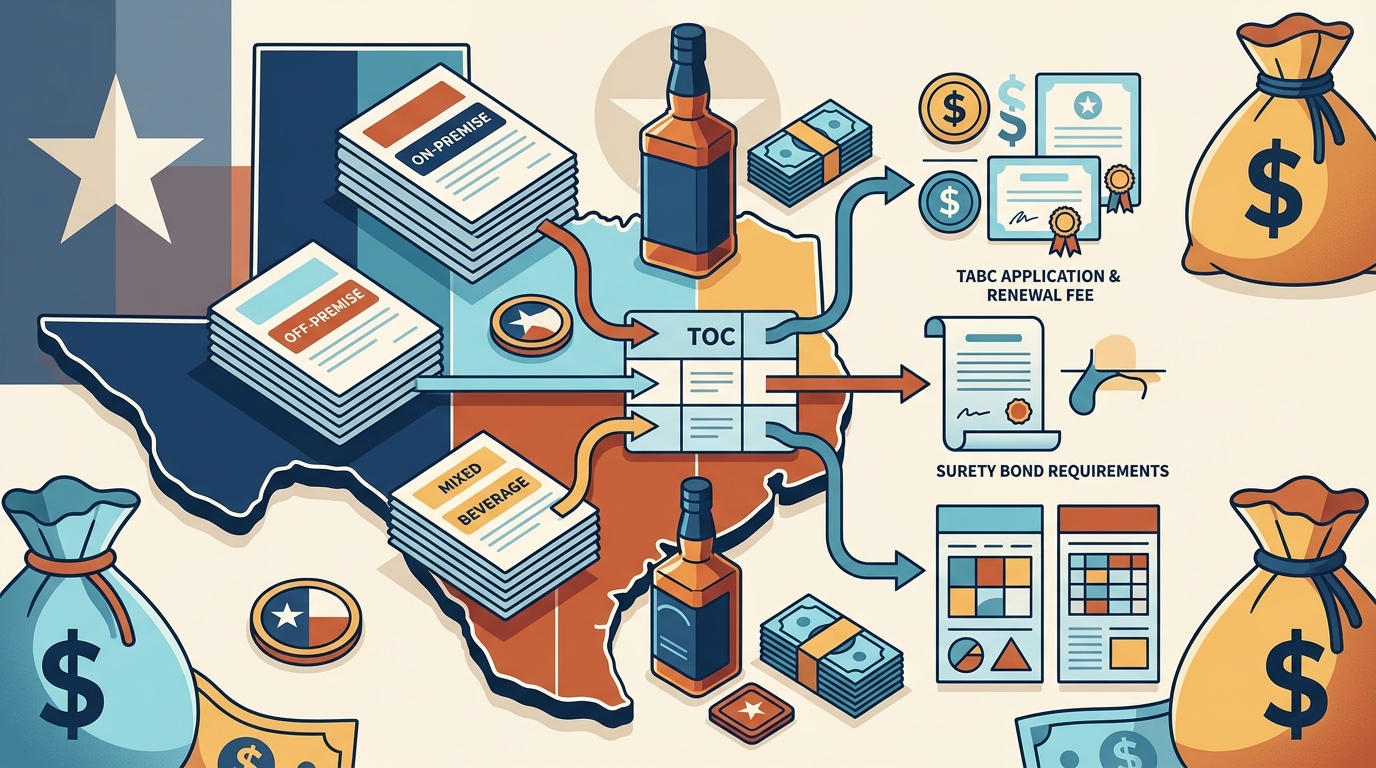
Understanding the specific type of permit you need is the first step in calculating your total cost. The Texas Alcoholic Beverage Commission (TABC) categorizes licenses based on the type of alcohol sold and the location of consumption. A liquor license is a legal authorization issued by the state that allows a business to sell, serve, or distribute alcoholic beverages. The classification of your business dictates which fee schedule applies.
On-Premise Permits
On-premise permits allow customers to consume alcohol within the business location. The most common on-premise permit is the Mixed Beverage Permit, which authorizes the sale of spirits, wine, and beer for on-site consumption. This is the standard license for bars, nightclubs, and full-service restaurants. Another on-premise option is the Wine and Malt Beverage Permit, which allows the sale of wine and beer but excludes distilled spirits. This permit is often chosen by cafes and restaurants that do not want to carry a full spirits inventory.
Off-Premise Permits
Off-premise permits allow customers to purchase sealed containers of alcohol to take home. The Package Store Permit is the license for traditional liquor stores that sell spirits, wine, and beer. The Wine and Malt Beverage Retailer's Permit, often called the BQ permit, allows the sale of wine and beer in sealed containers but does not cover spirits. This permit is common for convenience stores, grocery stores, and wine boutiques. Each of these classes has distinct state fees and local requirements that impact your total budget.
TABC State Fees for 2026
The state of Texas sets the baseline cost for alcohol permits through the TABC. These fees are standardized across the state and are paid directly to the state. For the 2026 licensing period, the TABC has established specific fee structures for the two-year permit terms. It is important to note that these state fees are only one component of the total cost. Local jurisdictions may add their own fees, and surety bonds are often required in addition to the state payment.
Mixed Beverage Permit Fees
The Mixed Beverage Permit carries the highest state fee among common on-premise licenses. For 2026, the state fee for a Mixed Beverage Permit is approximately $5,300 for a two-year term. This fee covers the authorization to sell spirits, wine, and beer on the premises. Because this permit allows for the highest volume of alcohol sales, the state fee reflects the greater regulatory oversight required. Operators should budget for this higher state cost when planning a full-service bar or restaurant.
Package Store and Wine and Malt Fees
Off-premise permits generally have lower state fees than on-premise mixed beverage permits. The Package Store Permit, which allows the sale of spirits, wine, and beer, has a 2026 state fee of approximately $1,800 for a two-year term. The Wine and Malt Beverage Retailer's Permit, which covers only wine and beer, has a state fee of approximately $1,900 for a two-year term. These fees are significantly lower than the mixed beverage permit, making them more accessible for retail-focused businesses. However, local fees and bonds can still add to the total cost.
Local Municipal Fees and Bonds
While the TABC sets the state fee, local cities and counties in Texas have the authority to impose their own fees and requirements. A local certification is a mandatory approval from the city or county that verifies the business meets local zoning and safety standards. These local fees vary widely depending on the jurisdiction. In some cities, the local fee is a flat amount, while in others, it is calculated as a percentage of the state fee. Operators must research the specific requirements of their city and county to determine the exact local cost.
Surety Bonds
Local Fee Variations
Cost Comparison by Permit Class
The following table summarizes the estimated total costs for common Texas alcohol permits in 2026. These figures include the state fee, a typical local fee, and the cost of a standard conduct surety bond. Actual costs may vary based on your specific location and business circumstances.
| Permit Class | State Fee (2-Year) | Typical Local Fee | Conduct Bond Amount | Estimated Total Cost |
|---|
Note: The conduct bond amount is a one-time cost to secure the bond, but the premium is an annual recurring cost. The total cost range reflects the variability in local fees and bond amounts based on proximity to schools.
Key Takeaways
- The total cost of a Texas liquor license is the sum of state fees, local fees, and surety bonds.
- Mixed Beverage Permits have the highest state fees, starting at approximately $5,300 for two years.
- Package Store and Wine and Malt Permits have lower state fees, ranging from $1,800 to $1,900.
- Always verify local fee schedules with your city or county before signing a lease.
- Working with a licensing expert can help identify all required fees and avoid costly delays.
Frequently Asked Questions
How much does a Mixed Beverage Permit cost in Texas?
What is the difference between a Package Store Permit and a Wine and Malt Permit?
A Package Store Permit allows the sale of spirits, wine, and beer in sealed containers. A Wine and Malt Beverage Retailer's Permit allows the sale of only wine and beer in sealed containers. The Package Store Permit has a slightly lower state fee but allows for a wider product range.
Do I need a surety bond for my liquor license?
How long does it take to get a liquor license in Texas?
The timeline for obtaining a liquor license in Texas varies by permit class and local jurisdiction. It can take anywhere from 30 to 90 days or longer. Working with a licensing expert can help streamline the process and ensure all requirements are met promptly.
Can I sell alcohol to go with a Mixed Beverage Permit?
No, a Mixed Beverage Permit only allows for on-premise consumption. To sell alcohol to go, you would need a separate permit, such as a Wine and Malt Beverage Retailer's Permit or a Package Store Permit, depending on the type of alcohol you want to sell.
What are local fees for a liquor license in Texas?
Local fees are set by individual cities and counties and vary widely. They can range from a few hundred dollars to several thousand dollars. You must contact your local city clerk or county office to determine the exact fee for your specific location.
Is the liquor license fee a one-time payment?
The state fee is paid for a two-year term and must be renewed every two years. The local fee is also typically paid for the same term. The surety bond premium is an annual recurring cost that must be paid every year to keep the bond active.
How can I reduce the cost of my liquor license?
You can reduce costs by choosing the appropriate permit class for your business model. For example, if you do not need to sell spirits, a Wine and Malt Permit may be more affordable than a Mixed Beverage Permit. Additionally, maintaining good credit can lower the cost of your surety bond premium.
Final Thoughts on Budgeting for Texas Alcohol Licensing
Understanding the full cost of a liquor license in Texas is essential for any business owner planning to sell or serve alcohol. The total cost is a combination of state fees, local municipal charges, and mandatory surety bonds. By carefully selecting the right permit class and researching local requirements, you can create an accurate budget and avoid unexpected expenses. Gerald Franklin Agency, with decades of experience in Texas alcohol licensing, can help you navigate this complex process. Our team of former TABC professionals ensures that all fees are identified and all requirements are met, so you can open your business on time and within budget. To start your application, for a personalized consultation.