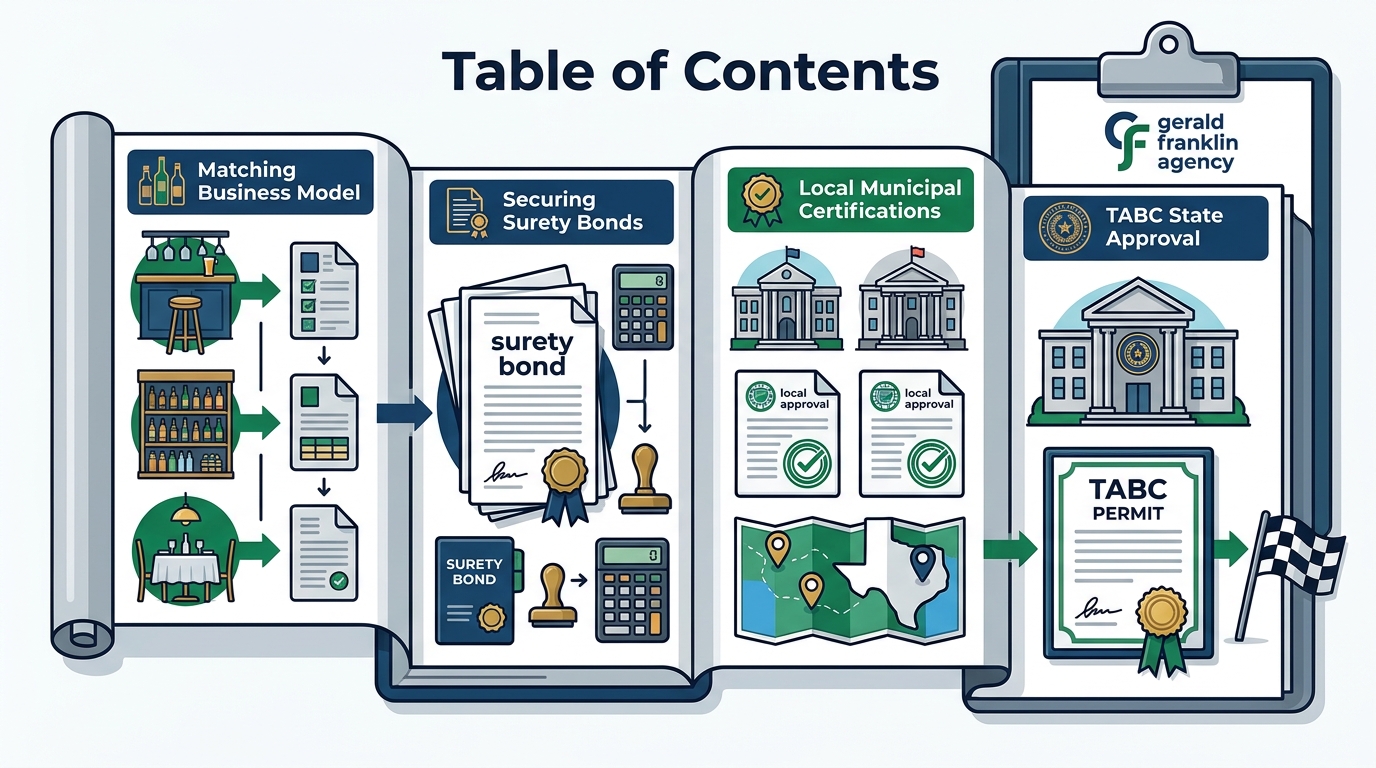
Obtaining a TABC permit in Texas requires matching your specific business model to the correct license class, securing necessary surety bonds, and completing local municipal certifications. The Texas Alcoholic Beverage Commission regulates all alcohol sales and service, and the process involves both state and local approvals. Gerald Franklin Agency, the largest private liquor licensing agency in Texas, helps businesses navigate this complex regulatory landscape to ensure their applications are filed correctly and approved on schedule.
Understanding the TABC Regulatory Framework
The Texas Alcoholic Beverage Commission is the state agency responsible for regulating the production, distribution, and sale of alcoholic beverages. A TABC permit is the official authorization that allows a business to legally sell or serve alcohol within the state. The regulatory framework is designed to ensure public safety, prevent underage access, and maintain order in the alcohol industry. Understanding this framework is the first step in a successful application.
Most businesses in Texas fall into one of two primary categories: on-premise or off-premise. On-premise permits allow alcohol to be consumed within the business location, such as in a restaurant or bar. Off-premise permits allow alcohol to be sold for consumption elsewhere, such as in a package store. The distinction is critical because the requirements, fees, and local restrictions differ significantly between these two categories. Choosing the wrong category can result in a denied application or significant delays in opening your business.
Identifying the Correct Permit Class
Selecting the right permit class is the most important decision in the application process. A Mixed Beverage Permit is the most common on-premise license, allowing the sale of spirits, wine, and beer for consumption on the premises. This permit is required for bars, full-service restaurants, hotels, and nightclubs. It is the most restrictive and expensive permit to obtain due to the higher liability associated with spirits.
For businesses that only serve wine and beer, a Wine and Malt Beverage Permit is the appropriate choice. This permit is generally easier to obtain and has lower fees than the Mixed Beverage Permit. It is suitable for casual restaurants, cafes, and some retail establishments. Another option is the Private Club Permit, which allows member-based organizations to serve alcohol to their members and guests. This permit is often used in dry counties where other alcohol sales are prohibited. Identifying the correct class ensures that you are not paying for unnecessary privileges or missing out on required ones.
The Role of Surety Bonds in TABC Applications
Surety bonds are a mandatory financial guarantee required for most TABC permits. A conduct surety bond is a three-party contract between the business, the surety company, and the TABC. It guarantees that the business will comply with all state alcohol laws and regulations. If the business violates these laws, the state can file a claim against the bond. The bond protects the state and the public, not the business owner.
Local Certifications and Municipal Approvals
State approval is only half of the process. In Texas, local municipalities and counties have significant authority over alcohol licensing. Before the TABC will issue a permit, the local city or county must certify that the business complies with local ordinances. This includes zoning laws, distance requirements from schools and churches, and noise regulations. The local certification is a critical step that many applicants overlook, leading to delays in their application.
The local certification process involves submitting your application to the city secretary or county clerk. They will review your application and issue a certification if your business meets local requirements. This process can take several weeks, depending on the municipality. It is essential to start this process early and ensure that all local requirements are met. Gerald Franklin Agency coordinates the local certifications alongside your state application, ensuring that both approvals are aligned and that your opening date is not delayed by a missing local sign-off.
Application Process and Timeline Expectations
The TABC application process is detailed and requires accurate documentation. The application is submitted through the TABC AIMS portal, which is the state's online licensing system. The application includes information about the business, its owners, and its location. It also requires the submission of the surety bond and local certifications. The TABC reviews the application and may request additional information or documentation. The review process can take several weeks to several months, depending on the complexity of the application and the current workload of the TABC.
It is important to be patient and responsive during the review process. If the TABC requests additional information, you must provide it promptly to avoid delays. The timeline for obtaining a TABC permit varies by permit class and location. On-premise permits generally take longer to process than off-premise permits due to the higher level of scrutiny. Working with an experienced licensing agency can help you navigate the process more efficiently and ensure that your application is complete and accurate from the start.
Key Takeaways
- Match your business model to the correct TABC permit class, such as Mixed Beverage or Wine and Malt.
- Obtain local municipal or county certifications before the state will issue your permit.
- Submit your application through the TABC AIMS portal with complete and accurate documentation.
- Maintain your bond for the first three years of operation to qualify for release.
- Coordinate state and local approvals to avoid delays in your opening date.
Frequently Asked Questions
What is a TABC permit?
A TABC permit is the official state authorization that allows a business to legally sell or serve alcohol in Texas. It is issued by the Texas Alcoholic Beverage Commission and is required for all alcohol-related businesses.
How much does a TABC permit cost?
The cost of a TABC permit varies by class and location. It includes state fees, local fees, and the cost of the required surety bond. The total cost can range from a few hundred to several thousand dollars.
How long does it take to get a TABC permit?
The timeline for obtaining a TABC permit varies by permit class and location. It can take several weeks to several months. Working with an experienced agency can help expedite the process.
Do I need a surety bond for my TABC permit?
Yes, most TABC permits require a surety bond. The bond guarantees that your business will comply with state alcohol laws. The amount required depends on the permit class and location.
What is the difference between on-premise and off-premise permits?
On-premise permits allow alcohol to be consumed within the business location, while off-premise permits allow alcohol to be sold for consumption elsewhere. The requirements and fees differ between these two categories.
Can I operate in a dry county?
In dry counties, most alcohol sales are prohibited. However, a Private Club Permit may allow member-based organizations to serve alcohol to their members and guests. This is a complex area of law that requires careful navigation.
Start Your TABC Application with Confidence
Navigating the TABC permit process requires expertise and attention to detail. Gerald Franklin Agency has been helping Texas businesses obtain their alcohol licenses since 1944. Our team of former TABC professionals knows the regulations inside and out and can guide you through every step of the process. From identifying the right permit class to securing your surety bond and coordinating local certifications, we handle the entire application for you. To start your TABC permit application, today and let us help you open your business on time.