Getting a liquor license in New York City is a complex, multi-layered process that requires navigating state, city, and neighborhood regulations. Gerald Franklin Agency helps businesses secure these licenses by managing the entire application lifecycle. This guide covers the specific steps, from state filings to the critical community board requirements that determine your success.
State Level Licensing
New York State liquor licensing is governed by the New York State Liquor Authority (SLA). The SLA is the primary regulatory body that issues the actual license that allows a business to sell alcohol. A State Liquor Authority license is the legal authorization required for any establishment to purchase, sell, or serve alcoholic beverages within the state. Without this state-level approval, no local permit can be issued.
Types of State Licenses
The SLA offers various license classes, each with specific privileges. The most common for restaurants and bars is the On-Premises license. This license allows the holder to serve alcohol to patrons who consume it on the premises. Other classes include Off-Premises licenses for retail sales and Manufacturer licenses for breweries and wineries. Each class has distinct requirements regarding ownership, location, and operational standards.
Application Process
The application process begins with the submission of a detailed form to the SLA. This form requires extensive information about the business owners, their backgrounds, and the proposed location. The SLA conducts a thorough review, including background checks on all owners and key employees. This stage is purely administrative and regulatory, focusing on the legal and financial integrity of the applicants.
City Level Approvals
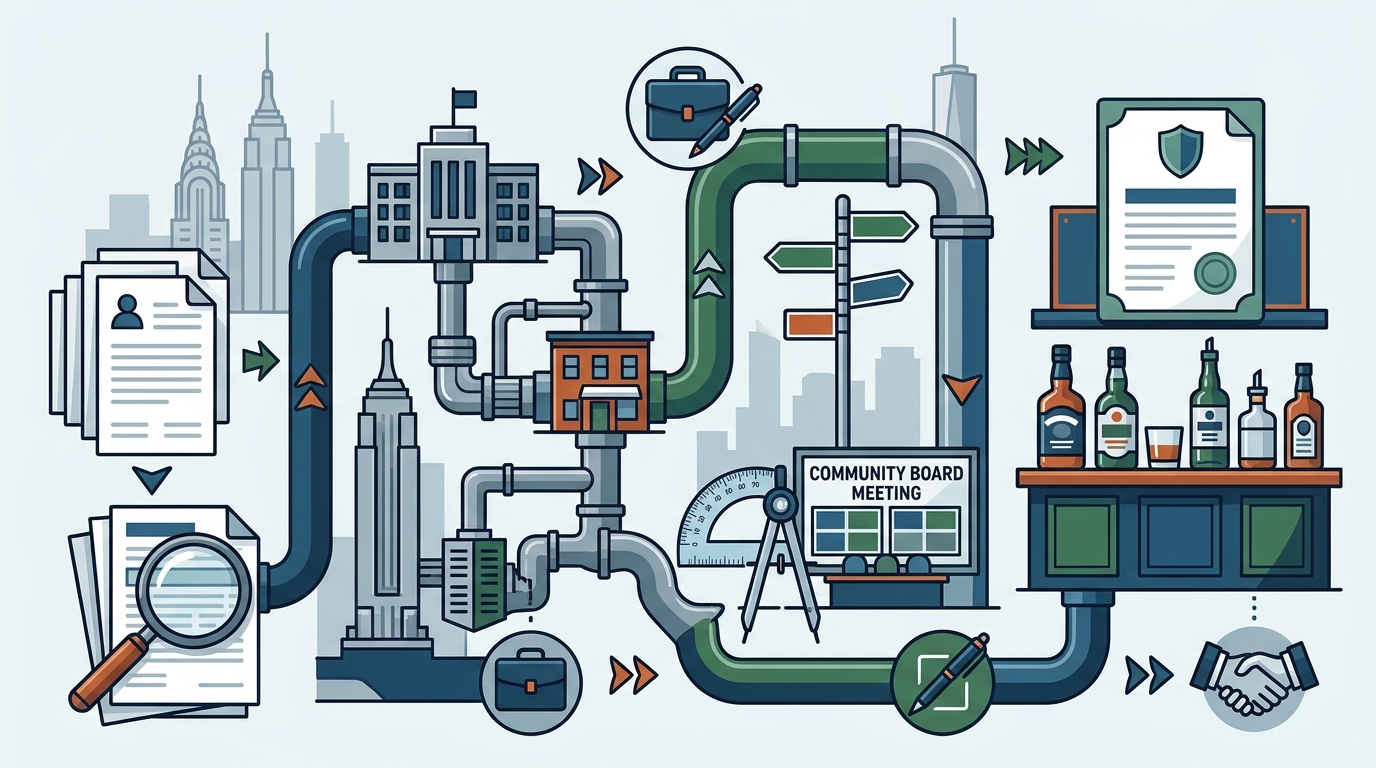
In New York City, the licensing process does not end with the state. The city has its own layer of regulation, primarily managed by the Department of Consumer and Worker Protection (DCWP). A City Liquor License is a local permit that must be obtained in addition to the state license. This dual-approval system ensures that businesses comply with both state laws and local ordinances.
DCWP Role
The DCWP reviews applications to ensure they meet city-specific requirements. This includes verifying that the business has the necessary local permits, such as a Certificate of Occupancy and a Food Service permit. The DCWP also checks for compliance with local zoning laws and building codes. This step is crucial because a business can have a state license but still be unable to operate if it lacks the required city permits.
Coordination Between Agencies
One of the biggest challenges for applicants is coordinating between the SLA and the DCWP. These two agencies operate independently, and a delay in one can stall the entire process. For example, if the DCWP finds an issue with the Certificate of Occupancy, the SLA may hold the state license until the city issue is resolved. This interdependence makes the process time-consuming and prone to errors if not managed carefully.
Community Board Requirements
The most unique and often most difficult part of the NYC liquor licensing process is the Community Board recommendation. A Community Board recommendation is a formal opinion issued by the local Community Board regarding a liquor license application. This recommendation is not a vote, but it carries significant weight with the DCWP and the SLA.
The Public Hearing Process
When an application is filed, the Community Board schedules a public hearing. During this hearing, the applicant presents their case, and community members are invited to speak. Residents, local business owners, and other stakeholders can voice their support or opposition. The Community Board then issues a recommendation, which can be favorable, unfavorable, or neutral. An unfavorable recommendation can lead to the denial of the license, even if the state and city agencies approve it.
Factors Influencing the Recommendation
Community Boards consider several factors when making their recommendation. These include the density of existing liquor licenses in the area, the potential for noise and public safety issues, and the impact on the local community. In areas with a high concentration of bars and restaurants, new applications often face strong opposition. This is why understanding the local context is essential for a successful application.
Strategies for a Favorable Recommendation
Applicants can improve their chances of a favorable recommendation by engaging with the community early. This includes attending Community Board meetings, meeting with local residents, and addressing their concerns. Presenting a clear plan for managing noise, security, and waste can also help. A well-prepared applicant who demonstrates respect for the community is more likely to receive a positive recommendation.
The Role of a Professional Expediter
Navigating the NYC liquor licensing process is complex and time-consuming. This is where a professional expediter comes in. A professional liquor license expediter is a specialist who manages the entire application process on behalf of the business. They have deep knowledge of the regulatory landscape and can identify and resolve issues before they become major problems.
Why Hire an Expediter?
There are several reasons why businesses hire an expediter. First, they save time. The licensing process can take months, and an expediter can streamline the workflow to get the license faster. Second, they reduce the risk of errors. A single mistake in the application can lead to a denial or a delay. An expediter ensures that all forms are filled out correctly and that all required documents are submitted.
Services Offered by Gerald Franklin Agency
Gerald Franklin Agency provides comprehensive liquor license expediting services in New York City. Our team of former state alcohol professionals handles every aspect of the process, from the initial consultation to the final approval. We prepare and file the application with the SLA, coordinate with the DCWP, and manage the Community Board hearing. We also provide strategic advice on how to present the application to the community to maximize the chances of a favorable recommendation.
Licensing Timelines and Deadlines
Understanding the timeline is crucial for planning your business launch. The NYC liquor licensing process is not a single event but a series of steps that must be completed in a specific order. Each step has its own timeline, and delays in one step can push back the entire process.
Typical Timeline
On average, the process takes between 6 to 12 months. The state application review can take several months, depending on the complexity of the case. The Community Board hearing is scheduled after the state application is complete, and the recommendation is issued within a few weeks of the hearing. The DCWP then reviews the application and the Community Board recommendation before issuing the city license.
Common Delays
Common delays include incomplete applications, issues with the Certificate of Occupancy, and unfavorable Community Board recommendations. An unfavorable recommendation can lead to a denial, which requires a new application and a new Community Board hearing. This can add several months to the process. Working with an expediter can help mitigate these risks and keep the process on track.
Key Takeaways
- The NYC liquor licensing process involves three main layers: the State Liquor Authority, the Department of Consumer and Worker Protection, and the local Community Board.
- A State Liquor Authority license is the legal authorization to sell alcohol, while a City Liquor License is the local permit required to operate.
- The Community Board recommendation is a critical factor in the approval process, and an unfavorable recommendation can lead to denial.
- Engaging with the community early and addressing their concerns can improve the chances of a favorable Community Board recommendation.
- A professional expediter, such as Gerald Franklin Agency, can manage the entire process, saving time and reducing the risk of errors.
- The licensing process typically takes 6 to 12 months, and delays are common if the application is not managed carefully.
- Understanding the specific requirements for your license class and location is essential for a successful application.
- Working with a specialist who has experience in NYC liquor licensing can significantly improve the outcome of your application.
Frequently Asked Questions
What is the difference between a state license and a city license?
A state license is issued by the New York State Liquor Authority and authorizes the sale of alcohol. A city license is issued by the Department of Consumer and Worker Protection and is required to operate in New York City. Both are necessary for a business to legally sell alcohol in NYC.
How long does the Community Board hearing take?
The Community Board hearing is a public event where the applicant presents their case and community members speak. The hearing itself can take a few hours, but the Community Board issues its recommendation within a few weeks after the hearing.
Can I appeal an unfavorable Community Board recommendation?
Yes, you can appeal an unfavorable recommendation to the Department of Consumer and Worker Protection. However, the appeal process can be lengthy and is not guaranteed to succeed. It is often more effective to address the community's concerns during the initial hearing.
Do I need a Certificate of Occupancy before applying?
Yes, you need a valid Certificate of Occupancy for the space before you can apply for a liquor license. The Certificate of Occupancy must match the use of the space, such as a restaurant or bar. If you do not have one, you must obtain it from the Department of Buildings before filing your liquor license application.
What is the role of the Department of Consumer and Worker Protection?
The Department of Consumer and Worker Protection reviews liquor license applications to ensure they meet city-specific requirements. This includes checking for compliance with local zoning laws, building codes, and other city regulations. The DCWP also issues the city license after the state license and Community Board recommendation are approved.
How can I improve my chances of a favorable Community Board recommendation?
You can improve your chances by engaging with the community early, attending Community Board meetings, and addressing their concerns. Presenting a clear plan for managing noise, security, and waste can also help. A well-prepared applicant who demonstrates respect for the community is more likely to receive a positive recommendation.
What are the common reasons for denial?
Common reasons for denial include an unfavorable Community Board recommendation, issues with the Certificate of Occupancy, and incomplete or incorrect applications. An unfavorable recommendation is the most common reason for denial in NYC, as it reflects the community's opposition to the new license.
Can Gerald Franklin Agency help with the Community Board hearing?
Yes, Gerald Franklin Agency provides comprehensive support for the Community Board hearing. We prepare the presentation, manage the logistics, and advise on how to address community concerns. Our goal is to maximize the chances of a favorable recommendation and ensure a smooth approval process.